Osmosis video - Anemia - Iron-deficiency: Nursing
Learn deeper with Osmosis
Master this topic faster with videos, questions, and AI.
Used by 8M+ healthcare learners.
No credit card · Cancel anytime
00:00 / 00:00
Video Summary of Anemia - Iron-deficiency: Nursing
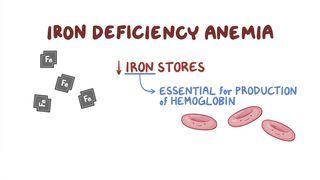
Iron deficiency anemia (IDA) is a condition in which the body is unable to produce sufficient hemoglobin in the red blood cells, due to an inadequate amount of iron in the body. Hemoglobin in the red blood cells is responsible for carrying oxygen throughout the body, so without enough of it, the body doesn't get the oxygen it needs. People with IDA present with symptoms like fatigue, weakness, shortness of breath, and difficulty concentrating. It can also lead to more serious conditions like developmental delay in children, heart failure, and organ damage.
There are several reasons why someone might develop IDA. The most common cause is simply not getting enough iron in your diet. Other causes include bleeding (either internally or externally), chronic illness, and during states in which the body's iron demands are increased such as pregnancy. IDA is characterized by microcytic and hypochromic red blood cells on the peripheral blood smear.