Osmosis video - Classical homocystinuria (NORD)
00:00 / 00:00
Video Summary of Classical homocystinuria (NORD)
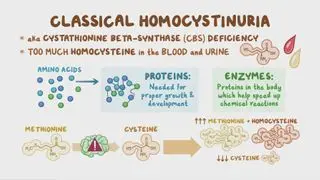
Classical homocystinuria, also known as Cystathionine Beta-Synthase (CBS), is a genetic disorder caused by a mutation of the CBS gene, resulting in impaired homocysteine metabolism. Homocysteine is a compound that is derived from the amino acid methionine. Normally, the CBS enzyme helps to break down a protein called homocysteine. When it is not working properly, homocysteine levels can become very high. This can damage blood vessels and organs, including the heart, brain, and eyes.
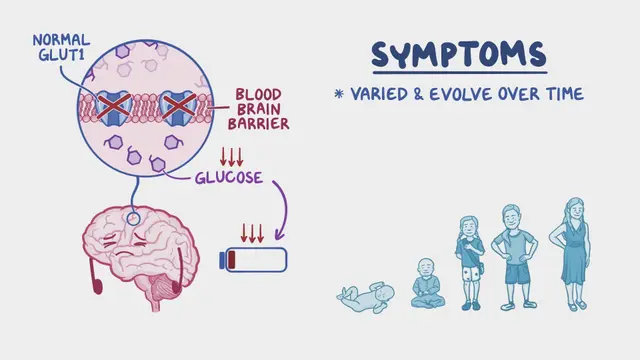
Symptoms include poor growth and developmental delay in infants, myopia, and downward and inward subluxation of the eye lens. Also, people with classical homocystinuria often have a tall, thin build and long limbs. They may also have a small head size, scoliosis, and osteoporosis. Intellectual disability is common in this disorder. High levels of homocysteine can damage the blood vessels, leading to problems with the heart, brain, and eyes. For example, people with this disorder may have an increased risk of stroke or other problems with the blood vessels in the brain. They may also have an increased risk for cataracts or other issues with the eyes.