Osmosis video - Pancreatitis: Clinical
Learn deeper with Osmosis
Master this topic faster with videos, questions, and AI.
Used by 8M+ healthcare learners.
No credit card · Cancel anytime
00:00 / 00:00
Video Summary of Pancreatitis: Clinical
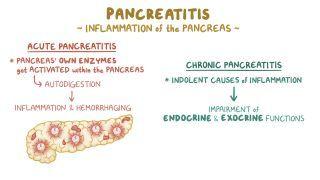
Pancreatitis refers to the inflammation of the pancreas, an organ located in the abdomen that produces hormones responsible for glycemia control, and enzymes that help digest food. Pancreatitis can be acute, or chronic.
Acute pancreatitis can be caused by gallstones, alcohol consumption, pancreatic trauma, and infections such as with mumps virus. It is characterized by epigastric abdominal pain, nausea, and vomiting.
Chronic pancreatitis is a long-term condition that can cause progressive and permanent damage to the pancreas. Causes of chronic pancreatitis include long-term alcohol abuse, genetic mutations, pancreatic duct obstruction due to tumors, and autoimmune conditions, like systemic lupus erythematosus. Treatment typically involves hospitalization, pain management, and addressing the underlying cause of pancreatitis. In severe cases, surgery may be necessary.