Osmosis video - Pediatric bone and joint infections: Clinical
00:00 / 00:00
Video Summary of Pediatric bone and joint infections: Clinical
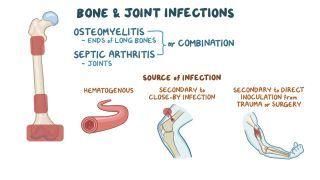
Osteomyelitis and septic arthritis in children are serious conditions, which need prompt management. They often result from bacterial infection, and if untreated, they can lead to severe complications such as joint damage, disability, disseminated infections, and sepsis.
Osteomyelitis refers to an infection of bones, often caused by bacteria such as Staphylococcus aureus and Streptococcus pneumonia. Symptoms of osteomyelitis can include fever, swelling, redness, and severe pain in the affected bone. Septic arthritis refers to an infection of the joint, also commonly caused by a bacterial infection. Symptoms of septic arthritis can include fever, joint pain, and redness and swelling in the affected joint.
Treatment for both conditions involves antibiotics, and sometimes surgery. Antibiotics are given to help eradicate the infection and prevent further spread, while surgery may be necessary to remove any infected tissue or to drain any abscesses.