Osmosis video - Pediatric bone tumors: Clinical
Learn deeper with Osmosis
Master this topic faster with videos, questions, and AI.
Used by 8M+ healthcare learners.
No credit card · Cancel anytime
00:00 / 00:00
Video Summary of Pediatric bone tumors: Clinical
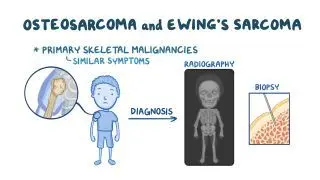
Pediatric bone tumors are a type of cancer that affects the bones of children and adolescents. They can either be benign or malignant, and can occur in any bone of the body. Common pediatric bone tumors are osteosarcoma and Ewing sarcoma.
Osteosarcoma commonly affects the metaphyses of a long bone like the femur or tibia, while Ewing’s sarcoma most frequently involves the diaphyseal or meta-diaphyseal regions of long bones like the femur, or the pelvis. Both osteosarcoma and Ewing’s sarcoma present with local symptoms such as dull, aching pain, swelling, and occasional pathologic fractures.
The diagnostic procedures involve a physical exam, imaging (e.g. X-rays), and histological examination for the definitive diagnosis. Management may involve neoadjuvant chemotherapy followed by local surgical treatment and additional chemotherapy.