Osmosis video - Pediatric infectious rashes: Clinical
Learn deeper with Osmosis
Master this topic faster with videos, questions, and AI.
Used by 8M+ healthcare learners.
No credit card · Cancel anytime
00:00 / 00:00
Video Summary of Pediatric infectious rashes: Clinical
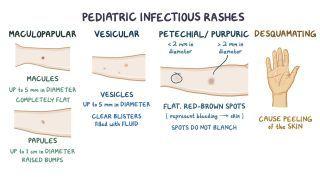
Pediatric infectious rashes are a common symptom of various infectious diseases in children. In children. infectious rashes can be divided into four main types. These are maculopapular rashes, vesicular, petechial or purpuric, and desquamating rashes.
Maculopapular rashes are seen in conditions like erythema infectiosum or fifth disease caused by parvovirus B19. Maculopapular rashes are also seen in measles, rubella, and roseola. The virus causes flu-like symptoms along with a fever that lasts a few days. Next, vesicular rashes, which are characterized by vesicles covering the body, are seen in chickenpox, shingles, and in hand-foot-mouth disease.
Petechial or purpuric rashes are seen in a septic child and may signify meningococcemia, whereas, purpura on the lower limbs and buttocks in a well-appearing child plus arthritis, abdominal pain, and glomerulonephritis, may be underlying signs of Henoch Schonlein Purpura. Last but not least, desquamating rashes are seen in Scarlet fever and Kawasaki disease.