Osmosis video - Peptic ulcers and stomach cancer: Clinical
00:00 / 00:00
Video Summary of Peptic ulcers and stomach cancer: Clinical
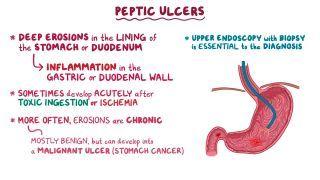
A peptic ulcer is an erosion or a break in gastric or/and duodenal mucosa. The most common causes of peptic ulcers are infection with a bacterium called Helicobacter pylori (H. pylori) and long-term use of nonsteroidal anti-inflammatory drugs (NSAIDs) such as aspirin and ibuprofen. Symptoms of peptic ulcers include upper left abdominal pain, bloating, vomiting, nausea, and loss of appetite. Treatment involves a combination of medications, and sometimes surgery.
Moving on to stomach cancer, also known as gastric cancer, it is a type of cancer that begins in the lining of the stomach. Risk factors for stomach cancer include H. pylori infection, a diet high in smoked or salty foods, and a family history of stomach cancer. Symptoms of stomach cancer usually appear in advanced stages and include nausea, vomiting, unintended weight loss, diffuse abdominal pain, hematemesis or melena, and a sense of fullness in the upper abdomen after eating a small meal. Treatment of stomach cancer may involve surgery, chemotherapy, and/or radiation therapy.