Osmosis video - Thalassemia: Nursing
Learn deeper with Osmosis
Master this topic faster with videos, questions, and AI.
Used by 8M+ healthcare learners.
No credit card · Cancel anytime
00:00 / 00:00
Video Summary of Thalassemia: Nursing
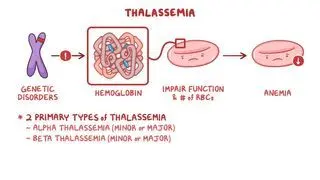
Thalassemia is a genetic disorder characterized by abnormal hemoglobin production, which can cause anemia and other complications. There are two main types of thalassemia: alpha and beta-thalassemia. Alpha thalassemia occurs when the body has a defect in the production of alpha-globin chains, while beta thalassemia occurs when there is a defect in the production of beta-globin chains.
Risk factors include clients with a family history of thalassemia and ethnic groups originating from places where there's a high prevalence of thalassemias, like the area around the Mediterranean sea, the Middle East, India, Pakistan, and Africa. The severity of thalassemia can vary from mild to severe, depending on the specific type and the number of gene mutations involved. Individuals with mild thalassemia may not experience any symptoms or may have mild anemia, while those with severe thalassemia can experience more severe symptoms, such as fatigue, shortness of breath, and jaundice.
Treatment is typically only required for thalassemia major and includes frequent blood transfusions to correct the anemia, followed by chelation therapy with medications like desferrioxamine or deferasirox, to remove the excess iron from the blood transfusions. In some cases, a stem cell transplant can eliminate the need for frequent transfusions; and splenectomy may also be required for clients with a very enlarged spleen. Priority goals of nursing care centers on monitoring and managing hemoglobin and iron levels. Client and family education focuses on learning about the condition, managing symptoms of anemia, and when to contact the healthcare provider.