Osmosis video - Tocolytics: Nursing pharmacology
Learn deeper with Osmosis
Master this topic faster with videos, questions, and AI.
Used by 8M+ healthcare learners.
No credit card · Cancel anytime
00:00 / 00:00
Video Summary of Tocolytics: Nursing pharmacology
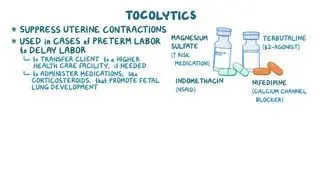
Tocolytics are medications used to inhibit preterm labor or stop contractions in women who are at risk of giving birth prematurely. Tocolytics work by relaxing the uterine muscles, thus delaying the delivery and allowing more time for the fetus to mature and complete pre-delivery medications. Common tocolytic medications include: Magnesium sulfate: It works by reducing the amount of calcium in the uterine muscles, which results in relaxation and decreased contractions. Nifedipine: It works by blocking the calcium channels in the uterine muscle cells, preventing them from contracting. Indomethacin: It works by inhibiting the production of prostaglandins, which normally induce contractions. Terbutaline: A beta-agonist that works by stimulating the beta receptors in the uterus, which results in relaxation and decreased contractions. Patients who are receiving tocolytics should be under close monitoring in health care institutions since severe adverse drug effects can happen and labor can still continue despite treatment.