Osmosis video - Corticosteroids - Topical: Nursing pharmacology
Learn deeper with Osmosis
Master this topic faster with videos, questions, and AI.
Used by 8M+ healthcare learners.
No credit card · Cancel anytime
00:00 / 00:00
Video Summary of Corticosteroids - Topical: Nursing pharmacology
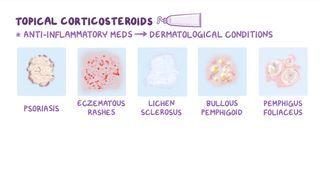
Topical corticosteroids are a group of medications used in the treatment of various skin conditions, such as psoriasis, eczematous rashes, lichen sclerosis, bullous pemphigoid, pemphigus foliaceous, and urticaria. They work by suppressing the inflammatory response, thus reducing inflammation and itching in the affected area.
Common topical corticosteroids include hydrocortisone, triamcinolone, and betamethasone clobetasol. Some side effects of topical corticosteroids include skin irritation, dryness, and redness. Long-term can also cause thinning of the skin, stretch marks, and increased risk of infections.
While caring for a client on a topical corticosteroid, nursing considerations include applying the medication to intact skin using a clean technique, as well as monitoring for side effects such as the development of infection or irritation at the application site. Client teaching is focused on how to apply the medication as directed and to report symptoms of systemic absorption or if the affected area does not respond to treatment.