Osmosis video - Tricuspid atresia: Nursing
Learn deeper with Osmosis
Master this topic faster with videos, questions, and AI.
Used by 8M+ healthcare learners.
No credit card · Cancel anytime
00:00 / 00:00
Video Summary of Tricuspid atresia: Nursing
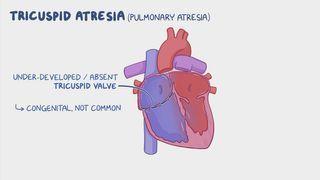
Tricuspid atresia is a congenital heart defect in which the tricuspid valve, located between the right atrium and right ventricle of the heart, is either missing or abnormally developed. This can impair the blood flow from the right atrium to the right ventricle. Luckily, additional defects that present with this disorder, such as an atrial septal defect (ASD) or patent foramen ovale, provide a substitute route for the blood that would otherwise be trapped on the right side. However, all of this leads to the mixing of poorly oxygenated and highly oxygenated blood.
Symptoms include cyanosis, shortness of breath, difficulty in breathing, poor feeding, and decreased energy. The condition is typically diagnosed through echocardiography, a non-invasive imaging test that uses sound waves to create images of the heart. Treatment for tricuspid atresia typically involves drugs like IV prostaglandin for newborns to keep the ductus arteriosus open until surgery can be performed.