Osmosis video - Urinary system: Urinary incontinence
Learn deeper with Osmosis
Master this topic faster with videos, questions, and AI.
Used by 8M+ healthcare learners.
No credit card · Cancel anytime
00:00 / 00:00
Video Summary of Urinary system: Urinary incontinence
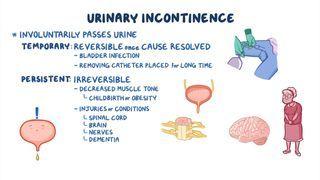
Urinary incontinence: Urinary incontinence is involuntary urination, and it can be temporary or persistent. The main types of urinary incontinence include stress incontinence, overflow incontinence, and urge incontinence. With stress incontinence, urine is lost during coughing, laughing, sneezing, or during physical exercise. Overflow incontinence happens when the bladder doesn't empty properly and becomes overflown with urine. It's usually associated with urinary retention and is often caused by an enlarged prostate in older biological males.
Urge incontinence is a sudden desire to pass urine that's difficult to delay and is accompanied by involuntary leakage of urine. Always inform the nurse when you notice changes in your clients' patterns of urination or when a client involuntarily loses urine. Treatment of urinary incontinence depends on the underlying cause and may include lifestyle changes, medication, pelvic floor muscle exercises, or surgery.