Osmosis video - Vaccines: Nursing pharmacology
00:00 / 00:00
Video Summary of Vaccines: Nursing pharmacology
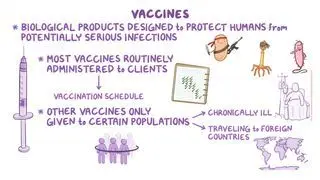
Vaccinations, also known as immunizations, are a way to protect individuals from infectious diseases. Vaccines work by stimulating the immune system to recognize and fight specific pathogens, such as viruses or bacteria. They allow us to develop active immunity where a protective adaptive immune response is made to pathogens without causing disease in the patient. There are four main types of vaccines: Live attenuated, inactivated, subunit, and toxoid vaccines. Live attenuated and inactivated vaccines are whole-cell vaccines, which means that the whole virus or bacteria is used to create the vaccine. Subunit and toxoid vaccines are considered fractionated vaccines because only one part of the pathogen is used to create the vaccine.
Vaccines are typically given through injections, nasal sprays, or oral doses, and are usually recommended for infants and young children, as well as for adults who may be at risk for certain infectious diseases. Vaccines can sometimes cause mild side effects. There may be pain and swelling at the injection site, flu-like symptoms like fever, malaise, headache, and anorexia, that usually last for a day or two. In rare situations, there can be more serious reactions, including prolonged irritability, seizures, high fever, thrombocytopenia, and anaphylaxis, as well as rare autoimmune conditions like Guillain-Barre syndrome. Nursing considerations when administering vaccines include screening for contraindications or cautions to vaccine administration, administering the vaccine, and monitoring for adverse reactions, as well as providing education about vaccine side effects and how to manage them.