Osmosis video - Vestibulo-ocular reflex and nystagmus
Learn deeper with Osmosis
Master this topic faster with videos, questions, and AI.
Used by 8M+ healthcare learners.
No credit card · Cancel anytime
00:00 / 00:00


Video Summary of Vestibulo-ocular reflex and nystagmus
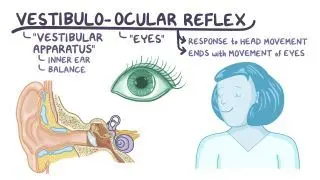
The vestibulo-ocular reflex is a reflex that helps stabilize the visual field during head movements. It occurs in response to head movement and leads to the eyes moving in the opposite direction to maintain a steady gaze. Physiological vestibular nystagmus is a normal and expected type of nystagmus that is part of the vestibulo-ocular reflex.
The receptors of the vestibulo-ocular reflex pathway, are the hair cells inside the structures that make up the vestibular apparatus which detect the direction of movement. Then, they pass the message through the vestibulo-cochlear nerve, which then triggers the firing of the vestibular, abducens, and oculomotor nuclei. The efferent pathway is represented by the abducens and the oculomotor nerve, which cause the extrinsic eye muscles to contract or relax to adjust the direction of gaze.