
Spaced Repetition + Osmosis
Study less. Remember more.
Osmosis uses the proven learning technique that makes medical knowledge stick. Without the extra effort.
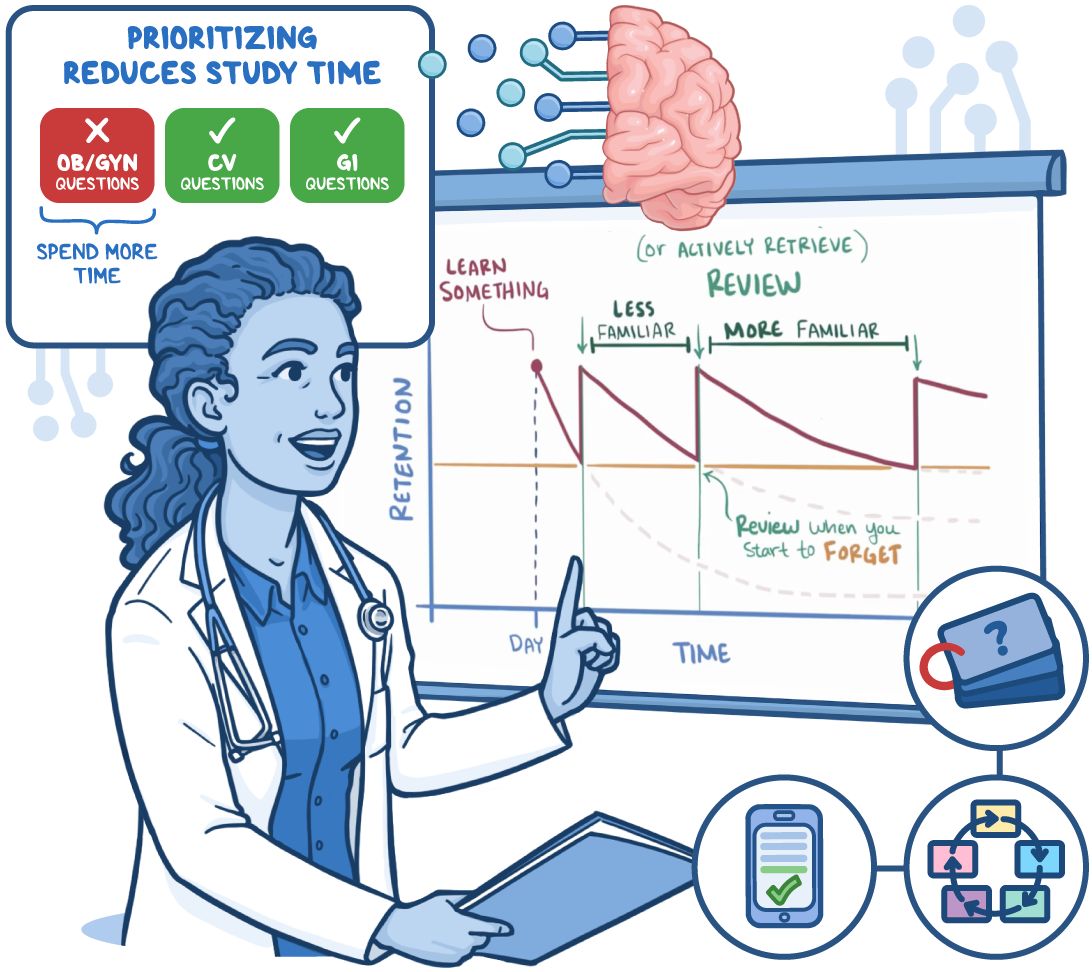
Your brain is wired to forget
Cramming might get you through tomorrow’s quiz. But a week later? Most of that information is gone. That’s the “forgetting curve” at work.
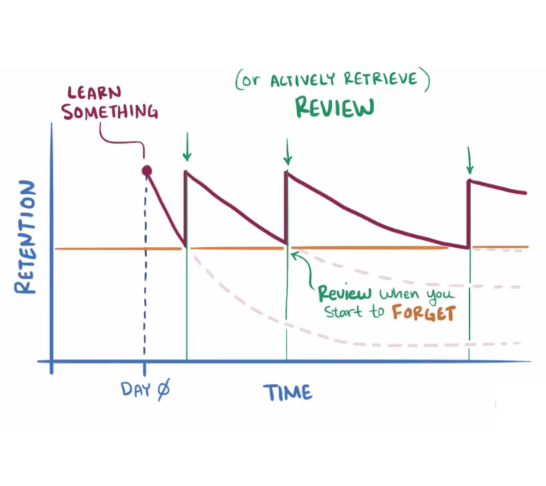
The secret isn’t more hours. It’s smarter timing.
Spaced repetition resurfaces concepts just before you’d forget them. So you only review what matters. And make every minute of study time count.

Med students lose half of their basic science knowledge within 2 years without review
Source: Long-term retention of basic science knowledge: a review study

Med school candidates who used spaced repetition were twice as likely to pass their entrance exams

Medical residents retained more knowledge using spaced repetition compared to controls
Osmosis makes review happen naturally
Spaced repetition is built right into your study flow. So what you learn today stays fresh for exams, rotations, and beyond.
Pick up right where you left off
Jump right back in without losing any of your progress
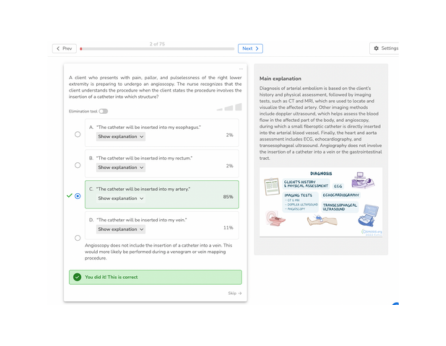
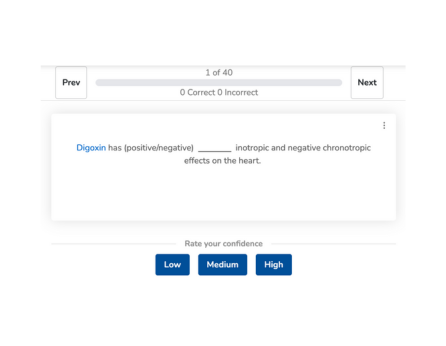
Stay sharp with Osmosis daily practice quizzes
Keep concepts fresh with bite-sized reviews built into your routine.
Make recall effortless with Osmosis flashcards
Reinforce new material and revisit tricky concepts until they click.
Forgetting is so last term
More efficient study sessions using Osmosis
92.1%
of Osmosis learners say it’s helped them study more efficiently.
“
Osmosis helps me retain the information that’s coming at me. I use the flashcards daily and really appreciate the use of the latest evidence-based learning strategies. They truly make learning medicine fun.

Arman Israelyan
MD student
Get more A’s to your Q’s.
What is spaced repetition and does it really work?
Spaced repetition is a proven study method that schedules review sessions at increasing intervals to strengthen long-term memory. The Osmosis platform uses spaced repetition in tools such as flashcards, quizzes (question bank), and study schedules to help learners revisit high-yield concepts and reinforce retention over time.
Is spaced repetition better than cramming?
Learning through spaced repetition is more effective than cramming because it spreads review sessions over time and strengthens memory using repeated recall. Osmosis flashcards and study tools apply spaced repetition to help learners retain complex medical information for boards, exams, and clinical practice.
How often should I review my materials?
The ideal review frequency depends on the topic and how well you understand the material. Spaced repetition in the Osmosis platform helps schedule review sessions automatically so you revisit key concepts at optimal intervals.
Does spaced repetition work for learning anatomy?
Spaced repetition is effective for learning anatomy because repeated review helps reinforce complex structures and relationships over time. Osmosis flashcards and visual learning tools can support anatomy review by combining imagery with the use of spaced repetition.
Is spaced repetition the same as spiral learning?
Spaced repetition and spiral learning are related but slightly different learning approaches. Spaced repetition focuses on reviewing information at increasing intervals, while spiral learning revisits topics over time with increasing depth and complexity.