
Albumin-to-Creatinine Ratio · What Is It, How It’s Evaluated, What It Indicates, and More

Published: Mar 19, 2026
Author: Lily Guo, MD
Editor: Alyssa Haag, MD
Editor: Emily Miao, PharmD, MD
Editor: Kelsey LaFayette, DNP, ARNP, FNP-C
Illustrator: Abbey Richard, MSc
7-day free trial

Go deeper with Osmosis

Osmosis is a learning platform with videos, questions, and AI tools to help you master topics like this.

4.8 · 12,000+ reviews
Watch quick, visual videos
Practice with Qbank-style questions
Use AI to explain, quiz, and review
Study anytime with the mobile app
Start free trial

No credit card · Cancel anytime

What is the albumin-to-creatinine ratio?

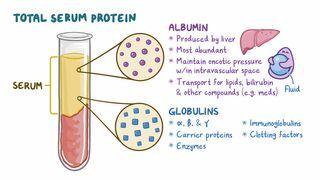
The albumin-to-creatinine ratio (ACR) is a urine test that detects the ratio of albumin and creatinine in the urine. Albumin is the most abundant protein in the blood and is synthesized by the liver. In a healthy individual, an albumin molecule is generally too large to filter through the glomeruli, which are clusters of blood vessels in the kidney responsible for filtration. However, when the kidneys are damaged, albumin can pass through the glomeruli.  

On the other hand, creatinine is a metabolic waste product that can normally be found in the urine even in healthy individuals. It’s produced from the normal breakdown of muscle tissue and the consumption of protein and is excreted at a relatively constant rate. This consistency allows the albumin-to-creatinine ratio to normalize for variations in urine concentration that can happen depending on one’s hydration status, time of day, and diet (e.g., meat, vegetarian, or vegan diets). While ACR is a stable and reliable test of kidney function that accounts for these potential variances in the amount of albumin in the body, the ACR test does have limitations (e.g., impacted by vigorous exercise, diet) that should be considered when interpreting results.  

Learn deeper with Osmosis

Master this topic faster with videos, questions, and AI.

Used by 8M+ healthcare learners.

Start free trial

No credit card · Cancel anytime

How is the albumin-to-creatinine ratio evaluated?

The albumin-to-creatinine ratio is evaluated through a urine test, including a single urine sample or 24-hour urine sample. Most often a single urine sample is taken at a healthcare provider’s office or in a laboratory to measure ACR, in a test known as a spot urine albumin-creatinine ratio. A single urine sample can also be timed, like in the morning upon waking or after having not voided for 4 hours. These results provide an estimate of the amount of albumin that would be excreted in the urine during a 24-hour period.  

Another way to measure ACR is through a 24-hour urine collection. This method is the most accurate and requires the individual to collect all of their urine over a 24-hour period.  

Prior to an ACR urine test, it may be recommended to avoid intense exercise since the increase in muscle breakdown can affect test results. Additionally, some may be recommended to avoid eating meat the day before the test as meat consumption may have a small effect on urine creatinine levels. Other conditions that may affect the accuracy of the results include fever or infection at the time of testing (e.g., urinary tract infection), urinary or menstrual bleeding, or a sudden dramatic increase in blood pressure or blood glucose levels 

For any abnormal results, the ACR may be repeated every 3 to 6 months to ensure the value indicates true renal dysfunction as opposed to situational albuminuria (i.e., in the case of intense exercise).  

What are the indications for evaluating the albumin-to-creatinine ratio?

The indications for evaluating the albumin-to-creatinine ratio include assessing for kidney disease in individuals who are at high risk. The population at high risk for kidney disease includes those with type 1 and type 2 diabetes mellitus. Uncontrolled or poorly controlled diabetes mellitus can result in the development of diabetic nephropathy (i.e., a deterioration in kidney function) as a result of hyperglycemia (i.e., elevated blood sugar) that increases the amount of inflammatory proteins ultimately damaging blood vessels in the kidneys. Other factors that can increase the risk for kidney disease include hypertension or high blood pressure; cardiovascular disease; a family history of kidney disease; tobacco smoking; obesity; being 50 years of age or older; and systemic diseases like lupus erythematosus. 

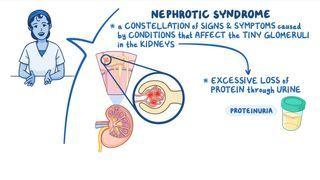
In individuals with risk factors for kidney disease, the ACR is typically measured each year as a screening test, and if elevated, additional tests (e.g., estimated glomerular filtration rate [eGFR]) are typically performed over a 3-month interval. Urine ACR can be measured more frequently if levels of albumin are significantly raised. Additionally, if an individual presents with symptoms of kidney dysfunction including edema (i.e., swelling), proteinuria (i.e., protein in the urine), or hematuria (i.e., blood in the urine), a urine ACR may be ordered to assess kidney function.  

What is a normal value for albumin-to-creatinine ratio?

A normal urine ACR is less than 30 milligrams per gram (mg/g). 

What does an elevated albumin-to-creatinine ratio indicate?

Since the urine albumin-to-creatinine ratio is a general measure of kidney function, an elevated value may indicate kidney damage. ACR between 30 and 299 mg/g is considered moderately increased and ACR of 300 mg/g or higher is considered severely increased. 

ACR can also be a predictor of progression or worsening of kidney damage in someone who has already been diagnosed with chronic kidney diseaseAn elevated ACR is also associated with an increased risk of cardiovascular events, including myocardial infarction or heart attack; stroke; and heart failure. Additionally, not only can hypertension lead to increases in urine ACR, but an elevated ACR can predict the onset of hypertension in those who previously had normal blood pressure. In those with diabetes mellitus, an increased ACR is associated with a higher risk of developing complications secondary to the disease, such as diabetic retinopathy (i.e., growth of abnormal blood vessels in the retina); neuropathy or nerve damage; and nephropathy.   

Two elevated results for 3 months or more can be a sign of kidney disease. In addition to the urine ACR, a blood test called the estimated glomerular filtration rate (eGFR) may also be done to assess how well the kidneys are functioning. If laboratory testing is abnormal, imaging tests, such as ultrasound or computed tomography (CT) of the kidneys may be performed to further aid in diagnosing any underlying causes.  

What does a decreased albumin-to-creatinine ratio indicate?

A decreased albumin-to-creatinine ratio is an indicator that the kidneys are healthy and functioning appropriately. A decreased albumin-to-creatinine ratio relative to previous increased test results indicates that kidney health may be improving either secondary to lifestyle changes (e.g., reduction in salt and protein intake) or treatment of underlying conditions, like diabetes mellitus or hypertension 

What are the most important facts to know about albumin-to-creatinine ratio?

The albumin-to-creatinine ratio (ACR) urine test measures the amount of albumin in the urine relative to creatinine, a waste product excreted at a relatively constant rate. The ACR is measured in individuals with risk factors for kidney disease, such as diabetes, hypertension, cardiovascular disease, or with a family history of kidney disease. Testing the ACR involves urine sampling via a spot urine sample or 24-hour collection. An elevated ACR indicates kidney damage. This test, along with the estimated glomerular filtration rate (eGFR), is used by healthcare professionals to help diagnose and monitor kidney health disease and help guide treatment for those diagnosed with kidney disease.  

Key Takeaways

Definition 

The albumin-to-creatinine ratio (ACR) is a urine test that detects the ratio of albumin and creatinine in the urine as a marker of kidney damage 

Albumin 

-Most abundant blood protein  

-Synthesized by the liver  

-If kidney damage filtered through glomeruli  

Creatinine  

-Metabolic waste product from muscle tissue breakdown  

-Normally found in urine of healthy individuals  

Evaluation 

-Urine test  

-Single sample 

-24-hour sample (most accurate)  

-Limitations: influenced by  

-Intense exercise (to be avoided prior to test)  

-Meat intake (to be avoided day prior to test)  

-Fever/infection 

-Urinary or menstrual bleeding 

-Sudden ↑ in blood pressure/glucose levels  

-Abnormal result → repeat every 3-6 months to differentiate renal dysfunction vs situational albuminuria 

Indications  

-Population at risk* for kidney disease 

-Type 1 and type 2 diabetes mellitus (diabetic nephropathy 

-Hypertension  

-Cardiovascular disease  

-Family history of kidney disease  

-Tobacco smoking  

-Obesity  

-≥50 years of age  

-Systemic diseases (e.g., lupus erythematosus)  

-Symptoms of kidney dysfunction (e.g., edema, proteinuria, hematuria 

*Yearly measurement (screening) → additional tests (e.g., eGFR) over 3-month interval; more frequent measurement if albumin significantly raised 

Normal ACR 

<30 mg/g 

Elevated ACR 

-30-299 mg/g → moderately increased 

-≥300 mg/g → severely increased   possible kidney damage | two elevated results for 3 months or more: kidney disease → eGFR, imaging  

-Elevated values can also predict 

-Worsening of known chronic kidney disease  

-Increased risk of cardiovascular events  

-Onset of hypertension  

-Increased risk of diabetes complications (diabetic retinopathy, neuropathy, nephropathy)  

Decreased ACR 

-Indicator of healthy kidneys 

-If decreased relative to previous increased test results → improving kidney health  

Students say Osmosis is 100% worth it

Because Osmosis saves them time. Lowers stress. And actually helps them remember when it counts.

I used Osmosis to prepare for my first medical school licensing exam! Super helpful and interactive for people who may not do great with just pages of text info!

Cecilia Ruiz

Cecilia Ruiz

MD student

Sayan Misra

I have used Osmosis for about four years. Best thing I have ever used for my medical studies.

Sayan Misra

Sayan Misra

Med student

Osmosis videos are superior because they define simple concepts, tell a story with a clear progression, and provide context.

Jay Pate

Jay Pate

Dental student

References


Brantsma AH, Bakker SJ, de Zeeuw D, de Jong PE, Gansevoort RT. Urinary albumin excretion as a predictor of the development of hypertension in the general population. J Am Soc Nephrol. 2006;17(2):331-335.


Friedman AN, Marrero D, Ma Y, et al; Diabetes Prevention Program Research Group. Value of urinary albumin-to-creatinine ratio as a predictor of type 2 diabetes in pre-diabetic individuals. Diabetes Care. 2008;31(12):2344-2348. doi:10.2337/dc08-0148


Gerstein HC, Mann JF, Yi Q, et al; HOPE Study Investigators. Albuminuria and risk of cardiovascular events, death, and heart failure in diabetic and nondiabetic individuals. JAMA. 2001;286(4):421-426.


Ming L, Wang D, Zhu Y. Association between urinary albumin-to-creatinine ratio within normal range and hypertension among adults in the United States: Data from the NHANES 2009-2018. Clin Cardiol. 2023;46(6):622-631. doi:10.1002/clc.24012


National Kidney Foundation. Kidney Failure Risk Factor: Urine Albumin-to-Creatinine Ratio (UACR). National Kidney Foundation. Published April 7, 2020. Accessed May 14, 2025. https://www.kidney.org/content/kidney-failure-risk-factor-urine-albumin-to-creatinine-ration-uacr


Peterson JC, Adler S, Burkart JM, et al. Blood pressure control, proteinuria, and the progression of renal disease: The Modification of Diet in Renal Disease Study. Ann Intern Med. 1995;123(10):754-762.


Ren F, Li M, Xu H, Qin X, Teng Y. Urine albumin-to-creatinine ratio within the normal range and risk of hypertension in the general population: A meta-analysis. J Clin Hypertens (Greenwich). 2021;23(7):1284-1290. doi:10.1111/jch.14263