Complete metabolic panel (CMP) - Estimated glomerular filtration rate (eGFR): Nursing
An older adult client with a history of chronic kidney disease is seen by his primary care provider. The client’s kidney function and disease progression will be assessed by monitoring laboratory test results, including the estimated glomerular filtration rate, or eGFR.
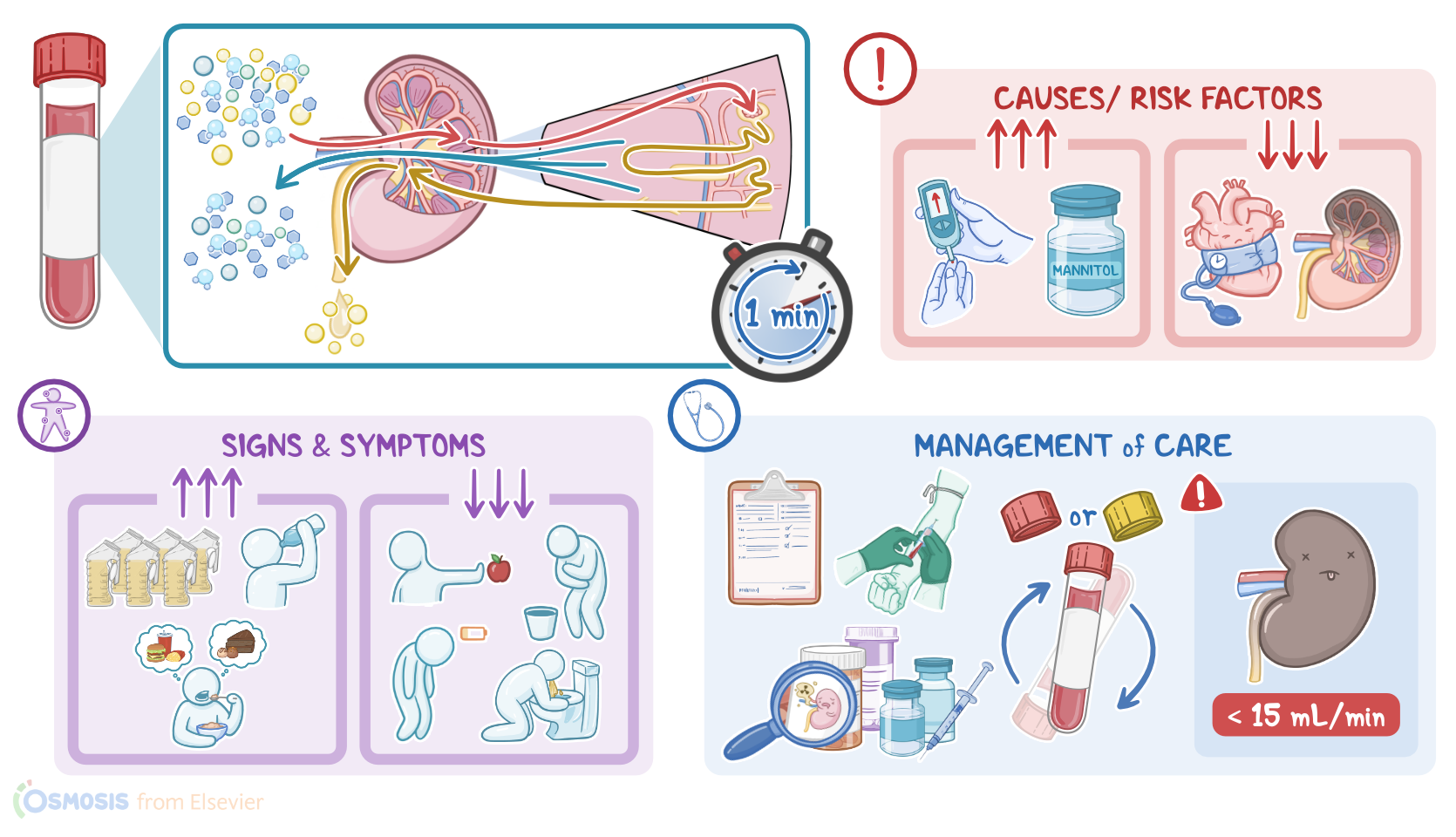
So, the glomerular filtration rate, or GFR for short, measures the amount of fluid filtered by the kidneys in one minute. Now, because GFR is not always practical to perform, the estimated GFR, or eGFR, is measured using a formula, including the Cockcroft-Gault equation, which uses the blood creatinine level, weight, age, and sex;
the Modification of Diet in Renal Disease formula, also called MDRD, which uses the blood creatinine level, age, and sex, along with an adjustment for Black people of African descent; and
the Chronic Kidney Disease-Epidemiology Collaboration formula, or CKD-EPI, that uses age, sex, and serum creatinine or cysteine C, or both to calculate the eGFR. In healthy adults, eGFR is about 120 mL/min/1.73m2 of body surface area.
Let’s switch gears and talk about the conditions that affect eGFR. Increased eGFR is often seen in conditions that cause osmotic diuresis, which is an increase in filtration and urination due to the presence of certain substances in the fluid filtered by the kidneys.
So with uncontrolled diabetes and hyperglycemia, for example, the glucose pulls water with it as the kidneys work hard to eliminate the excess glucose. An increased eGFR is also expected when administering an osmotic diuretic like mannitol.
When it comes to decreased eGFR, this can be caused by impaired kidney function, which reduces the kidney’s filtering ability. An important cause of impaired kidney function is acute kidney injury, which can result from prerenal conditions like hypoperfusion due to shock or congestive heart failure; intrarenal conditions like acute tubular necrosis or acute glomerulonephritis; and postrenal conditions that impair the flow of urine such as benign prostatic hyperplasia or kidney stones.
Another cause of kidney impairment is chronic kidney disease, which is associated with conditions that can cause a decline in kidney function, like uncontrolled hypertension, diabetes, and cardiovascular disease.
| ESTIMATED GLOMERULAR FILTRATION (eGFR) RATE | ||
| KEY POINTS | NOTES | |
| PHYSIOLOGY |
| |
| PATHOLOGY |
| |
| NURSING IMPLICATIONS |
| |
No notes for this video yet
Try adding a note below