

Distichiasis · What It Is, Causes, Diagnosis, and More

Published: Apr 22, 2026
Author: Emily Miao, PharmD
Editor: Alyssa Haag
Editor: Józia McGowan, DO
Editor: Kelsey LaFayette, DNP
Illustrator: Jung Hee Lee, MScBMC
Copyeditor: David G. Walker
7-day free trial

Go deeper with Osmosis

Osmosis is a learning platform with videos, questions, and AI tools to help you master topics like this.

4.8 · 12,000+ reviews
Watch quick, visual videos
Practice with Qbank-style questions
Use AI to explain, quiz, and review
Study anytime with the mobile app
Start free trial

No credit card · Cancel anytime

What is distichiasis?

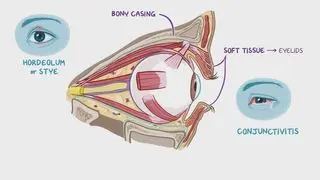
Distichiasis is a rare condition characterized by the abnormal growth of eyelashes from the meibomian glands of the upper and lower eyelids. The term distichiasis can be broken down into “di,” which means two, and “stichos,” which means rows; altogether, this explains the abnormal growth of eyelashes seen in this condition. Meibomian glands are small oil-producing glands located along the edge of the eyelids that secrete meibum (i.e. oily substances) to lubricate the eyes. Normally, eyelashes are located within the anterior membrane of the eyelid, arising from the skin epidermis. In distichiasis, extra eyelashes grow from meibomian gland openings instead of the epidermis, resulting in a double row of eyelashes and, occasionally, obstruction. 

Learn deeper with Osmosis

Master this topic faster with videos, questions, and AI.

Used by 8M+ healthcare learners.

Start free trial

No credit card · Cancel anytime

What causes distichiasis?

Distichiasis can be congenital (i.e. present at birth) or acquired (i.e. developed after birth as a result of non-genetic factors). Congenital distichiasis occurs when the germ cells responsible for differentiating into meibomian glands, develop into a pilosebaceous unit instead. A pilosebaceous unit consists of a hair follicle, a hair shaft, and a sebaceous gland. Therefore, instead of small oil-producing glands, extra eyelashes emerge in these areas and cause meibomian gland dysfunction. On the other hand, acquired distichiasis occurs from the transformation and de-differentiation of existing meibomian glands into pilosebaceous units due to external factors (i.e. inflammation, trauma, irritation). For example, blepharitis (i.e. eyelid inflammation) or bacterial infections of the eye may cause chronic inflammation and irritation, which may disrupt cellular programming within the pilosebaceous units and meibomian glands. This can cause new, abnormal growth of eyelashes from meibomian gland openings.  
 
Additionally, distichiasis can also occur as part of a syndrome called lymphedema distichiasis syndrome (LDS), which is a rare genetic multi-organ disorder characterized by lymphedema (i.e. swelling and accumulation of fluid) and distichiasis. LDS is caused by a rare gene mutation in the FOXC2 gene, which plays an important role in cardiovascular and lymphatic system development. Structural heart defects (e.g. obstructed outflow of blood from the right ventricle to the lungs, also known as pulmonary stenosis) and arrhythmias have been reported in individuals with LDS. LDS is inherited in an autosomal dominant pattern, meaning only one copy of the mutated gene is required to cause disease in the individual.

What are the signs and symptoms of distichiasis?

Signs and symptoms of distichiasis include an extra row of eyelashes growing from the upper or lower eyelids. The extra eyelashes can grow inward (i.e. trichiasis), irritating the cornea (i.e. the surface of the eye) or the conjunctiva (i.e. the inner lining of the eyelid), resulting in redness, swelling, and tearing. Individuals may report an itchy or gritty sensation in the eyes and may experience dry eyes due to inadequate lubrication. Clinicians may also notice an inward rotation of the eyelid margin (i.e. entropion). In severe cases, the extra eyelashes may irritate the cornea with each blink leading to corneal abrasions and corneal ulcers, which may lead to photosensitivity, pain, and blurry vision. Other complications include corneal scarring, secondary infections, and permanent vision loss if left untreated. 

How is distichiasis diagnosed?

Diagnosis of distichiasis begins with a thorough review of symptoms and medical history. An initial physical exam revealing two rows of eyelashes may prompt a referral to an ophthalmologist for a further comprehensive ophthalmologic assessment. The eyelids may be evaluated to assess the eyelid margins and the positioning of eyelashes. A close-up examination can also help differentiate between distichiasis and trichiasis. A slit-lamp is a specialized magnifying microscope that offers detailed information about the eye structures (e.g. cornea, iris, retina) and can identify corneal abrasions or corneal ulcers, if present. Genetic testing for FOXC2 mutations can be considered if there is high clinical suspicion for LDS.  

How is distichiasis treated?

Management of distichiasis consists of supportive care measures and interventions aimed at alleviating symptoms and preventing secondary complications. In mild cases, where the individual is asymptomatic, supportive care measures include the use of ocular lubricants (e.g. artificial tears) and soft contact lenses, which serve as a barrier between the eyelashes and cornea. Individuals who experience persistent symptoms despite conservative measures can consider procedures including electrolysis (i.e. use of electrical current to destroy the hair follicle) and cryotherapy (i.e. liquid nitrogen to freeze the hair follicle) to prevent eyelash regrowth. In severe, refractory cases, surgical treatments, such as the surgical removal of the affected glands or lid splitting, may be necessary to alleviate symptoms. Lid splitting is a surgical procedure in which the eyelid is split open to expose the eyelash follicle, which is then removed either manually or via electrolysis and/or cryotherapy. Secondary complications, including corneal abrasions and corneal ulcers, are managed with a combination of topical antibiotics (e.g. ciprofloxacin, ofloxacin), lubricants, and cycloplegic agents (e.g. atropine, cyclopentolate) to promote the healing process and prevent further complications.

What are the most important facts to know about distichiasis?

Distichiasis is a rare condition characterized by the abnormal growth of eyelashes from the meibomian glands of the upper and lower eyelids. Distichiasis can be present at birth, acquired from external causes and conditions, or occur as part of a syndrome such as lymphedema distichiasis syndrome. Signs and symptoms of distichiasis include an extra row of eyelashes growing from upper or lower eyelids and entropion, among others. A referral to an ophthalmologist can be helpful for a comprehensive ophthalmologic assessment, which assesses the eyelid margins, positioning of eyelashes, and presence of other disease-related complications. The treatment approach to distichiasis depends on the disease origin, and management is aimed at alleviating symptoms and preventing secondary complications.  

Key Takeaways

Definition 

Distichiasis is a rare condition characterized by the abnormal growth of eyelashes from the meibomian glands of the upper and lower eyelids, resulting in a double row of eyelashes and, in some cases, obstruction.  

Meibomian glands 

Small oil-producing glands located along the edge of the eyelids  

Causes 

 - Congenital: germ cells develop into pilosebaceous unit instead of meibomian glands 

 - Acquired: transformation and de-differentiation of existing meibomian glands into pilosebaceous units  

 - Inflammation; irritation; trauma (e.g., blepharitis, eye bacterial infection)  

 - Lymphedema distichiasis syndrome (LDS)  

 - Lymphedema + distichiasis  

 - FOXC2 gene mutation, autosomal dominant inheritance 

Signs and Symptoms 

 - Extra row of eyelashes growing from the upper or lower eyelids  

 - Trichiasis → redness, swelling, tearing of the conjunctiva  

 - Itchy or gritty sensation  

 - Entropion  

 - Complications 

 - Corneal abrasion and ulcersphotosensitivity, pain, blurry vision  

 - Corneal scarring  

 - Secondary infection  

 - Permanent vision loss  

Diagnosis 

 - Medical history  

 - Physical exam  

 - Ophthalmologic assessment  

 - Genetic testing (LDS suspicion)  

Treatment 

 - Supportive care: ocular lubricants; soft contact lenses 

 - Electrolysis 

 - Cryotherapy  

 - Surgical treatment: surgical removal of the affected glands; lid splitting  

 - Complications management: topical antibiotics; lubricants; cycloplegic agents  

Students say Osmosis is 100% worth it

Because Osmosis saves them time. Lowers stress. And actually helps them remember when it counts.

I used Osmosis to prepare for my first medical school licensing exam! Super helpful and interactive for people who may not do great with just pages of text info!

Cecilia Ruiz

Cecilia Ruiz

MD student

Sayan Misra

I have used Osmosis for about four years. Best thing I have ever used for my medical studies.

Sayan Misra

Sayan Misra

Med student

Osmosis videos are superior because they define simple concepts, tell a story with a clear progression, and provide context.

Jay Pate

Jay Pate

Dental student

References


Anderson RL, Harvey JT. Lid splitting and posterior lamella cryosurgery for congenital and acquired distichiasis. Arch Ophthalmol. 1981;99(4):631-634. doi:10.1001/archopht.1981.03930010631008 


Aumond S, Bitton E. The eyelash follicle features and anomalies: A review. J Optom. 2018;11(4):211-222. doi:10.1016/j.optom.2018.05.003 


Fea A, Turco D, Actis AG, De Sanctis U, Actis G, Grignolo FM. Ectropion, entropion, trichiasis. Minerva Chir. 2013;68(6 Suppl 1):27-35. 


Mansour S, Brice GW, Jeffery S, Mortimer P. Lymphedema-Distichiasis Syndrome. In: Adam MP, Feldman J, Mirzaa GM, et al., eds. GeneReviews; 2005. 


Mellor RH, Brice G, Stanton AW, et al. Mutations in FOXC2 are strongly associated with primary valve failure in veins of the lower limb. Circulation. 2007;115(14):1912-1920. doi:10.1161/CIRCULATIONAHA.106.675348 


O'Donnell BA, Collin JR. Distichiasis: Management with cryotherapy to the posterior lamella. Br J Ophthalmol. 1993;77(5):289-292. doi:10.1136/bjo.77.5.289 


Scheie HG, Albert DM. Distichiasis and trichiasis: Origin and management. Am J Ophthalmol. 1966;61(4):718-720. doi:10.1016/0002-9394(66)91209-8