

Dysdiadochokinesia · What Is It, Causes, Diagnosis, Treatment, and More

Published: Sep 24, 2025
Author: Georgina Tiarks, MD
Editor: Ahaana Singh
Editor: Lisa Miklush, PhD, RN, CNS
Editor: Kelsey LaFayette, DNP, ARNP, FNP-C
Editor: Lily Guo, MD
Illustrator: Jillian Dunbar
7-day free trial

Go deeper with Osmosis

Osmosis is a learning platform with videos, questions, and AI tools to help you master topics like this.

4.8 · 12,000+ reviews
Watch quick, visual videos
Practice with Qbank-style questions
Use AI to explain, quiz, and review
Study anytime with the mobile app
Start free trial

No credit card · Cancel anytime

What is dysdiadochokinesia?

Dysdiadochokinesia (DDK) refers to the inability to perform rapid, alternating movements often due to cerebellar dysfunction. Ordinarily, individuals can rapidly switch between opposing movements in a coordinated fashion, like when unscrewing a light bulb. However, someone with DDK will find that their muscle response is slow or awkward, especially in the upper and lower limbs. This can include poor coordination while rapidly tapping one’s finger or foot, opening and closing one’s fist, and switching muscular positions from flexion (i.e., bent) to extension (i.e., straight).  

Learn deeper with Osmosis

Master this topic faster with videos, questions, and AI.

Used by 8M+ healthcare learners.

Start free trial

No credit card · Cancel anytime

What causes dysdiadochokinesia?

DDK often results from cerebellar dysfunction. The cerebellum is the part of the brain responsible for coordinated muscle movement, balance, gait (i.e., walking), and complex tasks. When an underlying problem affects the cerebellum, a person may have difficulty with coordination (i.e., cerebellar ataxia) speech, stability, and limb control.  

Cerebellar dysfunction can either be acquired or genetic. Examples of acquired causes include metabolic etiologies (e.g., Hashimoto disease or celiac disease), vascular etiologies (e.g., intracranial hemorrhage or stroke), brain cancer, infections (e.g., Lyme disease), inflammatory diseases (e.g., multiple sclerosis), or psychiatric problems (e.g., schizophrenia). Certain medications such as barbiturates and sedatives, as well as toxins from recreational drugs, alcohol, and botulinum can also lead to DDK. Finally, deficiencies in vitamins B, E, and thiamine can also increase the risk of developing cerebellar dysfunction. 

Examples of genetic or hereditary causes of DDK include Friedreich ataxia, spinocerebellar muscle atrophy, and Huntington disease 

Can strokes cause dysdiadochokinesia?

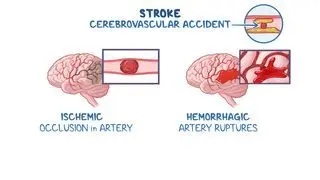
Strokes impacting the cerebellum can cause DDK. This usually occurs as a result of a blocked blood vessel preventing oxygen flow to the cerebellum. The resulting low oxygen levels can cause significant damage to the cerebellum and potentially lead to DDK. 

How is dysdiadochokinesia diagnosed?

Diagnosis of DDK typically requires a physical examination to assess motor control and cerebellar function. A common method to test rapid alternating movement involves the individual starting with the palm of one hand resting on a flat surface. They are then asked to flip their hand repeatedly, alternating between having the palm face down and then face up.  

While assessing for DDK, other exams can also be done to test general cerebellar function including the Romberg test which requires the individual to stand with their heels together and eyes closed. If the individual has trouble balancing, it may indicate cerebellar dysfunction. Finally, the Stewart Holmes rebound test requires the individual to push against resistance, which is then suddenly removed. The examiner will assess how well the individual can control their balance after the resistance is taken away. 

Typically, further testing is done to determine the underlying cause. After completing a thorough physical examination and medical history review, blood tests may be performed to detect potential vitamin deficiencies, toxins, autoimmune antibodies, lipids, or changes in hormone levels. A full blood cell count may also be performed to help assess possible underlying conditions. Imaging techniques, such as computerized tomography (CT) scans of the head or magnetic resonance imaging (MRI) of the brain, may also be required to determine the source of cerebellar dysfunction. Finally, if genetic disorders are suspected, providers may recommend genetic testing. 

How is dysdiadochokinesia treated?

Treatment for DDK largely focuses on treating the underlying cause. For example, if a cerebellar stroke is the cause, the individual may be prescribed medications (e.g., anti-hypertensive or anti-coagulation medications) to prevent future strokes. Once the underlying condition is managed, clinicians may work on resolving the associated symptoms that one may experience with DDK such as poor balance or difficulty writing and speaking. Oftentimes, physical therapy will be recommended, such as balance exercises, strength training, and other exercises to improve motor function. In some cases, speech and occupational therapy may also be beneficial.  

What are the most important facts to know about dysdiadochokinesia?

Dysdiadochokinesia (DDK) refers to the inability to perform coordinated, rapid muscle movements. DDK is often a symptom related to an underlying problem impacting the cerebellum. The cerebellum is the portion of the brain that controls balance, coordination, and complex tasks. When this area of the brain is damaged, the individual may have difficulty with fast, alternating motions. Clinicians can diagnose DDK using a variety of tests that assess motor function. They may also need to perform additional imaging and blood work to evaluate the underlying cause. Treatment will largely depend on resolving the underlying cause but may also include the management of symptoms through physical, occupational, or speech therapy 

Key Takeaways

Definition 

Dysdiadochokinesia (DDK) is the inability to perform rapid, alternating movements. 

Causes 

- Acquired cerebellar dysfunction 

- Metabolic dysfunction  

- Vascular etiologies  

- Brain cancer  

- Infections   

- Inflammatory diseases   

- Psychiatric conditions 

- Medications, recreational drugs, alcohol 

- Vitamin deficiencies in vitamins 

- Genetic cerebellar dysfunction 

- Friedreich ataxia  

- Spinocerebellar muscle atrophy  

- Huntington disease 

Association with Stroke 

- Blocked blood flow to the cerebellum can cause DDK 

Diagnosis

- Physical examination  

- Lab tests 

- Imaging 

- Genetic testing 

Treatment

- Treat the underlying cause 

- Resolve associated symptoms 

- Physical therapy 

- Occupational therapy 

- Speech therapy 

Students say Osmosis is 100% worth it

Because Osmosis saves them time. Lowers stress. And actually helps them remember when it counts.

I used Osmosis to prepare for my first medical school licensing exam! Super helpful and interactive for people who may not do great with just pages of text info!

Cecilia Ruiz

Cecilia Ruiz

MD student

Sayan Misra

I have used Osmosis for about four years. Best thing I have ever used for my medical studies.

Sayan Misra

Sayan Misra

Med student

Osmosis videos are superior because they define simple concepts, tell a story with a clear progression, and provide context.

Jay Pate

Jay Pate

Dental student

References


Algahtani HA, Fatani AN, Shirah BH, Algahtani RH. Hashimoto`s encephalopathy presenting with progressive cerebellar ataxia. Neurosciences (Riyadh). 2019;24(4):315-319. doi:10.17712/nsj.2019.4.20190016  


Brendel B, Synofzik M, Ackermann H, et al. Comparing speech characteristics in spinocerebellar ataxias type 3 and type 6 with Friedreich ataxia. J Neurol. 2015;262(1):21-26. doi:10.1007/s00415-014-7511-8 


Casella G, Bordo BM, Schalling R, et al. Neurological disorders and celiac disease. Minerva Gastroenterol Dietol. 2016;62(2):197-206.  


Pereira AC, Brasolotto AG, Berretin-Felix G, Padovani CR. Diadococinesia oral e laríngea em pacientes pós-acidente vascular encefálico [Oral and laryngeal diadochokinesia in post cerebrovascular accident patients]. Pro Fono. 2004;16(3):283-292.  


Tjaden K, Watling E. Characteristics of diadochokinesis in multiple sclerosis and Parkinson's disease. Folia Phoniatr Logop. 2003;55(5):241-259. doi:10.1159/000072155 


Tran H, Nguyen KD, Pathirana PN, et al. A comprehensive scheme for the objective upper body assessments of subjects with cerebellar ataxia. J NeuroEngineering Rehabil. 2020;17:162. doi:10.1186/s12984-020-00790-3.