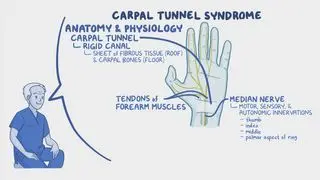
Treatment for benediction sign involves managing and treating the cause of median nerve damage. In cases of mild compression or injury, this often involves activity modification (e.g., avoiding repetitive forearm movements that worsen the symptoms), as well as the use of non-steroidal anti-inflammatory drugs (NSAIDs), such as aspirin or ibuprofen, to prevent worsening of symptoms and help control pain. In some cases, the use of an elbow or wrist brace may be helpful to reduce nerve strain.
Nerve decompression surgery may be performed in severe injuries or if conservative measures are not effective. The goal of decompression surgery is to release pressure on the nerve by removing fibrous bands, releasing tight muscles (e.g., pronator teres), or widening the nerve passage. In cases of traumatic nerve injuries, surgery may involve repairing severed nerves, which may be done by connecting both ends of the nerve directly or using a graft if the gap is too large to be repaired.
In addition, individuals may benefit from physical or occupational therapy to help to strengthen and stretch the forearm and hand muscles. Depending on the severity of the injury, muscle strength and sensation may not be completely recovered with therapy. Even with appropriate treatment, nerve injuries can take months to heal completely, whereas severe trauma can result in permanent dysfunction if not repaired early.