


Manometry · What Is It, When Is It Performed, and More

Published: Mar 30, 2026
Author: Lily Guo, MD
Editor: Alyssa Haag, MD
Editor: Józia McGowan, DO
Editor: Kelsey LaFayette, DNP, ARNP, FNP-C
Illustrator: Abbey Richard, MSc
7-day free trial

Go deeper with Osmosis

Osmosis is a learning platform with videos, questions, and AI tools to help you master topics like this.

4.8 · 12,000+ reviews
Watch quick, visual videos
Practice with Qbank-style questions
Use AI to explain, quiz, and review
Study anytime with the mobile app
Start free trial

No credit card · Cancel anytime

What is manometry?

Manometry is a diagnostic test that evaluates the pressure and constriction of muscles within various parts of the gastrointestinal tract. Most commonly, manometry is used to evaluate for disorders of the esophagus, a test known as esophageal manometry or an esophageal motility study. During esophageal manometry, a thin, flexible tube, or catheter, is used to measure the pressure generated by the upper and lower esophageal sphincters. The sphincters are round, striated muscles that help prevent the entry of air into the stomach or reflux of gastric contents into the esophagus.   

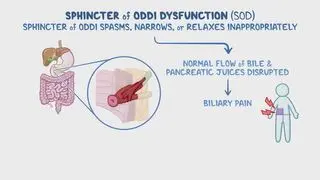
Non-esophageal manometry includes tests such as anorectal manometry, which evaluates disorders of the rectum and anal sphincter; and sphincter of Oddi manometry which assesses the muscle controlling bile flow from the bile ducts into the small intestine. The sphincter of Oddi is a muscular valve located where the bile duct and pancreatic duct empty into the duodenum, which is the first part of the small intestine. 

Learn deeper with Osmosis

Master this topic faster with videos, questions, and AI.

Used by 8M+ healthcare learners.

Start free trial

No credit card · Cancel anytime

What are the indications for performing manometry?

Esophageal manometry is primarily indicated for evaluating symptoms of esophageal dysfunction such as difficulty swallowing (i.e., dysphagia) or pain when swallowing (i.e., odynophagia). It is also indicated for heartburn, chest pain, and frequent regurgitation of food. It may also be performed before a fundoplication surgery, also known as anti-reflux surgery,  which is done to treat symptoms of gastroesophageal reflux disease (GERD). Esophageal manometry may also be used to assess motility disorders of the esophagus, such as achalasia, which is a swallowing disorder where esophageal muscles fail to contract properly; diffuse esophageal spasm, which is when the esophagus muscles contract in an uncoordinated manner; or scleroderma, an autoimmune disease resulting in the smooth muscle of the esophagus being replaced with fibrous scar tissue 

In contrast, anorectal manometry may be performed in an individual with chronic constipation or fecal incontinence (i.e., the inability to hold stool). It can be used to diagnose conditions such as Hirschsprung disease, which is a congenital defect resulting in loss of nerves in the large intestine; injury to the anus or rectum; and irritable bowel syndrome, a condition associated with altered bowel movements. Sphincter of Oddi manometry is indicated when an individual experiences abdominal pain that is thought to be related to the bile duct due to either stenosis (i.e., narrowing) or dyskinesia (i.e., abnormal contraction) of the sphincter of Oddi 

How is manometry performed?

Esophageal manometry is performed under the guidance of a trained health professional and typically takes about 30 to 45 minutes. Typically, eating or drinking should be avoided for at least 6 hours before the test. During the procedure, the individual is awake and initially sitting in an upright position. A numbing gel is applied to the nostril and a numbing spray is applied to the back of the throat to ease discomfort. A pressure-sensitive catheter is guided through the nostril into the back of the throat while the individual is actively swallowing. Once the catheter enters the stomach, the individual is reclined so they are lying on their back. They are then asked not to swallow as the baseline pressure is recorded. The individual will then be asked to take small sips of water and swallow at various intervals to measure muscle contractions and relaxation. During the test, the catheter may be positioned to allow the pressure sensors to measure different parts of the esophagus. After the test is complete, the catheter is removed and one can return home and perform normal daily activities. While the risk is very low, manometry may be associated with arrhythmia (i.e., an irregular heartbeat) as a stress response; aspiration (i.e., inhalation of stomach contents); or esophageal perforation if the tube penetrates the esophageal wall. Individuals may experience a sore throat or nasal congestion after esophageal manometry.  

Similar to esophageal manometry, anorectal manometry is relatively non-invasive and is a 30-minute outpatient procedure. During the procedure, a small catheter with a deflated balloon is inserted into the anus and rectum. The balloon is inflated and deflated while the individual is asked to squeeze, relax, push, or cough, while pressure measurements are taken. Sphincter of Oddi manometry is more invasive and often performed under sedation by highly trained gastroenterologists as part of an ERCP (i.e., endoscopic retrograde cholangiopancreatography), a procedure that detects the presence of stones, tumors, or narrowing in the biliary and pancreatic ducts.

How are the results of manometry interpreted?

The test results of esophageal manometry help identify abnormal patterns of muscle contraction and relaxation in the esophagus. For example, if an individual has gastroesophageal reflux disease, their lower esophageal sphincter may be weak resulting in stomach acid flowing backward. If they have achalasia, the manometry may show high pressure in the lower esophageal sphincter at rest, failure of the lower esophageal sphincter to relax after swallowing, and an absence of peristaltic contractions in the lower esophagus. Alternatively, if an individual has diffuse esophageal spasms, manometry typically shows simultaneous contractions of the esophagus with greater than 30% of swallows and normal peristalsis. Lastly, those with scleroderma may have decreased lower esophageal sphincter pressure and absent or ineffective peristalsis of the distal esophagus 

Non-esophageal manometry may show decreased anal sphincter tone in those with injuries to the anus or rectum affecting the nerves and/or muscles. If the rectal muscles and sphincter are not able to relax when the balloon is inflated, the individual may have Hirschsprung disease resulting in paralysis of the muscles. Those with irritable bowel syndrome may be either more or less sensitive to changes in pressure from the balloon, or have a more stiff rectum requiring higher pressures to inflate the balloon on manometry. If there is a sphincter of Oddi dysfunction, manometry may show higher pressures on average compared to those without dysfunction.  

What are the most important facts to know about manometry?

Manometry is a diagnostic test that evaluates gastrointestinal muscle function by measuring pressures and contractions of certain muscles. It is particularly useful in diagnosing esophageal disorders such as dysphagia, gastroesophageal reflux disease, and motility disorders like achalasia, diffuse esophageal spasm, and scleroderma. Anorectal manometry may be indicated for chronic constipation and fecal incontinence, and sphincter of Oddi manometry for bile duct-related abdominal pain. The procedure typically involves a thin, pressure-sensitive catheter inserted through the relevant body part to measure pressures at various points. Results from manometry help identify abnormalities in muscle contraction and sphincter pressures to help guide the diagnosis and treatment of gastrointestinal disorders.  

Key Takeaways

Definition 

Manometry is a diagnostic test that evaluates the pressure and constriction of muscles within various parts of the gastrointestinal tract. 

Types 

 - Esophageal manometry (most common use)  

 - Measures pressure generated by upper and lower esophageal sphincters  

 - Non-esophageal manometry, e.g.:  

 - Anorectal manometry  

 - Sphincter of Oddi manometry  

Indications  

 - Esophageal manometry:  

 - Symptoms of esophageal dysfunction:  

 - Dysphagia 

 - Odynophagia  

 - Heartburn  

 - Chest pain  

 - Frequent food regurgitation  

 - Before fundoplication  

 - Motility disorders assessment (e.g., achalasia; diffuse esophageal spasm; scleroderma)  

 - Anorectal manometry:  

 - Chronic constipation  

 - Fecal incontinence  

   Can help diagnose Hirschsprung disease; anus/rectum injury; IBS  

 - Sphincter of Oddi manometry:  

 - Abdominal pain though to be related to the bile duct  

Technique 

 - Esophageal manometry:  

 - Transnasal catheter measures esophageal pressure during swallowing 

 - Fast ≥6 hours before the test; after, resume normal activity; mild throat/nasal discomfort possible 

 - Anorectal manometry:  

 - Rectal catheter with balloon measures pressures during squeeze/relax/push 

 - Sphincter of Oddi manometry: more invasive; performed during ERCP under sedation to assess biliary/pancreatic ducts 

Interpretation 

 - Esophageal manometry:  

 - Gastroesophageal reflux disease: weak esophageal sphincter → acid backflow  

 - Achalasia:  

 - High pressure and failure to relax at swallowing in lower esophageal sphincter 

 - Absence of peristaltic contractions in lower esophagus  

 - Diffuse esophageal spasms: simultaneous contractions of the esophagus + normal peristalsis  

 - Scleroderma:  

 - Decreased lower esophageal sphincter pressure  

 - Absent/ineffective peristalsis of the distal esophagus  

 - Anal manometry:  

 - Injuries to anus/rectum: decreased anal sphincter tone 

 - Hirschsprung disease: sphincter failure to relax 

 - Irritable bowel syndrome: altered rectal sensitivity (increased or decreased) and/or stiffer rectum requiring higher inflation pressures 

 - Sphincter of Oddi: higher pressure  

Students say Osmosis is 100% worth it

Because Osmosis saves them time. Lowers stress. And actually helps them remember when it counts.

I used Osmosis to prepare for my first medical school licensing exam! Super helpful and interactive for people who may not do great with just pages of text info!

Cecilia Ruiz

Cecilia Ruiz

MD student

Sayan Misra

I have used Osmosis for about four years. Best thing I have ever used for my medical studies.

Sayan Misra

Sayan Misra

Med student

Osmosis videos are superior because they define simple concepts, tell a story with a clear progression, and provide context.

Jay Pate

Jay Pate

Dental student

References


Anorectal Manometry. www.hopkinsmedicine.org. Published April 19, 2022. Accessed March 19, 2024. https://www.hopkinsmedicine.org/health/treatment-tests-and-therapies/anorectal-manometry#:~:text=What%20is%20anorectal%20manometry%3F 


Cheon YK. How to interpret a functional or motility test - Sphincter of oddi manometry. J Neurogastroenterol Motil. 2012 Apr;18(2):211-7. doi: 10.5056/jnm.2012.18.2.211. Epub 2012 Apr 9. PMID: 22523732; PMCID: PMC3325308. 


Hogan WJ. Diagnosis and treatment of sphincter of oddi dysfunction. Gastroenterol Hepatol (NY). 2007 Jan;3(1):31-5. PMID: 21960774; PMCID: PMC3096116. 


Mascarenhas A, Mendo R, O'Neill C, Franco AR, Mendes R, Simão I, Rodrigues JP. Current approach to dysphagia: A review focusing on esophageal motility disorders and their treatment. GE Port J Gastroenterol. 2023 Mar 8;30(6):403-413. doi: 10.1159/000529428. PMID: 38476159; PMCID: PMC10928869.