
Pressure Ulcer Stages · What Are They, Definition of Stages, and More

Published: Mar 31, 2026
Author: Lily Guo, MD
Editor: Alyssa Haag, MD
Editor: Emily Miao, MD, PharmD
Editor: Kelsey LaFayette, DNP, ARNP, FNP-C
Illustrator: Jung Hee Lee, MScBMC
7-day free trial

Go deeper with Osmosis

Osmosis is a learning platform with videos, questions, and AI tools to help you master topics like this.

4.8 · 12,000+ reviews
Watch quick, visual videos
Practice with Qbank-style questions
Use AI to explain, quiz, and review
Study anytime with the mobile app
Start free trial

No credit card · Cancel anytime

What is a pressure ulcer?

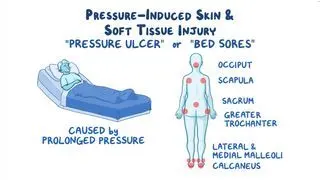
A pressure ulcer, also known as a pressure sore or decubitus ulcer, refers to a skin lesion that occurs due to prolonged immobility, for example in individuals who are wheelchair or bed bound (e.g., following a spinal cord injury).

Pressure ulcers occur as a result of skin breakdown due to prolonged pressure, friction, moisture, or traction on the skin. Common sites for pressure ulcers include bony prominences on the body, such as the sacrum (i.e., the wedge- shaped bone supporting the pelvis); ischial tuberosity (i.e., part of the pelvis that absorbs the weight of one sitting); heels of the feet; elbows; and shoulders.

In addition to prolonged immobility, being incontinent of stool or urine and using incontinence products can predispose individuals to pressure ulcers due to constant exposure to moisture and irritation. Nutrition can also play a role in wound healing with poor nutrition predisposing individuals to non-healing pressure ulcers. Pressure ulcers are common in hospitalized individuals, such that hospitals often have protocols for pressure injuries prevention.

Learn deeper with Osmosis

Master this topic faster with videos, questions, and AI.

Used by 8M+ healthcare learners.

Start free trial

No credit card · Cancel anytime

What are the stages of a pressure ulcer?

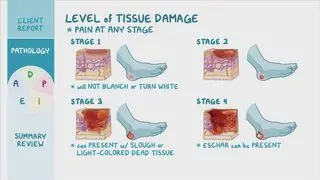
Pressure ulcers are commonly categorized based on depth of the ulcer and the layers of the skin affected. In the United States, the National Pressure Injury Advisory Panel (NPIAP) system is widely used. According to this system, there are four stages of pressure ulcers, with stage 1 pressure ulcers being the mildest, whereas stage 4 pressure ulcers are the most severe. Some pressure ulcers may be unstageable due to slough or eschar (i.e., necrotic, dead tissue) covering the wound bed that prevents clinicians from noting the depth of the ulcer.

The NPIAP guidelines also cover deep tissue injuries, which are persistent, non-blanchable erythematous areas of skin that can be intact, non-intact, or appear as blood-filled blisters. The condition can remain invisible for up to 48 hours and then progresses rapidly to full-thickness skin and soft tissue damage.

What is a stage 1 pressure ulcer?

A stage 1 pressure ulcer refers to an ulcer that appears as non-blanchable (i.e., skin discoloration that doesn’t fade when pressed on) erythema. The skin itself is intact with stage 1 ulcers. In lighter skin tones, erythema may be present, whereas in darker skin tones purpura (i.e., blue or purple discoloration) may be present. The skin may feel warm and there can be changes in sensation such as burning or itching.

To prevent stage 1 pressure ulcers from worsening, one can use a foam mattress or a mattress filled with gel or air which helps with reducing pressure while lying down. Soft pillows can be placed between the knees and ankles or under the heels and calves to alleviate pressure. One can also place pads between the mattress and body to absorb moisture if they are bed bound.

In the hospital setting, clinicians often perform risk assessments for hospitalized individuals to assess a patient's risk of developing a pressure ulcer. Oftentimes, frequent repositioning of patients is recommended to reduce the occurrence of pressure ulcers by increasing blood flow to the skin, and if applicable, frequent incontinence pad changes to reduce irritation and moisture from urine and feces. Additionally, clinicians often provide skin care and cleansing to patients while hospitalized to minimize the risk of pressure ulcers.

What is a stage 2 pressure ulcer?

A stage 2 pressure ulcer involves partial-thickness disruption of the epidermis (i.e., the outermost layer of skin) and dermis (i.e., the middle layer of skin). It can appear as a shallow ulcer with a red to pink wound bed, or as an intact or ruptured blister. To treat stage 2 pressure ulcers, the open wound can be cleaned, and wound dressings can be applied, such as foam silicone dressings, gauze, silver products (e.g., silver sulfadiazine, silver alginate), or honey. Negative pressure wound therapy may also be used, where a porous foam dressing is placed on the ulcer and covered with air-tight adhesive film. A vacuum is then used to suction out the air over the wound, to create an environment that can help reduce inflammatory exudate and promote formation of granulation tissue.

What is a stage 3 pressure ulcer?

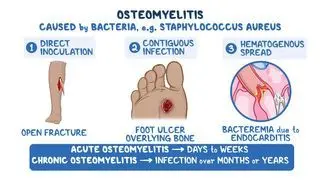
A stage 3 pressure ulcer refers to full-thickness loss of skin extending to the subcutaneous layer (i.e., the deepest layer of skin containing fat and connective tissue). However, bone, tendon, and muscle are not exposed. The lesion may have slough or eschar and can be foul-smelling, especially if it’s infected. Complications from stage 3 and 4 pressure ulcers can be life-threatening, especially if infection spreads to deeper tissues (i.e., necrotizing soft tissue infections); bone, resulting in osteomyelitis; and to the bloodstream, resulting in bacteremia. Often, these ulcers are polymicrobial, which means they contain both aerobic and anaerobic bacteria, however antibiotics are not recommended unless there is clinical evidence of skin or soft tissue infection or systemic signs of infection (e.g., fever, hypotension, leukocytosis). When bone is exposed, it’s often colonized with polymicrobial organisms, but this may not necessarily always lead to osteomyelitis.

What is a stage 4 pressure ulcer?

A stage 4 pressure ulcer is the most severe form of pressure ulcer and involves full-thickness skin loss extending through all layers of the skin, down to the muscle and bone. Tendons and joints may also be involved. Stage 4 pressure ulcers that are purulent may benefit from mechanical debridement to remove necrotic tissue and biofilms that prevent wound healing. Alternatively, if the wound is non-purulent or has a layer of dry eschar, debridement is usually not recommended. The depth and severity of the ulcer determines whether surgical management is required. After the ulcer is cleaned and debrided, skin grafts or flap reconstruction might be performed to fill the dead space overlying the ulcer. There are higher rates of failure as the staging of the ulcer progresses.

Lastly, the presence of severe ulcers can predispose individuals to fluid and protein loss. Up to 50 grams of body protein can be lost daily due to a draining ulcer, which can result in hypoproteinemia or malnutrition. Proper nutrition and protein supplementation is critical for promoting wound healing in those with severe pressure ulcers.

What are the most important facts to know about pressure ulcer stages?

Pressure ulcers are skin lesions that form due to pressure on bony prominences of the body, often from long term immobility. Pressure ulcers staged based on the severity and depth of tissue involvement and damage, and include Stage 1 through 4, with some ulcers deemed unstageable.
 
Stage 1 pressure ulcers are characterized by non-blanchable erythema on intact skin, with possible changes in skin sensation.
 
Stage 2 pressure ulcers are marked by loss of the epidermis and dermis, appearing as a shallow ulcer or blister.
 
Stage 3 pressure ulcers progress to full-thickness skin loss, reaching the subcutaneous layer, potentially with skin sloughing and malodor.
 
Stage 4 pressure ulcers are the most severe, with full-thickness loss down to muscle, bone, or tendons, possibly requiring surgical debridement.
 
Management of pressure ulcers can depend on the staging of the ulcer but primarily focuses on the prevention of pressure ulcers and halting progression of worsening ulcers. This includes frequent pressure redistribution, moisture control, and nutritional support.
 
In more advanced stages, wound dressings, debridement, and surgical reconstruction may play a role in treating pressure ulcers.
Students say Osmosis is 100% worth it

Because Osmosis saves them time. Lowers stress. And actually helps them remember when it counts.

I used Osmosis to prepare for my first medical school licensing exam! Super helpful and interactive for people who may not do great with just pages of text info!

Cecilia Ruiz

Cecilia Ruiz

MD student

Sayan Misra

I have used Osmosis for about four years. Best thing I have ever used for my medical studies.

Sayan Misra

Sayan Misra

Med student

Osmosis videos are superior because they define simple concepts, tell a story with a clear progression, and provide context.

Jay Pate

Jay Pate

Dental student

References


Edsberg, L. E., Black, J. M., Goldberg, M., McNichol, L., Moore, L., & Sieggreen, M. (2016). Revised National Pressure Ulcer Advisory Panel Pressure Injury Staging System: Revised Pressure Injury Staging System. J Wound Ostomy Continence Nurs, 43(6), 585-597. doi:10.1097/won.0000000000000281 


Qaseem A, Humphrey LL, Forciea MA, Starkey M, Denberg TD; Clinical Guidelines Committee of the American College of Physicians. Treatment of pressure ulcers: a clinical practice guideline from the American College of Physicians. Ann Intern Med. 2015 Mar 3;162(5):370-9. doi: 10.7326/M14-1568. PMID: 25732279. 


Chou R, Dana T, Bougatsos C, Blazina I, Starmer AJ, Reitel K, Buckley DI. Pressure ulcer risk assessment and prevention: a systematic comparative effectiveness review. Ann Intern Med. 2013 Jul 02;159(1):28-38. 


Mervis JS, Phillips TJ. Pressure ulcers: Pathophysiology, epidemiology, risk factors, and presentation. J Am Acad Dermatol. 2019 Oct;81(4):881-890.