Spirometry test results are interpreted by assessing the shape of the flow–volume curve and comparing the individual’s results with reference values obtained from populations matched for the same age, sex, height, and ethnicity.
The main spirometric indices are the FVC, or forced vital capacity, which is the maximum amount of air a person can forcibly
exhale from their lungs after a maximum inhalation; and the FEV1, which is the volume of air
exhaled during the first second of this forced
exhalation. Other values, such as forced expiratory flow between 25% and 75% of FVC (FEF25–75%) and
forced expiratory volume in 6 seconds (FEV6), are not commonly used as they have limited clinical value.
There are two main types of abnormal ventilatory patterns: obstructive and restrictive. In
obstructive lung diseases, like
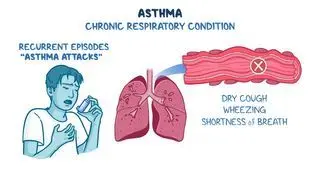
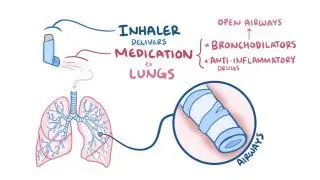
asthma or COPD, there is a significant reduction in FEV1 due to the narrowing of the airways, which hinders how fast air can leave the lungs during
expiration. Conversely, FVC is usually normal or only slightly decreased, which results in a disproportionate decrease in FEV1 relative to FVC. A FEV1/FVC ratio of less than 0.7 is considered the hallmark of obstructive lung disease and the degree of FEV1 reduction can be used to determine the severity of the
airway obstruction.
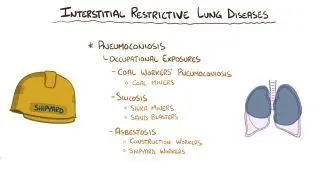
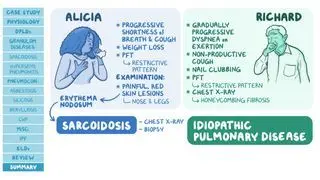
In restrictive lung diseases, like pulmonary fibrosis or interstitial lung diseases, there is a decrease in the amount of air the lungs can hold, which results in a decreased forced vital capacity, or FVC. Because there is less air in the lungs, the volume of air exhaled during the first second of exhalation, or FEV1, is reduced as well. As a result, the FEV1/FVC ratio, which is normally between 0.7 and 0.8, usually stays the same because both volumes decrease proportionally.
Both obstructive and restrictive lung diseases can change the spirometry flow-volume curve, which is used to show how
airflow relates to
lung volume. In obstructive lung diseases, the flow-volume curve is typically concave, whereas in restrictive lung diseases, it has a normal shape but is smaller than usual.