Tertiary Syphilis

What Is It, Causes, Treatment, and More

Author: Anna Hernández, MD
Editor: Alyssa Haag, MD
Editor: Józia McGowan, DO
Editor: Kelsey LaFayette, DNP, ARNP, FNP-C;
Editor: Mary Roberts, MSN, RN
Editor: Arianna Succi, MD
Illustrator: Jillian Dunbar
Copyeditor: Sadia Zaman, MBBS, BSc
Modified: Oct 09, 2025

What is tertiary syphilis?

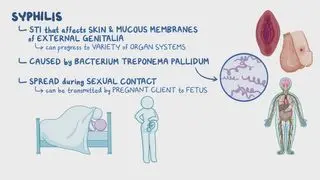
Tertiary syphilis is the third and final stage of syphilis, a sexually transmitted disease (STD) that progresses through different stages if left untreated.  

 Syphilis has been called “The Great Pretender”, as its symptoms can mimic many other diseases. The first stage is called primary syphilis, and it usually starts 1 to 3 weeks after the initial infection. This stage is characterized by the formation of a painless sore at the inoculation site, called a chancre. The following stage, secondary syphilis, occurs about 6 to 12 weeks after the initial infection. During this stage, the infection spreads through the bloodstream and causes a variety of different symptoms involving the skin, mucous membranes, and lymph nodes. Common symptoms include fever, sore throat, weight loss, hair loss, and headache. More specifically, generalized lymph node enlargement (lymphadenopathy) may occur, as well as a maculopapular rash affecting the palms of the hands and soles of the feet, consisting of small, raised or flat bumps. If left untreated, secondary syphilis typically progresses to a latent phase, where the disease becomes dormant and the affected individual is asymptomatic, although serologic tests (blood tests that detect antibodies or antigens) remain positive. This phase can be classified as early latent, if it occurs within a year of infection, and late latent, if it occurs after a year. Finally, late or tertiary syphilis develops in untreated individuals years or decades after the initial infection. 

An infographic detailing tertiary syphilis.

Is tertiary syphilis contagious?

Tertiary syphilis is the only non-contagious phase of the infection. In the primary, secondary, and early latent stages, individuals with syphilis can transmit the disease through sexual contact with infectious lesions of the mucous membranes; via a contaminated blood transfusion; or via vertical transmission during pregnancy to the baby, leading to congenital syphilis.

What causes tertiary syphilis?

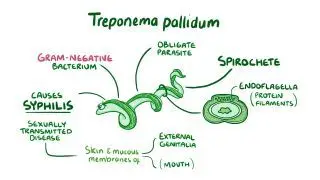
Syphilis is caused by Treponema pallidum, a spiral-shaped gram-negative bacterium that belongs to the group of spirochetes. This spirochete enters the body through contact with infected body fluids and spreads to the skin and nearby lymph nodes, from where it disseminates into the bloodstream. In the early stages of the disease, large numbers of spirochetes can be found circulating in the blood, causing the symptoms of secondary syphilis. On the other hand, in late-stage syphilis, spirochetes are mostly found in the tiny capillaries of various organs and tissues. Although there’s a relatively small number of bacteria in this stage, a severe immune response is activated, which damages the body’s own cells resulting in tertiary syphilis. In fact, the signs and symptoms found in the tertiary stage are a result of the body's own inflammatory response rather than direct damage from the spirochetes themselves.  

What are the signs and symptoms of tertiary syphilis?

Signs and symptoms of tertiary syphilis can be classified into three different forms: gummatous syphilis, late neurosyphilis, and cardiovascular syphilis.  

In gummatous syphilis, granulomatous lesions called gummas develop in the skin, bones, and organs. These lesions are a result of inflammation and contain different types of immune cells surrounded by fibrous tissue 

In late neurosyphilis, progressive damage to the posterior part of the spinal cord results in a loss of vibration sensation and proprioception (i.e., sense of the position of joints and other body parts, like the hands and feet). This type of neurological involvement is typical of the tertiary stage and is known as tabes dorsalis. In other cases, the blood vessels that supply the brain and spinal cord can be damaged, resulting in slurred speech, altered behavior, memory loss, difficulty coordinating muscle movements, and paralysis 

Finally, common manifestations of cardiovascular syphilis include inflammation of the aortic walls, which can lead to aortic aneurysms, as well as dilation of the aortic root. Dilation can cause aortic valve regurgitation (i.e., when blood leaks back through the valve leading into the aorta) 

It’s important to note that although tertiary syphilis is part of the natural history of the disease, it only develops in around one-third of individuals who don’t receive appropriate treatment. In addition, tertiary syphilis has become rare in recent years due to the effectiveness of antibiotic treatment.
How is tertiary syphilis diagnosed?

Diagnosis of tertiary syphilis begins with a thorough medical history and physical examination. Because syphilis lesions are often asymptomatic and can occur in areas of the body where they might go unnoticed, not all infections are diagnosed in their early stages.  

 If tertiary syphilis is suspected, the diagnosis is confirmed through blood tests that look for antibodies against Treponema pallidum (i.e., serological tests). These are divided into non-treponemal tests (e.g., RPR or VDRL), which detect nonspecific antibodies, and treponemal tests (e.g., FT-ABS, TPPA, MHA-TP), which detect antibodies specific to Treponema pallidum. Testing for syphilis typically begins with a non-treponemal test; if negative, syphilis may be ruled out. A positive non-treponemal test should be confirmed with a treponemal test to exclude false positive results. If the treponemal test is also positive, then the diagnosis of syphilis is confirmed. In cases of neurosyphilis, diagnosis can also be made by detecting a high leukocyte count in the cerebrospinal fluid (CSF) collected through a lumbar puncture, along with a positive CSF-VDRL test, which detects antibodies in the CSF.  

How is tertiary syphilis treated?

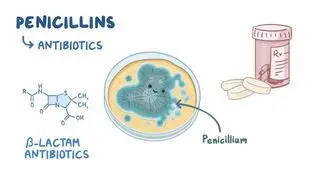
The main treatment for syphilis is the antibiotic penicillin, and the specific regimen depends upon the stage. Late syphilis, which includes late latent and tertiary syphilis, is treated with one weekly injection of penicillin for three consecutive weeks. For individuals with neurosyphilis, treatment involves higher doses of intravenous penicillin for about 10 to 14 days. Individuals who are allergic to penicillin can be treated with alternative antibiotics (e.g., doxycycline) or undergo desensitization to safely receive penicillin.

Can tertiary syphilis be cured?

Yes, with appropriate medical treatment, tertiary syphilis can be cured, and further damage prevented. However, reinfection can occur in cured individuals who continue to engage in high-risk sexual activity.

What are the most important facts to know about tertiary syphilis?

Syphilis is a STD caused by a spirochete called Treponema pallidum. The disease can progress through three stages. The first stage is localized primary syphilis, which produces painless sores called chancres. The secondary stage, also known as disseminated syphilis, causes enlarged lymph nodes and a widespread maculopapular rash. The final stage is tertiary syphilis, and it affects various organs, including the skin, nervous system, and cardiovascular system. Syphilis, including tertiary syphilis, can be diagnosed using specific blood tests (i.e., non-treponemal and treponemal tests). Treatment includes antibiotics like penicillin, along with protective measures to prevent reinfection. 

Key Takeaways

Definition 

Third and final stage of syphilis, a sexually transmitted disease that progresses through different stages if left untreated. It’s the only non-contagious phase of the infection. 

Causes 

- Treponema pallidum infection (gram-negative spirochete) → severe immune response → tissue damage 

Signs and Symptoms 
 

- Gummatous syphilis 

- Late neurosyphilis 

- Cardiovascolar syphilis 

Diagnosis 
 

- Medical history and physical examination  

- Serology 

     - Non-treponemal tests 

     - Treponemal tests 

- Lumbar puncture → CSF-VDRL, leukocytes count 

Treatment 

- Treatment is curative 

- Antibiotics (first line: penicillin) 

- Regiment depends on stage 

References


Centers for Disease Control and Prevention. About Syphilis. https://www.cdc.gov/syphilis/about/index.html. Published January 30, 2025. Accessed July 25, 2025.  


Ghanem, KG, Hook, EW. Syphilis. In: Goldman, L, Schafer, AI eds. Goldman-Cecil Medicine 26th ed. Philadelphia, PA: Elsevier: 2020: 1983-1989. 


Hook, EW. Syphilis. The Lancet. 2017;389(10078): 1550–1557. doi:10.1016/s0140-6736(16)32411-4 


World Health Organization. WHO Guidelines for the Treatment of Treponema pallidum (Syphilis). https://www.ncbi.nlm.nih.gov/books/NBK384904/. 2016. Accessed October 8, 2025.