
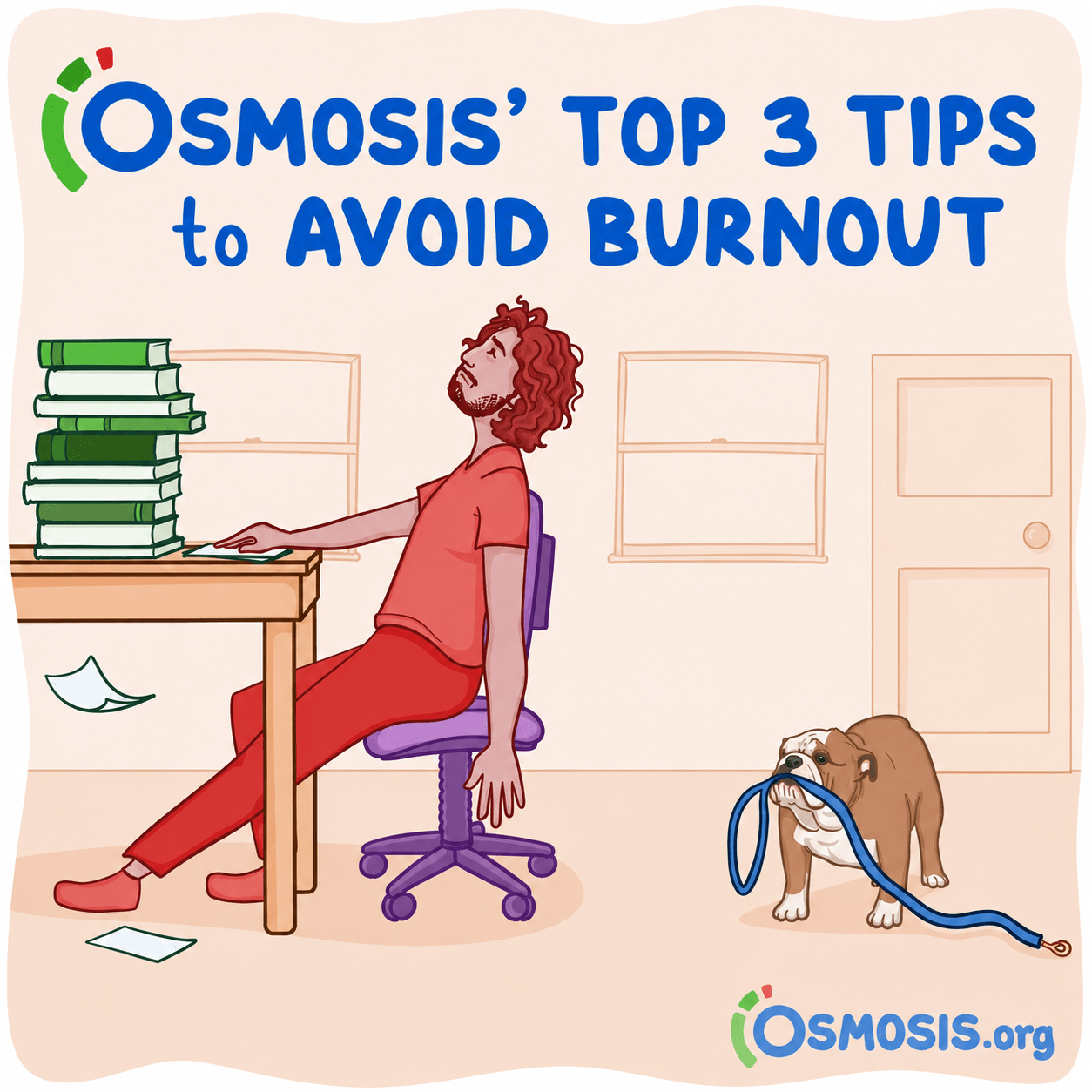
The life of a healthcare student, regardless of the program they’re in, is stressful at the best of times. Whether you’re on your way to becoming a health professional, or already on the job, it’s important to be aware of the signs of burnout. Osmosis is here to provide tips to help you find balance before burnout becomes an issue.
How do you identify burnout?
Burnout is a physical, mental, and emotional collapse. It’s more than the result of long hours worked: it’s also the stress associated with that work. Exhaustion leads to a lack of interest, and, potentially, a decline in job performance. Left unchecked, burnout can wreak havoc on more than one aspect of your life. Here are some tips to avoid burnout.

Tip 1: Use Hacks
Make sure to use hacks (helpful tricks or processes), to save time. There are a lot of hacks to deal with the bureaucracy of medicine.
For example: paperwork. One of the key ways to manage your time is to use helpful hacks for your shift paperwork! Some hospitals may help you out with this by providing a medical scribe, which is someone else who writes the notes for you. And, as of 2026, there are a variety of generative AI transcription options for you (or your organization) to choose from!
If a scribe’s not an option, an alternative hack is to make a template for yourself. Take your notes and then have templates set up for each chief complaint on your computer (e.g., a template for taking notes regarding chest pain, abdominal pain, asthma, etc.) Having those templates set up ahead of time helps you fill out the paperwork easily and helps in triggering your memory to ask certain questions when talking to the patient. (Tip: most residents on the floor have their preferred template. If you ask nicely, they might share it with you!)
Another hack is to bundle your work. Meaning you should group similar tasks together. Manage all of your notes at once, do all your discharges at once, do pharmacy runs all at once. Think about what tasks are on your to-do list and which tasks can be done together to save time.

Tip 2: Set Boundaries
We’re talking personal boundaries. Practice setting a firm time to leave your shift as if you had to be somewhere each time or you need to leave to get to an event. Don’t linger. Just make sure everything is all good to go before you leave and stick to having a hard stop time. When you set very firm limits about when you arrive at the hospital/facility and when you leave, you’re helping yourself avoid burnout and lower your stress levels. You’ll have something to look forward to, you’ll be better able to relax and recharge when you’re off work, and your nervous system will be reassured that you won’t always be at the hospital.

Tip 3: Establish a Healthy Work-Life Balance
Having a solid work-life (or school-life) balance is challenging with such a busy schedule and it’s often your social life that suffers.
While you might be rolling your eyes at the advice, “managing your work-life balance” is as simple as reading for thirty minutes a day from a favorite book or taking a dance break listening to your favorite artist. Try to always do a “favorite thing” to relieve stress rather than risk frustration and the possibility of taking it out on someone else.
Balance is based on choosing little things that make you happy and save your sanity. Long walk outside, talking to friends, making a habit of calling friends or family after a stressful shift all attribute to maintaining your work-life balance. Creating little habits to have something to look forward to can help avoid burnout. (Tip: do something you enjoy first thing in the morning to start the day off on a happy note!)

Signs You May Be Experiencing Burnout
Preventing and addressing burnout is becoming a part of the workplace conversation in most industries, however, we also need to listen to ourselves and address the signs of burnout. Forbes describes 10 signs of burnout, and in addition to our suggestions, offers some ways to address it.
10 Signs of Burnout
- Exhaustion
- Lack of motivation
- Frustration, cynicism and other negative emotions
- Cognitive problems
- Slipping job or academic performance
- Interpersonal problems at home and work
- Not taking care of yourself
- Preoccupied with work when you’re not at work
- Generally decrease satisfaction
- Health problems
Burnout tends to develop gradually and show up across a variety of emotional, mental, physical, and behavioral areas of life. As itprogresses, these patterns can reduce your overall life satisfaction and contribute to physical health problems, making it important to recognize the signs early and take steps to recover. Most importantly, taking care of yourself helps you take better care of your patients. Learn more about the science of rest and recovery to avoid burnout!
Key Takeaways
- Burnout affects physical, mental, and emotional well-being and can negatively impact both personal health and patient care.
- Time-saving strategies, such as using templates and grouping similar tasks, can reduce daily workload and stress.
- Setting clear personal boundaries around work hours helps create healthier routines and reduce burnout risk.
- Maintaining a sustainable work-life balance through enjoyable daily activities supports long-term resilience.
- Recognizing the early signs of burnout and taking proactive steps to address them is essential for healthcare professionals at every stage of training and practice.

Try Osmosis today! Get your free trial now to find out why millions of clinicians and caregivers love learning by Osmosis.
Leave a Reply