
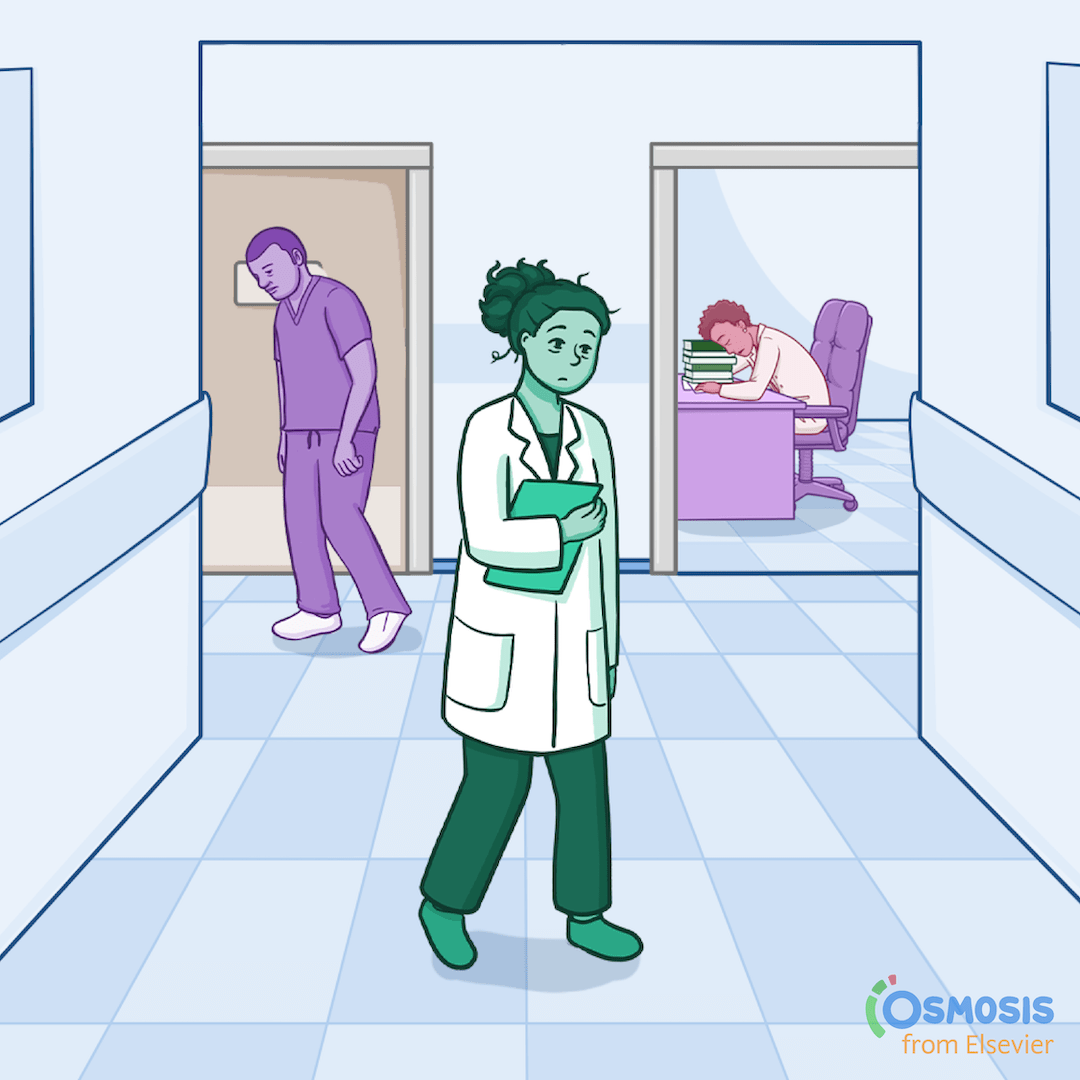
Training to become a healthcare professional is both exciting and demanding. Long hours of studying, working clinical shifts, and the constant flow of new information often result in getting less (or no) sleep. The thing is, getting enough quality sleep is one of the most important things you can do to succeed in your program. Don’t believe us? Let’s dive into how sleep boosts your ability to learn, improves your overall performance, and boosts your sense of well-being, making it vital to academic success.
What Happens When You Sleep
You’ve probably heard this fact in one of your courses: sleep isn’t just downtime for your body, it’s a fundamental physical process that helps your brain and body recover and get ready for a new day. During sleep, your brain:
- Processes and stores memories: This is how what you study gets locked in.
- Clears out toxins: Sleep helps keep your brain healthy.
- Regulates emotions: Getting enough rest supports your ability to manage daily stresses and remain calm.
For students training to be healthcare professionals, these functions are especially important because you’re constantly absorbing new information, making decisions, and managing high-pressure situations.

How Sleep Affects Learning and Memory
When you’re sleep-deprived, the ability to focus, remember details, and solve problems is negatively affected, making it much harder to complete the tasks vital to your training. Which means:
- You might struggle to recall important facts or clinical procedures.
- Your concentration during lectures or patient care can falter.
- It’s harder to think critically and make quick decisions.
Most importantly, when you practice good sleep hygiene, your memory will improve. It will enable you to apply what you’ve learned more readily. So, if you’re looking for a way to improve your academic performance, maintain your mental well-being, or stay a step ahead of your peers, remember what the research says:
- Students with better sleep quality, duration, and consistency tend to earn higher academic scores.
- Medical students who sleep well perform better in high-stakes clinical assessments.
- Adequate sleep during medical residency is linked to improved well-being and clinical performance.
Sleep and Maintaining Good Mental Health
The amount of focus and energy required to become a healthcare professional can be extraordinarily stressful, and a lack of sleep can make that stress and anxiety worse. Without enough rest, you might feel:
- More irritable or easily overwhelmed
- Less able or motivated to study or participate in personal and academic activities
- More prone to burnout and depression
When you make regular, quality sleep a priority, there’s a much higher likelihood that you’ll be emotionally regulated and resilient, enabling you to face the challenges of your day with a clear, calm mind.
Physical Health and Patient Safety
As we’re sure we’re all keenly aware, healthcare is a hands-on field where making mistakes can have serious consequences. Sleep deprivation affects your:
- Reaction time
- Coordination
- Attention to detail
The impact of a lack of sleep affects your learning but can also affect patient safety during clinical rotations. Which means prioritizing sleep helps keep you and your patients safe. That seems like a win-win situation to us!
How Much Sleep Do You Really Need?
The standard advice is to get approximately 7-9 hours of sleep every night. While that might seem impossible during extra busy training periods like clinicals, even making some basic improvements to your sleep habits can make an observable difference in your performance.

How to Get Enough Sleep as a Healthcare Professional
With the right strategies, even a super demanding schedule can include quality rest. Here are a few practices we recommend:
Create a Consistent Sleep Schedule
Do your best to go to bed and wake up at the same time every day. Yes, even on weekends. If you’re in a situation where your shift times change regularly, try gradually adjusting your sleep and wake times in small increments ahead of schedule changes. Prioritize sleep whenever you can to help your body adjust.
Limit Caffeine and Big Meals Before Bed
Research shows that drinking caffeine reduces sleep by about 45 minutes, overall, with increased effects when consumed closer to bedtime or in higher doses. In addition, eating within 4-6 hours of bedtime negatively affects the duration of sleep, so try to eat your last meal at least four hours before going to bed to help with sleep.
Unplug from All Screens
We bet you’ve heard this a hundred times, but it’s true! The blue light from our smartphones, tablets, and laptops can trick your brain into staying awake. And, unfortunately, blue light filter apps don’t help. So put your phone down and let your body prepare for a long night of rest.
Make Your Sleep Space Comfortable
Only you can speak to what makes you feel the most relaxed and comfortable at bedtime, but experts recommend that you keep your room cool, dark, and quiet for the best quality sleep. Use blackout curtains and earplugs or white noise machines if needed, especially if you’re sleeping during the day.
Practice Relaxation Techniques
Take some time to relax your mind and body before going to sleep. Here are a few meditation exercises to get started.

- Box Breathing: Inhale slowly and deeply for four seconds. Hold your breath for four seconds, then exhale slowly for four seconds, and pause for four seconds. Repeat 4–6 times to calm your nervous system and slow your heart rate. It has the added bonus of distracting you from any intrusive thoughts.
- Sleep Body Scan: While lying in bed, bring your attention to each part of your body. Start with your toes, flex that area and release, gradually making your way up to your head, consciously relaxing each area as you go.
- A “Goodnight” Mantra: Silently repeat a soothing phrase like “I am ready for rest,” or “It’s time to relax, let it all go, and sleep” with each exhale to quiet mental chatter.
- Gratitude Countdown: Mentally list five things you’re grateful for today, then slowly count down from 10 to 1 with each breath to ease into sleep.
- Alphabet Drift: Choose a calming word (like “peace” or “dream”), then for each letter in that word, quietly think of as many words as you can that start with that letter, letting your mind slow down as you go. This technique is based on the concept of “cognitive shift.”
Nap Wisely
If you’re feeling extra tired, take a short nap (15–30 minutes) before your shift to boost alertness. Try to avoid long naps, as they may interfere with your sleep cycle.
Manage Your Exposure to Light
When you’re working overnight shifts, help your brain welcome the new “day” when it’s time to get up by using light. Step outside (if the sun’s still up), or use a lightbox for ten minutes to help reset your circadian rhythm.
And if you’re changing shifts often, keep in mind that it can take several days to adjust to a new schedule, so be patient and prioritize your sleep as much as possible during these transitions.
Sleep Can Be Your Secret Weapon to Success in Healthcare
Sleep isn’t a luxury; it’s essential for thriving during the often stressful period of learning and training as well as throughout your career. Prioritizing rest helps you learn more effectively, perform at your best, and care for others safely. The most successful healthcare professionals know that taking care of patients starts with taking care of ourselves, and that begins with getting enough sleep. Its in your best interest to follow in their footsteps!
Key Takeaways
- Sleep strengthens memory, focus, and emotional regulation during training.
- Poor sleep impairs decision-making and increases risk of errors.
- Aim for 7-9 hours of quality sleep even during busy schedules.
- Consistent routines and limiting screens improve sleep quality.
- Short naps and light exposure help to manage shift work challenges.
References
- https://pmc.ncbi.nlm.nih.gov/articles/PMC7983127/
- https://www.nature.com/articles/s41586-024-07108-6
- https://pmc.ncbi.nlm.nih.gov/articles/PMC7181893/
- https://pmc.ncbi.nlm.nih.gov/articles/PMC11989636/
- https://pmc.ncbi.nlm.nih.gov/articles/PMC12014645/
- https://pubmed.ncbi.nlm.nih.gov/15509817/
- https://www.sciencedirect.com/science/article/pii/S0091743519301501
- https://pmc.ncbi.nlm.nih.gov/articles/PMC9092657/
- https://www.sciencedirect.com/science/article/pii/S0002939421000726
- https://www.sciencedirect.com/science/article/pii/S0360132318300325
- https://pmc.ncbi.nlm.nih.gov/articles/PMC7769998/

Try Osmosis by Elsevier today! Access your free trial and discover why millions of current and future clinicians and caregivers love learning with us.
Leave a Reply