Assessment - Nutrition: Nursing
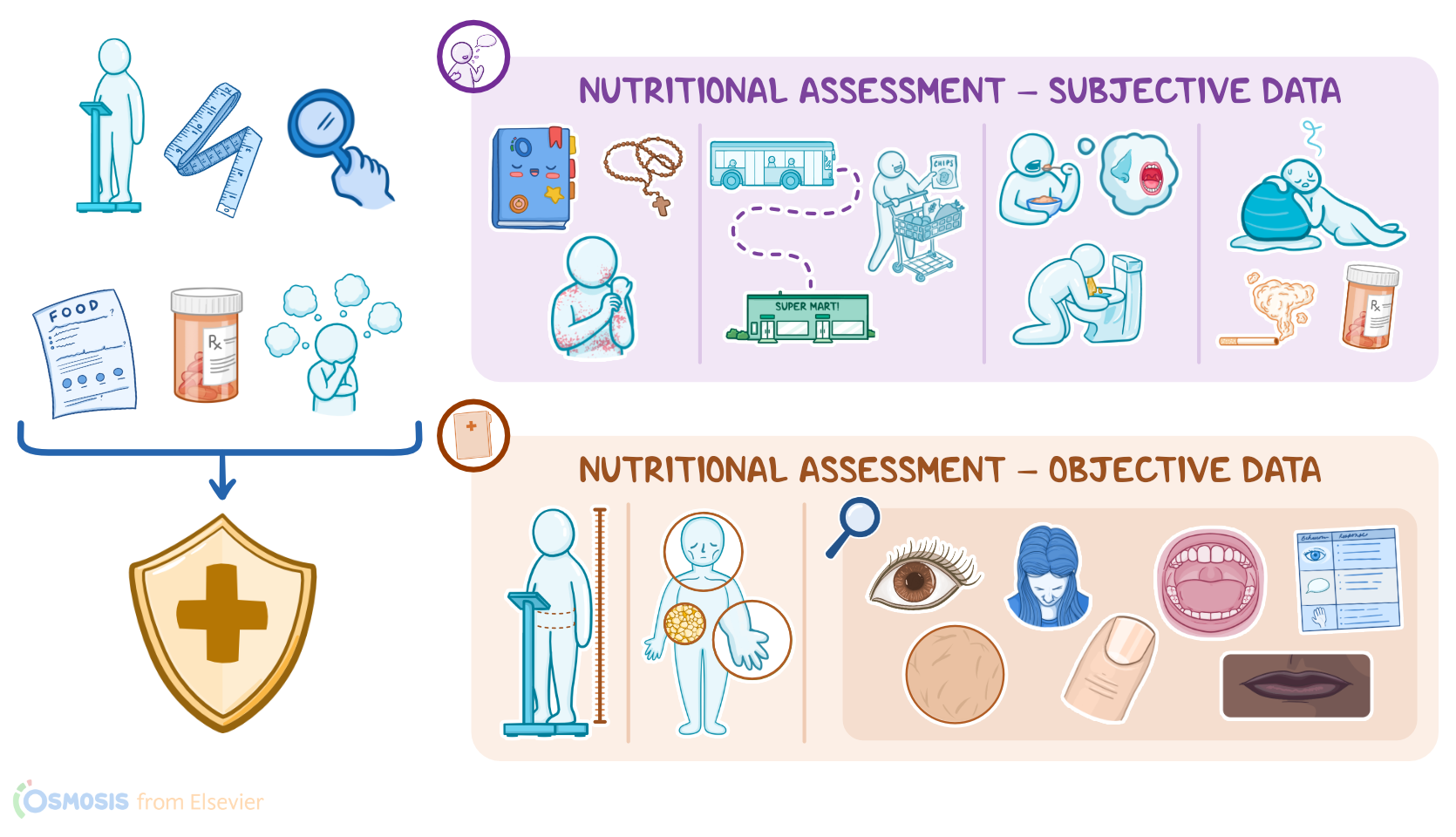
Nutritional assessment involves the collection and analysis of subjective data, or the information your patient shares with you, and objective data, or the information you observe. As the nurse, you’ll use information about your patient’s nutritional status, which is the balance of nutrient requirements and intake, to provide insight into your patient’s overall health.
Start your collection of subjective data by gathering information about your patient’s eating patterns and access to food. You can use tools such as a 24-hour diet recall, where your patient lists everything they have had to eat or drink in the past 24 hours; a food frequency questionnaire, that estimates how often they eat certain foods; or a food diary, where they keep track of everything consumed over a certain period. Then, ask about religious or cultural diet traditions or restrictions, as well as food allergies or intolerances that could influence their eating patterns.
Lastly, be sure to gather information about their access to transportation to a grocery store, who shops for and prepares their food, and any difficulties obtaining or preparing food.
Next, determine if there are any physiological factors that can impair their nutritional status. Ask about changes in appetite, taste, smell, chewing, or swallowing; gastrointestinal issues such as nausea, vomiting, diarrhea, or constipation; and psychological symptoms like depression or anxiety.
Inquire about any chronic medical conditions such as diabetes or inflammatory bowel disease, as well as acute conditions such as a recent trauma or surgery.
Also gather information about any diet modifications, exercise regimens, medications, or surgery used to resolve weight-related problems; and ask them if they’ve recently experienced unintentional weight loss. Also, determine if they are taking any medications that can impact digestion, absorption, and metabolism of nutrients, including laxatives, steroids, or anticonvulsants; as well as any supplements they are using. Finally, determine if they use any substances that can impair nutrition, including tobacco, alcohol, or illicit drugs.
Alright, next you’ll collect objective data about your patient’s nutritional status, starting with anthropomorphic measurements, which are measurements of body composition. First, calculate their body mass index, or BMI, by dividing their weight in kilograms by their height in meters squared; and note results outside the normal range of 18.5 to 24.9. Then, to determine your patient’s waist-hip ratio, divide their waist circumference in centimeters, which is the narrowest point below their rib cage and above their umbilicus, by their hip circumference in centimeters, which is the widest point of their hips at the greatest protrusion of the buttocks. A waist-hip ratio of 0.8 or more in those assigned female at birth or 1 or more in those assigned male at birth indicates increased risk of cardiovascular disease and diabetes due to an excessive distribution of fat in the abdomen.
Next, perform a focused physical assessment to identify clinical manifestations of impaired nutrition. Observe their general appearance noting the presence of excess adipose tissue; signs of fat and muscle wasting, like prominent cheek and clavicle bones; or edema.
Assess their eyes, which should appear moist and have clear, shiny corneas. Excessively dry eyes and foamy plaques on the cornea, known as Bitot spots, indicate vitamin A deficiency.
Next, note the appearance of their skin, hair, and nails. Their skin should be smooth and free of rashes, bruises, or flaking. Dry, flaky, or scaly skin can indicate deficiencies in vitamin A, essential fatty acids, and zinc, and excessive bruising or petechiae can suggest vitamin C and K deficiencies.
| ASSESSMENT - NUTRITION | ||
| KEY POINTS | NOTES | |
| DEFINITION |
| |
| SUBJECTIVE DATA |
| |
| OBJECTIVE DATA |
| |
- "Seidel’s guide to physical examination. (10th ed)." Elsevier (2023)
- "Physical examination and health assessment. (8th ed.)" Elsevier (2020)
- "Physical examination and health assessment. (3rd ed.)" Elsevier (2019)
- "Health assessment for nursing practice. (7th ed.)" Elsevier (2022)
No notes for this video yet
Try adding a note below