Autoimmunity: Nursing
Introduction0:00–0:13
Autoimmunity is when the immune system perceives the body’s own cells or proteins as foreign antigens and triggers an immune response resulting in organ damage or systemic inflammation.Let’s start by looking at how the body would normally prevent autoimmunity.
Physiology0:13–2:34
Now, the immune response can be classified as innate and adaptive, and the latter is the main culprit with autoimmunity.
See, the adaptive immune system is made up of B and T lymphocytes, also called B and T cells. Each lymphocyte only targets a specific pathogen, so you would have some lymphocytes that will only attack E.
coli and some lymphocytes that only attack the influenza virus. This is called a specific immune response.
Usually, an antigen presenting cell, or an APC, like a macrophage or dendritic cell brings the antigen to the lymphocytes and causes them to activate.
This will cause clonal expansion, meaning the activated lymphocyte will quickly proliferate, creating an army of lymphocytes that also targets the same antigen.
If the lymphocyte is a B cell, it will start creating antibodies against the antigen. If the lymphocyte is a T helper cell, it can help activate other lymphocytes like B cells, or it could call cells like macrophages and neutrophils to the pathogen to destroy it.
The downside is this random process inevitably leads to lymphocytes with receptors to self antigens. To ensure these lymphocytes do not attack other healthy cells in the body, there are processes called central and peripheral tolerance.
In central tolerance, APCs constantly bring different self peptides to immature T cells in the thymus and immature B cells in the bone marrow.
If the immature lymphocyte binds to the self peptide strongly, they undergo apoptosis where they self-destruct, and this is called clonal deletion.
In peripheral tolerance, surviving T and B cells are tested again after they leave the thymus and bone marrow and any self reactive lymphocytes that escaped central tolerance will either undergo apoptosis or anergy where they’re basically turned off and can no longer respond to antigens.
This process is assisted by a special type of T cell called regulatory T cells which also play a role in suppressing immune responses.
Causes & risk factors2:34–3:06
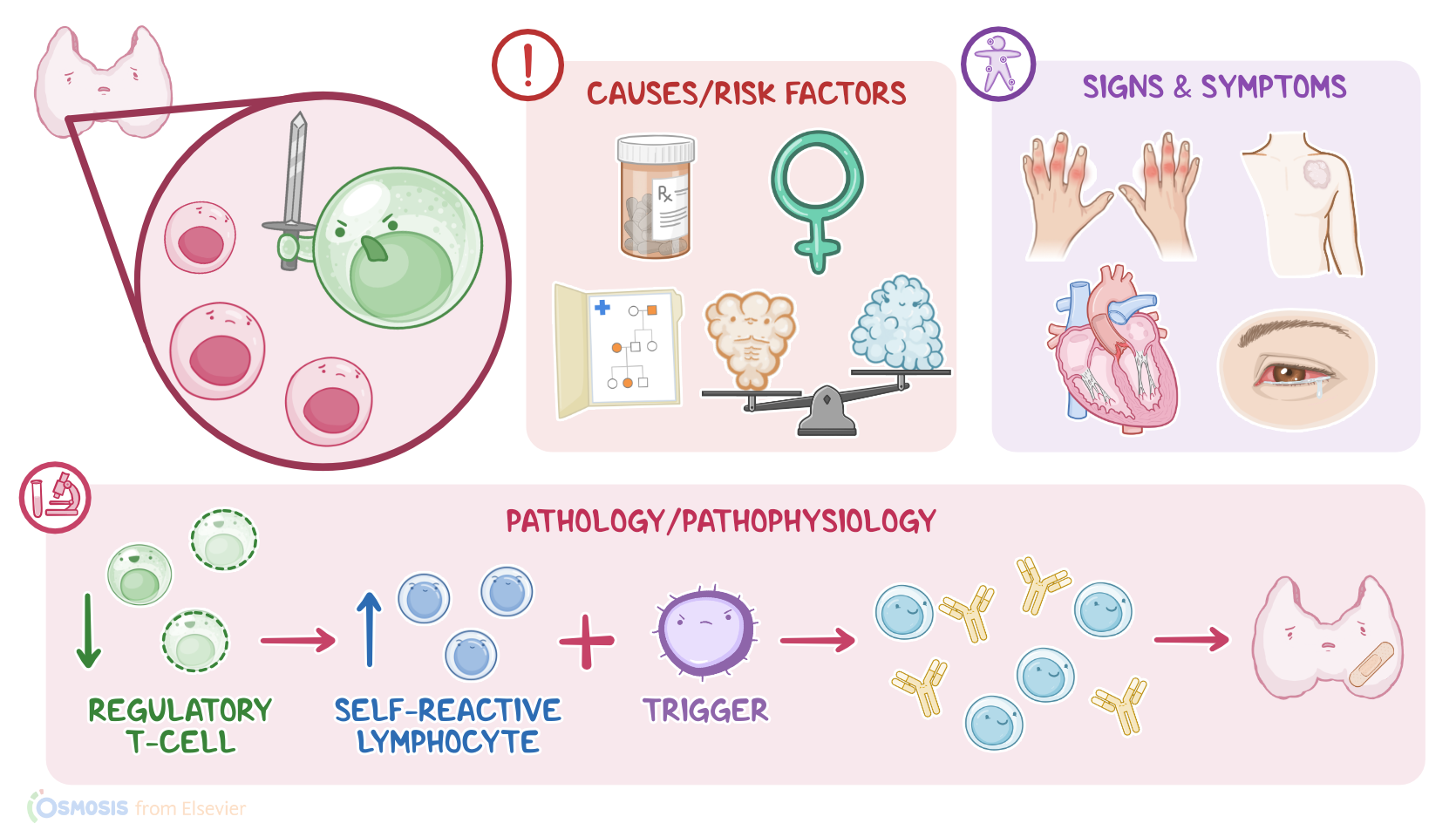
Now, the exact cause of autoimmune diseases is unknown, but it's believed to be associated with certain risk factors. Modifiable risk factors include various medications, like procainamide and hydralazine, whereas nonmodifiable risk factors include being assigned female at birth, age over 50, personal or family history of autoimmune disease, as well as hormonal changes during major endocrinological transition, like puberty and menopause.
For example, symptoms of autoimmune diseases tend to improve during pregnancy, but get even worse after delivery. Alright, now the pathology of autoimmune diseases starts with a genetically susceptible client, meaning they have a less effective central or peripheral tolerance or they have less functional regulatory T cells.
Pathology3:06–3:52
This causes an increase in self-reactive lymphocyte cells in the body. Add an environmental trigger to that, and it could start an immune response that becomes unchecked.
B cells undergo clonal expansion to produce autoantibodies that target the tissue. T helper cells release cytokines to recruit more immune cells to the tissue.
Both result in inflammation and organ damage. Even when the immune response resolves, some of the self reactive lymphocytes remain and could repeat this cycle over and over again.
This is why most autoimmune disorders are chronic. Now, autoimmune diseases can be systematic, meaning that they affect multiple organ systems; or they can be localized, meaning that they target a specific system or organ.
Clinical manifestations3:52–5:02
Examples of systemic autoimmune diseases include rheumatoid arthritis, systemic lupus erythematosus, and scleroderma. In contrast, localized autoimmune diseases are organ specific.
This includes disorders that affect the blood such as hemolytic anemia or immune thrombocytopenic purpura. The central nervous system can also be affected in clients with Guillain Barre syndrome or multiple sclerosis.Autoimmune diseases affecting the endocrine system include Hashimoto thyroiditis and Graves disease, as well as type 1 diabetes mellitus.
Other autoimmune diseases include uveitis, which affects the eye; rheumatic fever, which affects the heart, as well as celiac disease and inflammatory bowel syndrome, which affect the gastrointestinal tract.
Finally, autoimmune diseases can affect the muscles, such as myasthenia gravis. That being said, clinical manifestations vary a lot based on the type of autoimmune disease and what organ system is affected.
However, clients may present more generalized symptoms such as fatigue and low-grade fever.Alright, as a quick recap, autoimmunity is a malfunction of the immune system that causes it to attack the body cells instead of fighting off infections.
Review5:02–6:00
Autoimmune diseases are common, chronic, and progressive conditions of unknown causes. Risk factors for these diseases include medications, older age, family history, being assigned female at birth, and hormonal changes during puberty or menopause.
Autoimmune diseases start with a genetically susceptible client with less effective central or peripheral tolerance, or less functional regulatory T cells.
This leads to increased production of autoantibodies, which attack normal body cells. Autoimmune diseases can be systemic, such as rheumatoid arthritis and lupus, and can also be specific to a particular organ, such as hemolytic anemia and Hashimoto thyroiditis or Graves disease.
Clinical manifestations vary based on the type of autoimmune disease and the affected organ system, but common manifestations are fatigue and low-grade fever.
| AUTOIMMUNITY | ||
| KEY POINTS | NOTES | |
| DEFINITION |
| |
| PHYSIOLOGY |
| |
| CAUSES AND RISK FACTORS |
| |
| PATHOLOGY |
| |
| CLINICAL MANIFESTATIONS |
| |
No notes for this video yet
Try adding a note below