Care of an intubated client: Nursing skills
Nurse Yasmine is receiving the nurse-to-nurse report on an elderly client named Earl who is being transferred from the emergency department to the intensive care unit, or ICU. The emergency department nurse explains, “Earl collapsed in his home following a cardiac arrest and was found unresponsive by a family member. After arriving at the emergency department, he was intubated and started on mechanical ventilation. He will be transferred to the ICU in about 10 minutes ”
Nurse Yasmine notes that Earl is also receiving continuous IV sedation, and has a urinary catheter and a nasogastric tube. Nurse Yasmine will use what she knows about providing safe, effective, and quality care for an intubated client to promote positive client outcomes.
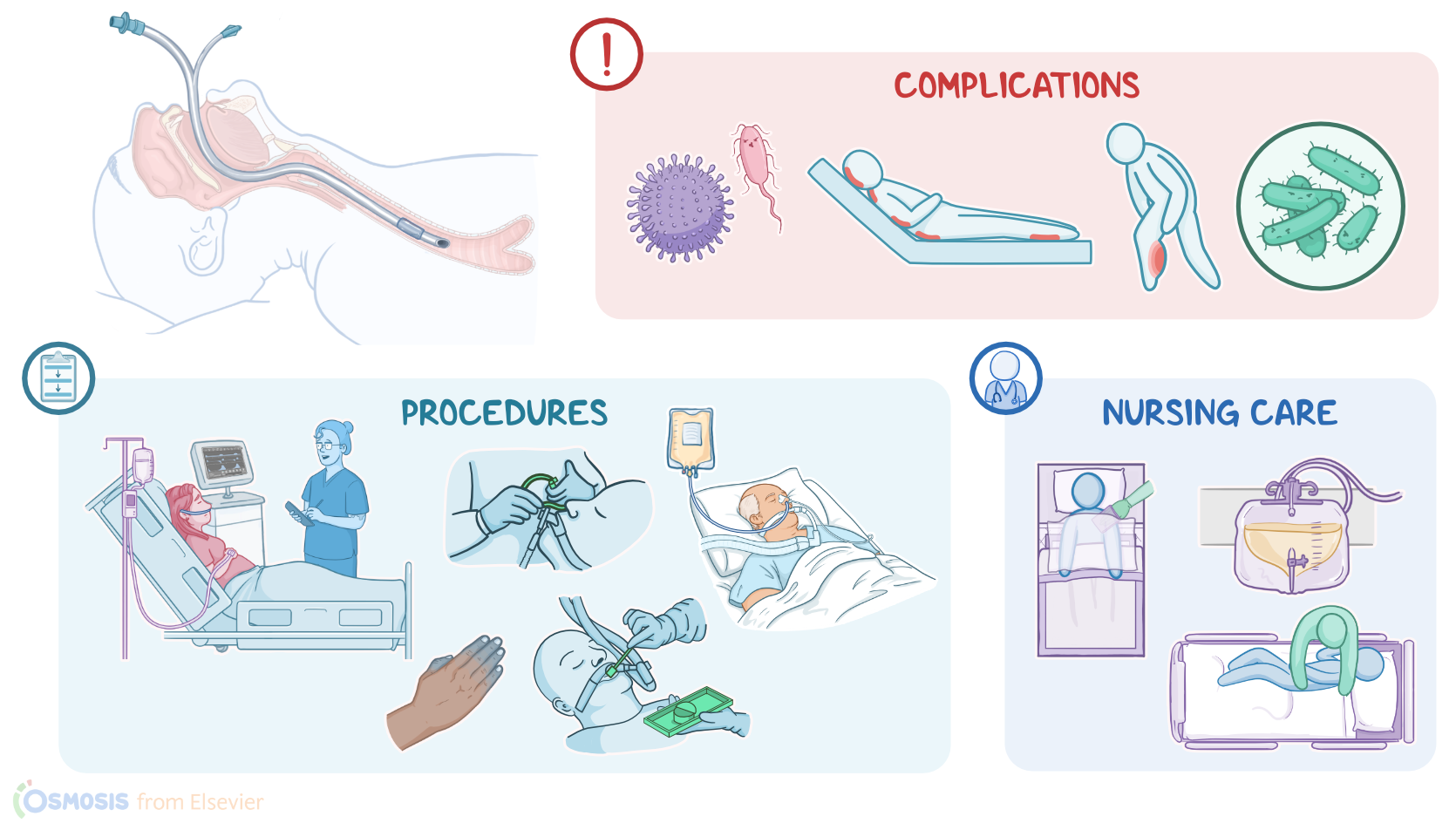
Intubation is a procedure where an endotracheal tube, or ETT, is inserted through a client’s mouth and into their trachea, which is usually performed prior to surgery or during emergencies when the client’s airway is compromised, such as a cardiac arrest. The ETT keeps the airway patent in order for oxygen to reach the client’s lungs.
After a client is intubated, the ETT tube can be attached to a mechanical ventilator to deliver oxygen and breaths to the client, which allows the client’s respiratory muscles to rest to promote healing and recovery. Mechanical ventilation can be used in the short-term, like during surgery, or more long-term, like with c respiratory failure or airway obstruction.
Okay, so when a client undergoes intubation and is placed on mechanical ventilation, the client is at an increased risk of developing complications such as infection, airway trauma, pressure injury, deep vein thrombosis, and malnutrition.
One of the main risks of mechanical ventilation is a particular type of infection called ventilator associated pneumonia, or VAP. This occurs when bacteria invade the lungs through the ETT.
Intubated clients can also develop barotrauma and ventilator-induced lung injuries, which occur when the pressure of ventilation is so high that it causes the alveoli to rupture.
In addition, intubated clients, like Earl, are generally sedated and paralyzed temporarily with IV medications to provide comfort and to ensure they don’t resist the ETT and damage their airway. However, this immobility can increase the risk of developing pressure injuries and deep vein thrombosis.
Lastly, malnutrition can result since intubation means the client can’t ingest food or fluids by mouth since their swallowing ability is compromised.
So, when caring for an intubated client on mechanical ventilation, you must take steps to manage their airway, prevent infections and complications of immobility, and ensure nutrition is maintained.
Although nurses don’t intubate clients, you’ll be responsible for performing respiratory assessments and monitoring the ventilator function and settings as ordered by the healthcare provider.
You should assess for hypoxemia by analyzing arterial blood gas results and oxygen saturation as well as listening to breath sounds and examining the skin and mucous membranes for cyanosis. Nurses will often collaborate with the respiratory therapist to ensure your client’s ventilation is adequate and effective.
Next, nurses play a key role in preventing infections in intubated clients. You’ll help to prevent VAP by suctioning your client as needed to reduce secretions, and by keeping the head of the bed between 30 and 45 degrees to promote airway expansion. Another important part of caring for an intubated client is performing oral care, since bacteria can travel from the mouth into the ETT, increasing the risk for VAP. In addition, the ETT can cause your client’s mouth to become dry and irritated, risking dental decay, oral sores, and pain.
| CARE OF AN INTUBATED CLIENT | ||
| KEY POINTS | NOTES | |
| DEFINITION |
| |
| ASSOCIATED RISKS |
| |
| MANAGEMENT OF CARE |
| |
No notes for this video yet
Try adding a note below