Complete metabolic panel (CMP) - Glucose: Nursing
Case report0:00–0:36
A 63-year-old female client comes to her primary care provider’s office with reports of excessive urination and thirst; and recent weight loss despite eating and drinking more than normal.
Her medical history is significant for hypertension and a BMI of 32 kg/m2. Based on the client’s assessment and medical history, the provider suspects hyperglycemia due to diabetes mellitus, and thus orders a glucose level.
Now, glucose, abbreviated as Glc, is a type of sugar that is typically obtained from consuming carbohydrates, such as bread or fruit.
Physiology0:36–2:44
After a meal, glucose gets absorbed from the gut into the blood and from there it enters the cells where it is used as a source for energy.
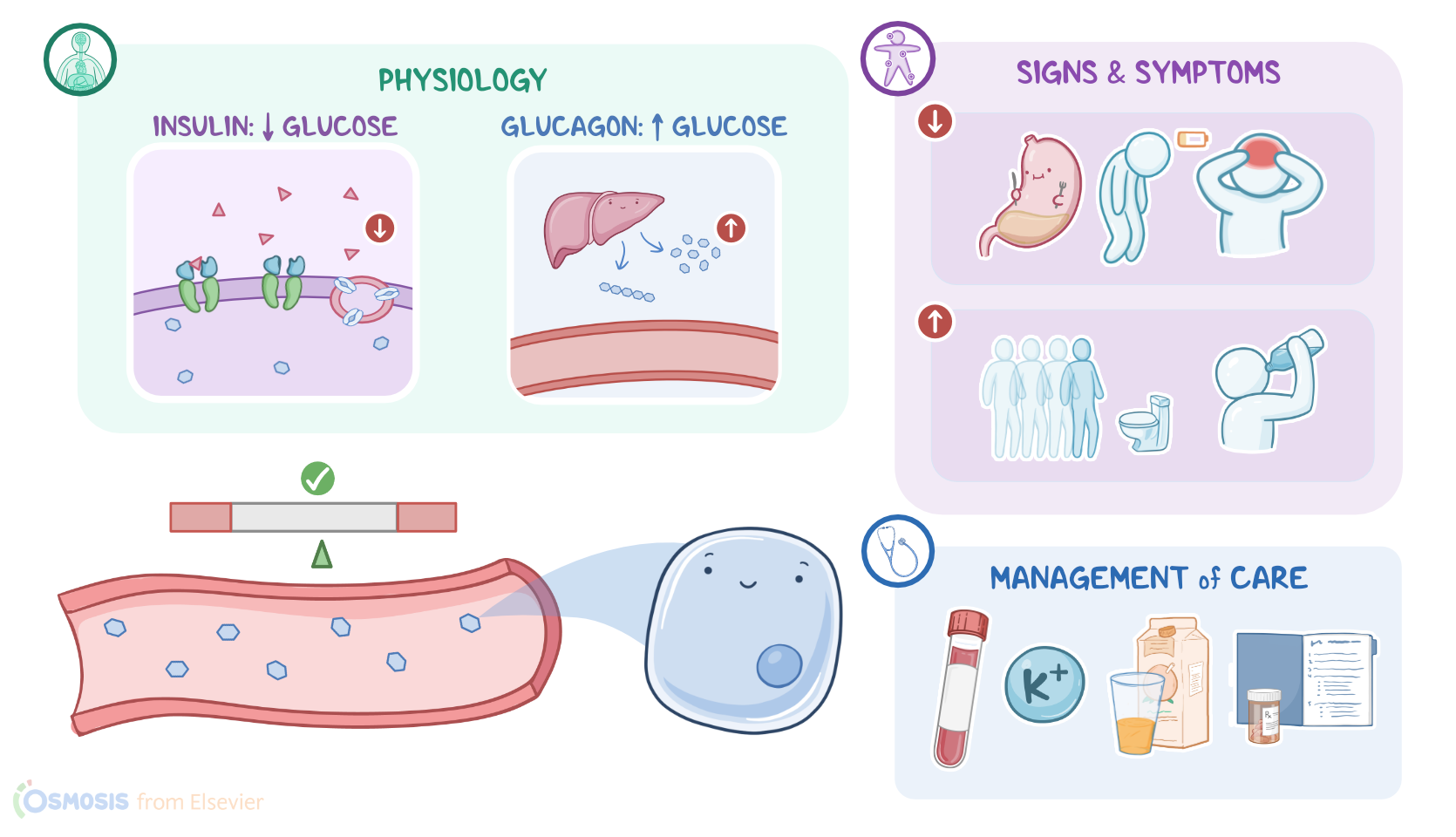
Insulin is used to reduce blood glucose levels, and glucagon is used to increase blood glucose levels. Both of these hormones are produced by clusters of cells in the pancreas called islets of Langerhans.
Insulin reduces the amount of glucose in the blood by binding to insulin receptors embedded in the cell membrane of various insulin-responsive tissues like muscle cells and adipose tissue.
When activated, the insulin receptors cause vesicles containing glucose transporters that are inside the cell to fuse with the cell membrane, allowing glucose to be transported into the cell.
Glucagon does exactly the opposite, it raises the blood glucose levels by getting the liver to generate new molecules of glucose from other molecules and also break down glycogen into glucose so that it can all get dumped into the blood.
Plasma glucose, also referred to as blood sugar, is usually measured as part of a complete metabolic panel, or CMP, or as part of a basic metabolic panel, or BMP.
It can also be measured at the point of care, or POC, by fingerstick. The normal range of plasma glucose measured after fasting, is around 70 to 99 mg/dL.
However, plasma glucose can also be measured after a meal, called postprandial, to see how the body responds. This level should be less than 120 mg/dL.
The most common reason for hyperglycemia is diabetes mellitus, where the body has trouble moving glucose from the blood into the cells.
Hyperglycemia2:44–3:51
This leads to high levels of glucose in the blood and not enough of it inside the cells, and remember that the cells need glucose as a source of energy, so not letting the glucose enter means that the cells starve for energy despite having glucose right on their doorstep.
Generally, a level of 100 to 125 mg/dL indicates prediabetes; and 126 mg/dL or higher indicates diabetes. A non-fasting or random glucose test can be done at any time, with 200 mg/dL or higher being a red flag for diabetes.
Finally, postprandial glucose of 140 mg/dL to 199 mg/dL indicates prediabetes and 200 or above indicates diabetes. Hyperglycemia may also occur in conditions such as chronic pancreatitis, Cushing syndrome, or hyperthyroidism.Alright now classic symptoms of elevated glucose include polyuria, which means frequent urination, along with polydipsia, which means being constantly thirsty and needing to drink a lot of water.
Clinical Manifestations of Hyperglycemia3:51–5:07
Many clients also present with polyphagia, which is a fancy way to say they have a large appetite. But, in spite of needing to eat a lot, clients experience unexplained weight loss because, since there’s no insulin, the tissue cells can’t uptake the glucose from food.Now, clients with type 1 diabetes are at risk for a serious acute complication called diabetic ketoacidosis, or DKA for short, which presents with nausea, vomiting, dehydration, and a characteristic fruity smelling breath, as well as a deep and labored breathing called Kussmaul respirations.
DKA can also cause mental status changes and even cerebral edema.An acute complication that is much more common in type 2 diabetes is called hyperosmolar hyperglycemic state, or HHS, which is characterized by extreme hyperglycemia and polyuria which can cause severe dehydration.
Nausea, vomiting, and mental status changes may also be present.Let’s switch gears and talk about hypoglycemia, which is when blood glucose levels drop below 70 mg/dL.
Hypoglycemia5:07–5:50
Hypoglycemia most often occurs in people with diabetes if they take too much insulin or certain oral antidiabetic medications, but it can also be a result of not eating enough or exercising more than usual in clients who don’t have diabetes.
Other possible causes for hypoglycemia include advanced liver disease, Addison disease, pancreatitis, and malnutrition. Finally, hypoglycemia with no clear cause may indicate the presence of a rare insulin-producing pancreatic tumor called an insulinoma.
Okay, now as for the clinical manifestations of low plasma glucose, signs and symptoms of hypoglycemia include hunger, fatigue, shaking, sweating, headache, and dizziness.
Clinical manifestations of Hypoglycemia5:50–6:16
If hypoglycemia persists, these signs and symptoms may worsen, resulting in confusion, slurred speech, blurred vision, fainting, seizures, or even coma.
A client’s plasma glucose levels are usually measured when there’s a history of conditions that can predispose a person to a glucose imbalance, or when there are signs or symptoms of hyperglycemia or hypoglycemia.
Indications for Measuring Glucose6:16–6:36
It is also used to monitor and manage clients diagnosed with diabetes mellitus.Let’s look at the nursing implications for a client with an abnormal plasma glucose level.
Nursing Implications6:36–8:40
Your priority goal of care is to assist in restoring a normal glucose level. Begin by collecting a sample through capillary sampling or venipuncture.
When performing venipuncture, you'll typically use a tube with a red, red-gray, green, or gold top. Gently invert the tube 5 times to ensure mixing of the clot activator inside the tube.
After collecting the sample, deliver it promptly to the laboratory. If your client has hyperglycemia, slow or stop any IV any solutions containing dextrose.
Then, administer the prescribed insulin to lower the glucose level and continue to monitor their blood glucose levels until stable.
Also remember to watch their potassium level, since hypokalemia can occur as a result of treatment.Now, if your client is experiencing hypoglycemia, administer the prescribed treatments to increase the glucose level.
If your client is alert, awake, and can tolerate oral treatments, administer 15g of oral carbohydrates, most often in the form of 4 ounces of apple or orange juice.
If 50% dextrose IV is ordered, slowly infuse the solution and reassess the glucose level according to protocol, usually 15 to 30 minutes following treatment.If at any point, your client’s glucose level drops below 55 mg/dL or rises above 600 mg/dL, immediately report this to the healthcare provider as these are considered critical levels.
Finally, for any client with a glucose imbalance, be sure to check their medication administration record for medications that can increase their glucose level, such as corticosteroids or phenytoin, or medications that can decrease their glucose level, such as monoamine oxidase inhibitors.As a quick recap….
Review8:40–9:47
Glucose is a type of sugar that is used by the body’s cells for energy. Glucose can be measured on its own with POC testing or as part of a CMP or BMP.
In adults, glucose normally ranges from 70-99 mg/dL. Glucose homeostasis is regulated by several hormones, including insulin and glucagon.
The body’s glucose levels can change if there is an absence of insulin in the body or decreased sensitivity to insulin, as in diabetes mellitus, or when an individual is consuming too little or too many carbohydrates.
Classic clinical manifestations of hyperglycemia are polyphagia, polydipsia, and polyuria, while clinical manifestations of hypoglycemia include hunger, fatigue, shaking, sweating, headache, and dizziness.
If either elevated or decreased glucose levels persist, clients can have systemic complications, which may even lead to coma and death.
The priority goal of nursing care is to assist in restoring a normal glucose level. nursing care is to assist in restoring a normal glucose
| GLUCOSE | ||
| KEY POINTS | NOTES | |
| PHYSIOLOGY |
| |
| PATHOLOGY |
| |
| INDICATIONS |
| |
| NURSING IMPLICATIONS |
| |
No notes for this video yet
Try adding a note below