Fetal circulation: Nursing
Fetal circulation involves the delivery of oxygen and nutrients from the placenta to the fetus and the transport of waste products from the fetus to the placenta, in order for them to be eventually eliminated by the mother’s body.
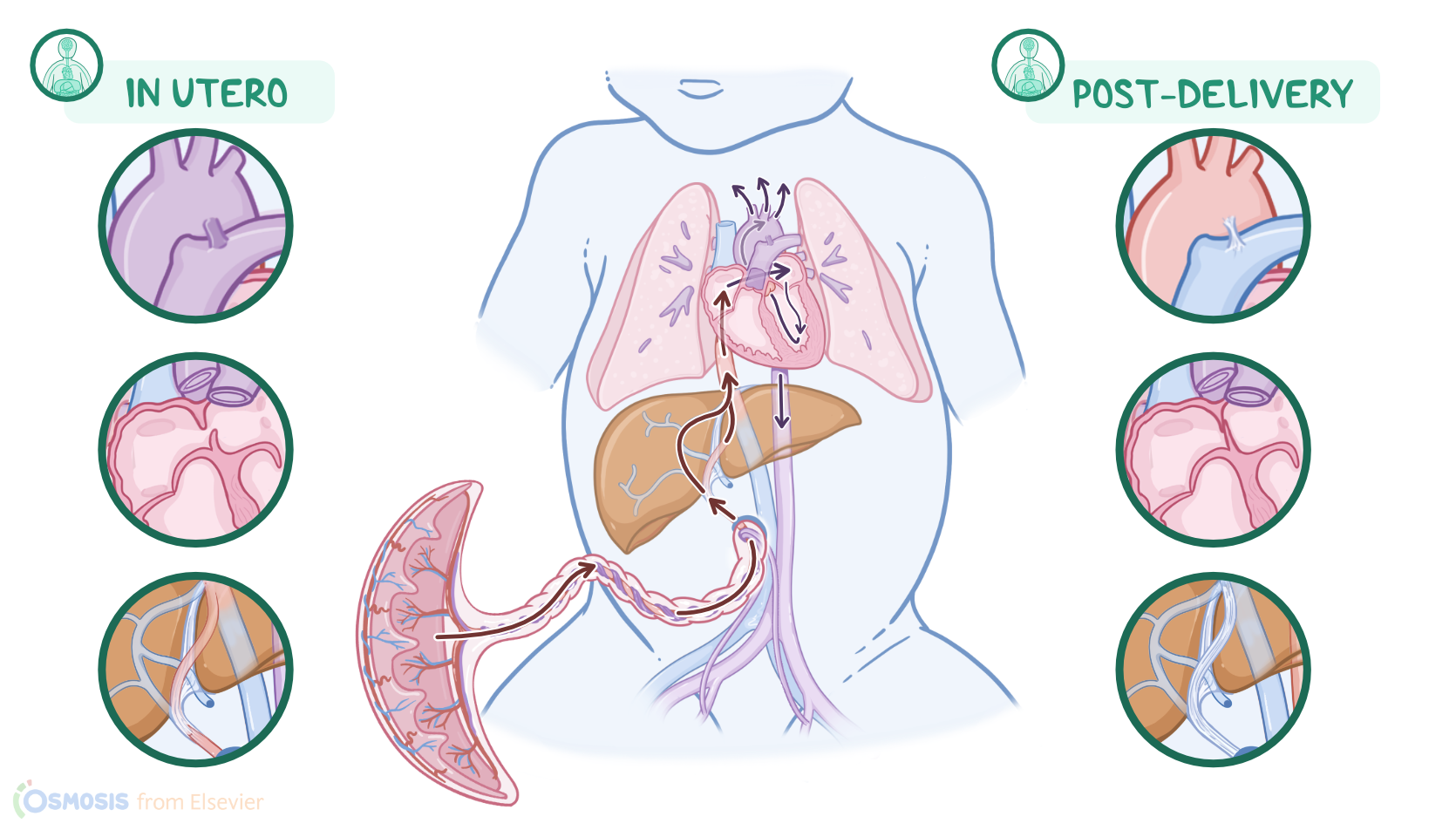
Fetal circulation has some unique features because the fetal lungs are not involved in gas exchange and there are three fetal shunts, which redirect the blood to ensure the highest oxygenated blood reaches the heart and brain, while redirecting blood away from the nonfunctional fetal lungs.
Now let’s first review the physiology of the umbilical cord that connects the fetus to the placenta, which takes on the role of exchanging oxygen, carbon dioxide, nutrients, and wastes. The cord houses two umbilical arteries and one umbilical vein. The umbilical vein provides the path for oxygenated blood to flow from the placenta to the fetus, while the umbilical arteries carry deoxygenated blood back to the placenta.
Now, oxygenated blood first flows through the umbilical vein and to the fetal liver, and here, the circulation divides as it meets the first fetal shunt called the ductus venosus. At this point, most of the blood passes through the ductus venosus and flows directly into the inferior vena cava. Meanwhile, the remaining blood perfuses the liver and then meets up with the rest of the blood in the inferior vena cava. Together, this blood flows into the right atrium of the fetal heart.
In the fetal heart, the pressure on the right side is higher than on the left side of the heart. This is because the fetal lungs are filled with fluid and the arteries are tightly constricted, so the pressure in the fetal lungs is high, leading to increased pressure in the right side of the heart.
This pressure difference allows a majority of the oxygenated blood in the right atrium to pass through the second shunt, called the foramen ovale, which is an opening between the two atria.
This shunt allows most of the blood to bypass the lungs and flow directly into the left atrium. From here, the blood flows into the left ventricle, which pumps it through the aorta, to supply oxygenated blood to perfuse the brain, the heart, and then the rest of the fetus.
| FETAL CIRCULATION | ||
| KEY POINTS | NOTES | |
| DEFINITION |
| |
| PHYSIOLOGY |
| |
No notes for this video yet
Try adding a note below