Geriatric considerations - Sensory: Nursing
Introduction0:00–0:44
Geriatrics is the branch of healthcare, dealing with both the physiology and psychology of aging, as well as the diagnosis and treatment of diseases affecting older adults.
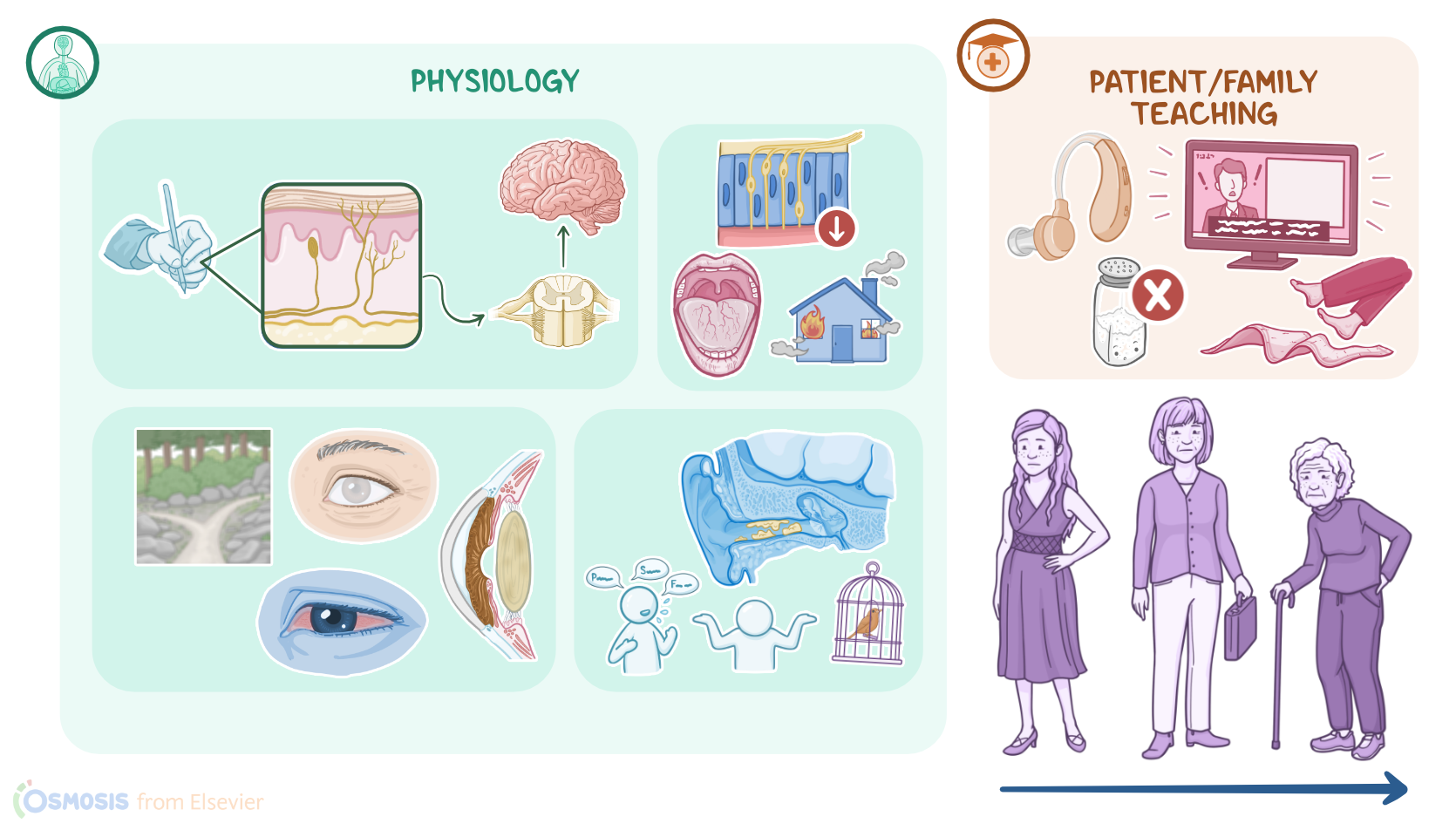
As we age, the body undergoes various changes such as a decline in the function of the sensory system, which gathers information about surroundings and what's happening inside our bodies.
The sensory system includes touch, vision, hearing, taste and smell, age related changes in the sensory system can impact many aspects of a client's quality of life and thus must be taken into consideration when caring for elderly clients.
First, let's start with touch. Tactile receptors are nerve endings that pick up sensory information when something comes in contact with your skin.
Touch0:44–1:48
Like when you're holding a pen, this sensation is then sent through sensory neurons to the spinal cord and eventually to the brain.
Now, with aging, the blood flow to nerve endings, the spinal cord and even some parts of the brain can decrease, which causes a decreased sensation of touch.
The loss of sensation makes it hard for older clients to feel pressure in specific areas of the body which can result in complications such as frostbites, burns or even pressure ulcers.
Vision1:48–3:41
Behind the lens is a gel like structure called the vitreous body which fills up the center of the eye and supports the retina.
The retina is a layer that houses photoreceptors which translate light into electrical impulses. These impulses are then carried by the optic nerve into the brain which processes the impulses from both eyes and fuses them into one clear image.
Now, with aging, the elasticity of the lens decreases, subsequently decreasing the visual acuity and causing presbyopia, which refers to a decreased ability to focus on near objects.
The cornea tends to become flattened which can result in corneal astigmatism and symptoms such as blurry vision. Next, the quantity and quality of tear production diminishes with aging resulting in dry eyes often there is yellowing or clouding of the lens which causes the lens to act as a filter, absorbing more blue green and violet light.
As a result, the client might have challenges differentiating these colors. Finally, elderly clients are at risk for developing several eye conditions including cataracts which are cloudy areas in the lens that reduce the sharpness of images that reach the retina as well as glaucoma, which refers to intraocular pressure caused by blockage of the drainage of the aqueous humor and senile miosis, meaning pupils become smaller and lose some of their ability to constrict, causing difficulties to adjust from light to dark environments, switching gears and moving on to hearing.
Hearing3:41–5:17
The external ear is made of the auricle, also called pinna. And the external acoustic canal, which is lined with a waxy substance called the cerumen.
Cerumen prevents foreign objects like dust or tiny insects from getting into the ears and causing damage. At the end of the external acoustic meatus, there's the thin oval tympanic membrane, more commonly known as the eardrum which separates the external ear from the middle ear.
When sound waves hit the tympanic membrane, it vibrates and transfers the vibration to the middle ear, which is a tiny chamber that houses the three auditory ossicles called the malleus and and stapes.
These bones create a chain that further transmits these vibrations to the inner ear which houses the membranous labyrinth, bony labyrinth and cochlea.
Moreover, the cochlea contains small sensory hair cells that create nerve impulses that travel through the vestibulo cochlear nerve, which is cranial nerve eight to the brain.
With aging, the number of cochlear hair cells and the nerve fibers that transport electrical impulses reduces, which results in what's known as sensory neural presbycusis.
These clients usually cannot understand high frequency sounds and conversational tones such as FS and P. Other important age related changes include the thickening of the tympanic membrane and build up of cerumen.
Furthermore, cerumen can become dry and impacted, subsequently worsening the presbycusis. Next up is taste and smell.
Taste and smell5:17–6:47
When you eat food or drink a beverage, your saliva acts as a solvent for different chemicals coming from what you ingested.
These dissolved chemicals then stimulate taste buds which cover the surface of the tongue. Each taste bud may contain up to 100 chemo receptors which are specialized types of cells that sense and convert chemical signals into electrical signals which travel through sensory nerves to the brain.
Similar to taste chemicals from odors are dissolved in the mucus secreted by the nasal cavity. These chemicals then stimulate smell chemo receptors which are present on the roof of the nasal cavity and get converted into electrical signals that go to the brain.
Ok. So both smell and taste, rely on chemo receptors with aging.
The number of taste and smell chemo receptors decreases. This is especially common in clients who are smoking, a reduced number of chemo receptors makes it harder for older clients to taste and smell food, which decreases their appetite and puts them at risk for poor nutrition.
Lastly, taste sensation can be decreased in clients with xerostomia or dry mouth, which is an abnormal oral dryness related to reduced salivary secretion and can also interfere with chewing and swallowing.
All right, moving on to client and family teaching first explain that sensory changes are often a natural part of aging, then discuss the sensory changes that your client is experiencing and talk about ways they can support optimal functioning and maintain a safe environment.
General client & family teaching6:47–9:06
Now, if your client is experiencing decreased visual acuity check to see if their diminished vision interferes with their ability to complete their ADLs.
Remind them of the importance of having their vision checked regularly and to keep their glasses prescription up to date, encourage them to have proper lighting to assist them in doing activities like cooking or reading and to always turn the lights on before going into a room.
Also review ways to manage diminished auditory function. Talk to them about ways they can enhance their understanding of others by watching their lip movements, facial expressions, gestures and environmental clues and suggest that they use the closed caption function when watching television also be sure to refer them to an audiologist for a hearing test, so they can obtain a hearing aid if needed.
If your client has impaired sense of smell and taste, talk to them about how these diminished senses can impair the enjoyment of their food and affect their nutritional status.
Teach them to avoid adding additional salt or sugar to their food in order to increase taste, instead, provide them a list of herbs and spices they can use to bring out more flavor in their food.
Then review how they can eat a well balanced diet to ensure they consume the nutrients they need each day and to prevent conditions such as hypertension or diabetes.
Next, ensure they have safety measures in place to prevent injury related to diminished sensory function. Ensure they have carbon monoxide and smoke detectors in their home suggest that they set the temperature on their water heater temperature to no higher than 120 °F or 49 °C to prevent accidental scalding and instruct them to prevent falls by making position changes, slowly wearing non slipped footwear and removing tripping hazards like clutter and loose rugs.
All right. As a quick recap.
Review9:06–11:09
As we age, the body undergoes various changes such as a decline in the function of the sensory system, which includes touch, vision, hearing, taste and smell, touch involves tactile receptors which are nerve endings that pick up sensory information from skin contact and then send it to the spinal cord and then to the brain during the aging process, touch can be affected by a decrease in blood flow to nerve endings, the spinal cord and even some parts of the brain making it harder for older clients to feel pressure in certain areas of their body.
Next, vision relies on photo receptors which translate light into electrical impulses that are carried to the brain, creating a clear image.
But with aging, the number of photoreceptors decreases. So the image transmitted is less clear.
Other age related ear changes can include the thickening of the tympanic membrane and build up of the cerumen taste and smell also change as we age since the number of chemo receptors decreases.
Also, clients may not be able to smell the odor of a gas leak or smoke from a fire which can put them in danger. Lastly, taste sensation can be decreased in clients with xerostomia, client and family teaching focuses on teaching geriatric clients how to accommodate for any sensory changes that occur with the aging process.
| GERIATRIC CONSIDERATIONS - SENSORY | ||
| KEY POINTS | NOTES | |
| DEFINITION |
| |
| TOUCH |
| |
| VISION |
| |
| HEARING |
| |
| TASTE AND SMELL |
| |
| PATIENT AND FAMILY TEACHING |
| |
No notes for this video yet
Try adding a note below