Pediatric psychosocial needs during illness and hospitalization: Nursing
Pediatric psychosocial needs during illness and hospitalization: Nursing
Pediatric Picsk-Shelley
Pediatric Picsk-Shelley
Notes
| PEDIATRIC PSYCHOSOCIAL NEEDS DURING HOSPITALIZATION | ||
| KEY POINTS | NOTES | |
| DEFINITION |
| |
| EFFECTS OF SEPARATION |
| |
| SIGNS AND SYMPTOMS |
| |
| MANAGEMENT OF CARE |
| |
| PATIENT AND FAMILY TEACHING |
| |
Transcript
Psychosocial needs of pediatric clients during illness and hospitalization can be challenging for nurses and other caregivers to meet. There are three main psychosocial effects that children experience during hospitalization, including fear, separation anxiety, and loss of control.
First, fear may arise from an unexpected occurrence of illness, potential physical harm, injuries, and pain. Children typically have a harder time adjusting to changes in the environment which may include scary equipment, smells, noises, other children crying, strange words, needles, and strangers in weird outfits, such as surgical gowns, masks, and caps.
Next is separation anxiety, which refers to the anxiety or emotional distress that a child experiences when separated from their caregiver, or their family, home, and friends. It can be characterized by anger and rejection of those who try to help. Anger can be followed by despair, where they become quiet and withdrawn.
Also, the child’s loss of control over decisions, usual everyday routines, self-care, and play, can adversely affect their coping mechanisms and decrease their ability to deal with new stressful situations.
Now, a child’s reaction to illness and hospitalization can be affected by many things, including age, developmental and cognitive level, temperament, and coping skills. Other important factors include recent stressful situations, the nature and severity of the illness, and whether the hospitalization is planned, unplanned, or if it’s an emergency situation. Also, length of separation from parents, family members, and other familiar caregivers; their reaction to illness or hospitalization; as well as the child’s cultural, ethnic, and religious background, can all have an effect on a child’s reaction.
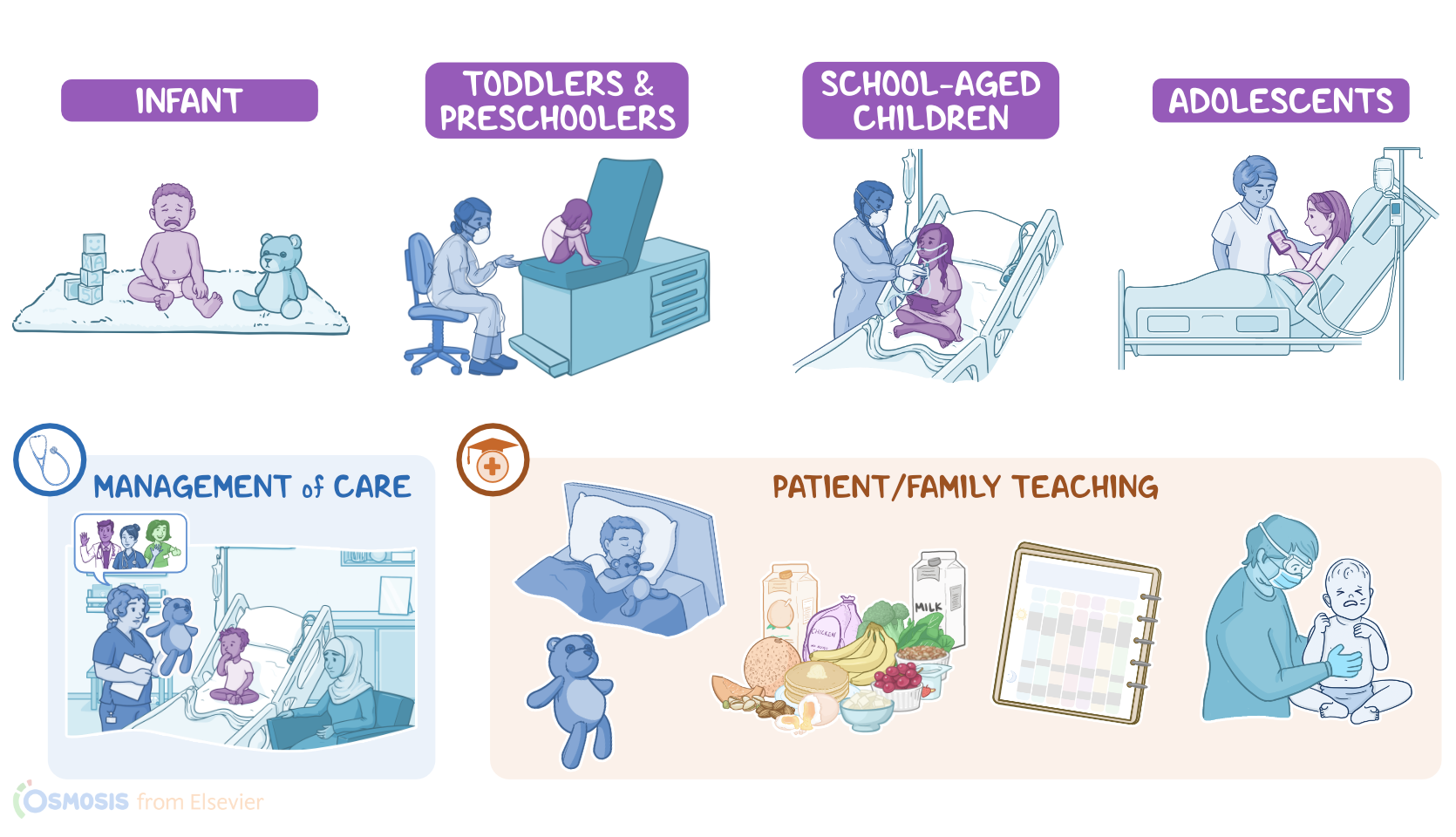
Okay, in terms of clinical manifestations, how a child expresses their emotions during illness or hospitalization varies depending on their age and stage of development. Starting with infants, children at this stage will often cry when left by their caregivers and turn away from strangers. They are especially vulnerable to the effects of stressors like sensory overload and invasive procedures, which can disrupt their feeding and sleeping patterns. They tend to convey emotions through facial expressions and gestures, such as a tense body posture and furrowed brow.
Now, toddlers and preschoolers are also afraid of strangers, and when separated from their caregivers, they will ask for or call out for them. They may throw temper tantrums, become sad and withdrawn, cry quietly, and be uncooperative with taking medications and food. They can even regress in acquired skills, such as toilet training. Children at this stage begin to understand illness but not its cause, so they tend to believe it’s their fault for becoming sick.
School-age children are often able to deal effectively with separation from caregivers. They have a better understanding of the illness, ask questions about procedures and tests that are being performed, and they want to take part in decision making. Children at this stage tend to have coping mechanisms that can help them deal with pain and discomfort related to invasive procedures; however, losing a sense of control can make them feel isolated, bored, or lonely.