Preoperative care: Nursing
Introduction0:00–1:53
Preoperative care is the preparation and management of a client during the preoperative period, which is the time period between the decision to perform a surgery and the beginning of the surgical procedure.
All right, so the first step of preoperative care starts with the surgeon, with a registered nurse as witness, obtaining informed consent from the client.
Then comes the client’s history, asking about current medications, especially the high risk ones like anticoagulants; as well as alcohol intake; cigarette smoking; illicit drug use; in addition to a personal or family history of complications from anesthesia;also allergies; or chronic illnesses, such as hypertension, diabetes, and anemia.
Clients should also be assessed for risk factors of obstructive sleep apnea since this condition can interfere with breathing when the client is under general anesthesia.
The risk factors are summarized with the STOP-BANG mnemonic that stands for snoring history, tiredness during the day, observed breathing cessation during sleep, high blood pressure, in addition to a body mass index of higher than 35 kg/m2, age over 50 years, as well as neck circumference larger than 40 centimeters, and gender assigned male at birth.
This is typically followed by diagnostic studies as needed like electrocardiogram or ECG; as well as imaging studies. In addition, clients should obtain the indicated laboratory tests, such as a complete blood count or CBC, coagulation profile, blood typing, and pregnancy test as needed.
Lastly, the preoperative care is wrapped up with the client's education, in order to prepare them for the surgical procedure and let them know what to expect after the procedure.Okay, let’s look at the nursing care you’ll provide to a client during the preoperative period.
Management and care1:53–3:56
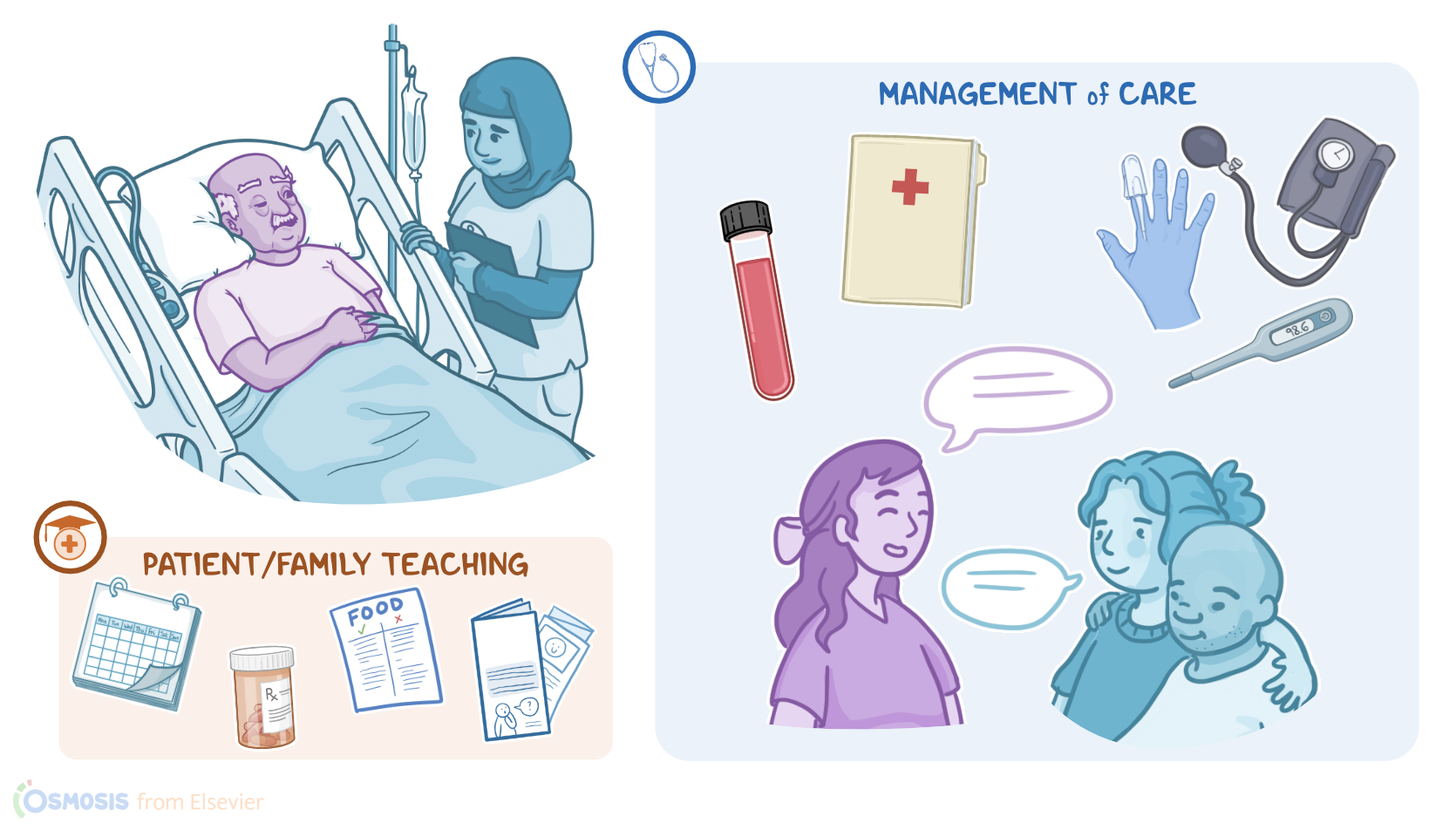
Your priority goals of care include preparing the client for surgery, establishing a baseline assessment, and providing psychosocial support.
Begin preparing your client for surgery by reviewing the preoperative checklist. Confirm your client has the correct identification and allergy bands on, and that informed consent has been obtained.
Then, ask your client about the last time they had anything to eat or drink and keep them NPO, as ordered. Remove any personal items, such as jewelry, glasses, or dentures, and secure them according to your facility policy.
Next, insert a urinary catheter and a large bore IV cannula, and administer the prescribed IV fluids and preoperative medications.
Also be sure to confirm that the surgical site has been marked by the surgeon.Then, conduct a thorough baseline assessment, including vital signs, oxygen saturation, heart and lung sounds, peripheral pulses, bowel sounds, and LOC.
Remember to apply warm blankets to prevent hypothermia. Confirm that the surgical history and physical are complete; an anesthesia assessment is documented; results of preoperative laboratory and diagnostic tests are on the client’s chart; blood type and crossmatch has been completed; and that blood products are available if needed.
Next, provide psychosocial support for your client by assessing their emotional state and readiness for surgery. Reduce their anxiety by encouraging them to ask questions and by providing simple explanations for the nursing care you will provide.
Encourage them to express their feelings and concerns, validate their feelings, and provide reassurance. Lastly, assist with transferring your client to the surgical suite, provide a handoff report to the surgical nurse using a standardized format, and go over the preoperative checklist with the surgical team.
All right, let’s move on to client and family teaching. Before their scheduled day of surgery, use easy-to-read, standardized, preprinted materials with simple pictures and graphics to prepare them for the procedure.
General client and family teaching3:56–5:09
Teach them about their anticipated length of stay; the type of anesthesia that will be used; any devices that will be used including catheters, drains, and vascular access devices.
Also reassure them about how their pain will be managed. Remember to encourage them to ask questions throughout the teaching session.
Next, talk to them about how they should prepare for their surgery, including obtaining the prescribed preoperative laboratory and diagnostic tests, NPO requirements, dietary restrictions, medication adjustments, and smoking cessation.
Then, give them an overview of what will happen during the initial postoperative period. Teach them about deep breathing, incisional splinting and coughing, using an incentive spirometer, early ambulation, and wearing compression stockings; and explain how doing these things will help prevent postoperative complications.
Finally, if your client is having an outpatient procedure, stress the need to have a responsible adult available to take them home.
All right, as a quick recap… Preoperative care is the care of a client during the preoperative period, which starts when the decision to perform surgery is made and ends when the surgical procedure begins.
Review5:09–5:51
Preoperative care includes obtaining informed consent, taking a detailed client history, assessing the client for risk factors of obstructive sleep apnea, obtaining preoperative diagnostic studies, and providing client education.
Priority goals of nursing care includes preparing the client for surgery, establishing a baseline assessment, and providing psychosocial support.
Client and family teaching is focused on what they need to do to prepare for surgery, and what to
| PREOPERATIVE CARE | ||
| KEY POINTS | NOTES | |
| DEFINITION |
| |
| INFORMED CONSENT AND ASSESSMENT |
| |
| MANAGEMENT OF CARE |
| |
| PATIENT AND FAMILY TEACHING |
| |
- "The effects of preoperative guided imagery interventions on preoperative anxiety and postoperative pain: A meta-analysis. 38:101077." Complementary Therapies in Clinical Practice. (2020)
- "Preoperative and postoperative recommendations to surgical wound care interventions: A systematic meta-review of Cochrane reviews. 102:103486. D " Int J Nurs Stud. (2020)
- "Postoperative discharge scoring criteria after Outpatient anesthesia: A review of the literature. 38(4):642-649.e1." Journal of PeriAnesthesia Nursing. (2023)
- "Risk prediction models for intensive care unit readmission: A systematic review of methodology and applicability. 33(4):367-374." Australian Critical Care. (2020)
- "Mosby's 2021 nursing drug reference. ISBN: 978-0-323-75733-1 " Elsevier (2021)
- "Critical care nursing: Diagnosis and management (9th ed). ISBN 978-0323642958 " Elsevier (2022)
No notes for this video yet
Try adding a note below