Preterm infant: Nursing
Introduction0:00–0:53
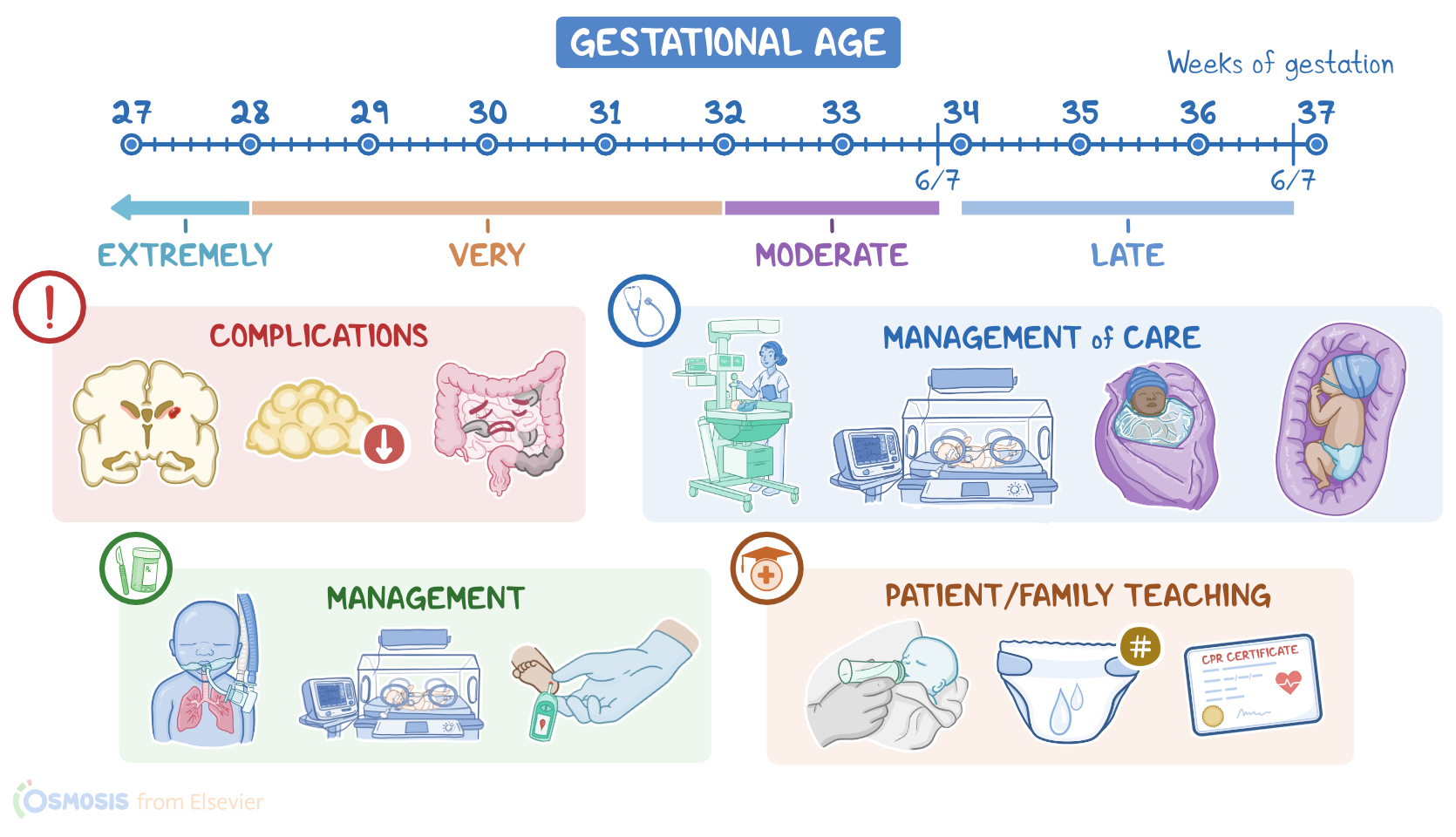
A preterm infant is born before 37 completed weeks of gestation. Classification of prematurity can be based on gestational age, so a late preterm infant is born between 34 weeks and 36 weeks and 6 days of gestation; a moderate preterm infant is born between 32 weeks and 33 weeks and 6 days of gestation;a very preterm infant is born less than 32 weeks of gestation; and an extremely preterm infant is born before 28 weeks of gestation.
Preterm infants can also be classified by birth weight. A low birth weight infant weighs less than 2500 grams; a very low birth weight infant weighs less than 1500 grams; and an extremely low birth weight infant weighs less than 1000 grams.Let’s start with some basic physiology.
Physiology0:53–2:17
Gestation refers to the period between conception and birth, which typically lasts for 40 weeks. During these 40 weeks, the embryo, and later fetus, grows and develops within the uterus.
Normally, every infant born between the 37th and 42nd week of gestation is considered a term infant, so an infant born before the 37th week is considered preterm.
Now, based on the gestational age and the infant’s birth weight, we can determine birth weight percentiles. Furthermore, birth weight percentiles help us evaluate the infant’s intrauterine growth and development, which is considered normal when the value is between the 10th and 90th percentile.
For example, an infant born at 40 weeks of gestation that weighs around 3350 grams is within the 40th percentile. In other words, this baby is appropriate for gestational age.
On the other hand, an infant born at 40 weeks of gestation that weighs around 2700 grams is within the 3rd percentile, and therefore small for gestational age.
Finally, an infant born at 40 weeks of gestation that weighs around 4200 grams is within the 95th percentile and is considered large for gestational age.Now, the cause of preterm birth can be medically indicated, when there are maternal, fetal, and placental complications such as preeclampsia, fetal anomalies, or placenta previa, and is accomplished by cesarean birth or labor induction.
Causes & risk factors2:17–3:30
Preterm birth can also be spontaneous, in which case the cause is often unknown, but there are certain risk factors that can lead to premature labor and birth.
These include extremes of age, like teenage pregnancy or maternal age more than 40 years of age; a history of prior preterm birth; obesity; being underweight or having a poor nutritional status; use of assisted reproductive technology like in vitro fertilization or IVF for short; cervical insufficiency; maternal substance use, including tobacco, alcohol, or illicit drugs; infections like bacterial vaginosis or an intrauterine infection; as well as factors like late or no prenatal care; high levels of stress; long working hours, especially when there’s long periods of standing; lack of social support; and intimate partner violence.Regardless of cause, preterm infants are more likely to develop severe or life threatening complications, and the complications are more severe as gestational age and birthweight decreases.
Pathology3:30–6:31
Respiratory complications are common, and are mostly related to insufficient surfactant production. This prevents the alveoli from expanding completely, resulting in hypoxia and respiratory distress syndrome or RDS for short.
Other respiratory complications include transient tachypnea of the newborn or TTN for short, because of decreased absorption of fetal lung fluid and subsequent decreased gas exchange; pulmonary hemorrhage; apnea with accompanying bradycardia; as well as persistent pulmonary hypertension of the newborn or PPHN for short, where pulmonary pressure remains high, resulting in continued shunting of blood away from the lungs through a patent ductus arteriosus, or PDA for short.
Given these complications, preterm infants may remain on prolonged mechanical ventilation. Unfortunately, mechanical ventilation can damage the lungs over time, leading to problems like bronchopulmonary dysplasia,
Clinical manifestations6:31–7:23
Treatment7:23–8:03
Management and care8:03–12:05
General client and family teaching12:05–14:12
Review14:12–4:44
| PRETERM INFANT | ||
| KEY POINTS | NOTES | |
| DEFINITION |
| |
| PHYSIOLOGY |
| |
| CAUSES AND RISK FACTORS |
| |
| PATHOPHYSIOLOGY |
| |
| SIGNS AND SYMPTOMS |
| |
| TREATMENT |
| |
| MANAGEMENT OF CARE |
| |
| PATIENT AND FAMILY TEACHING |
| |
No notes for this video yet
Try adding a note below