Substance use disorder - Alcohol and tobacco: Nursing
Substance use disorder is a condition in which an individual is unable to control their use of legal or illegal substances. Some of the most commonly used substances include alcohol and tobacco. There are three different stages of substance use: dependence where the substance is repeatedly used, tolerance where an increased amount of the substance is needed to have the same effect, and addiction where the substance use is recurrent and uncontrolled.
Okay, let’s quickly review the physiology of the brain’s reward center. Inside the brain are small molecules called neurotransmitters that are produced and used by neurons to communicate with each other. This communication happens when one neuron releases a neurotransmitter which then binds to the receptors of another neuron causing the neuron to react.
Now, in the rewards system, dopamine is the primary neurotransmitter. And so, when a person experiences pleasure, a surge of dopamine is released from the nucleus accumbens, which is a cluster of nerves near the hypothalamus, more commonly known as the brain’s reward center.
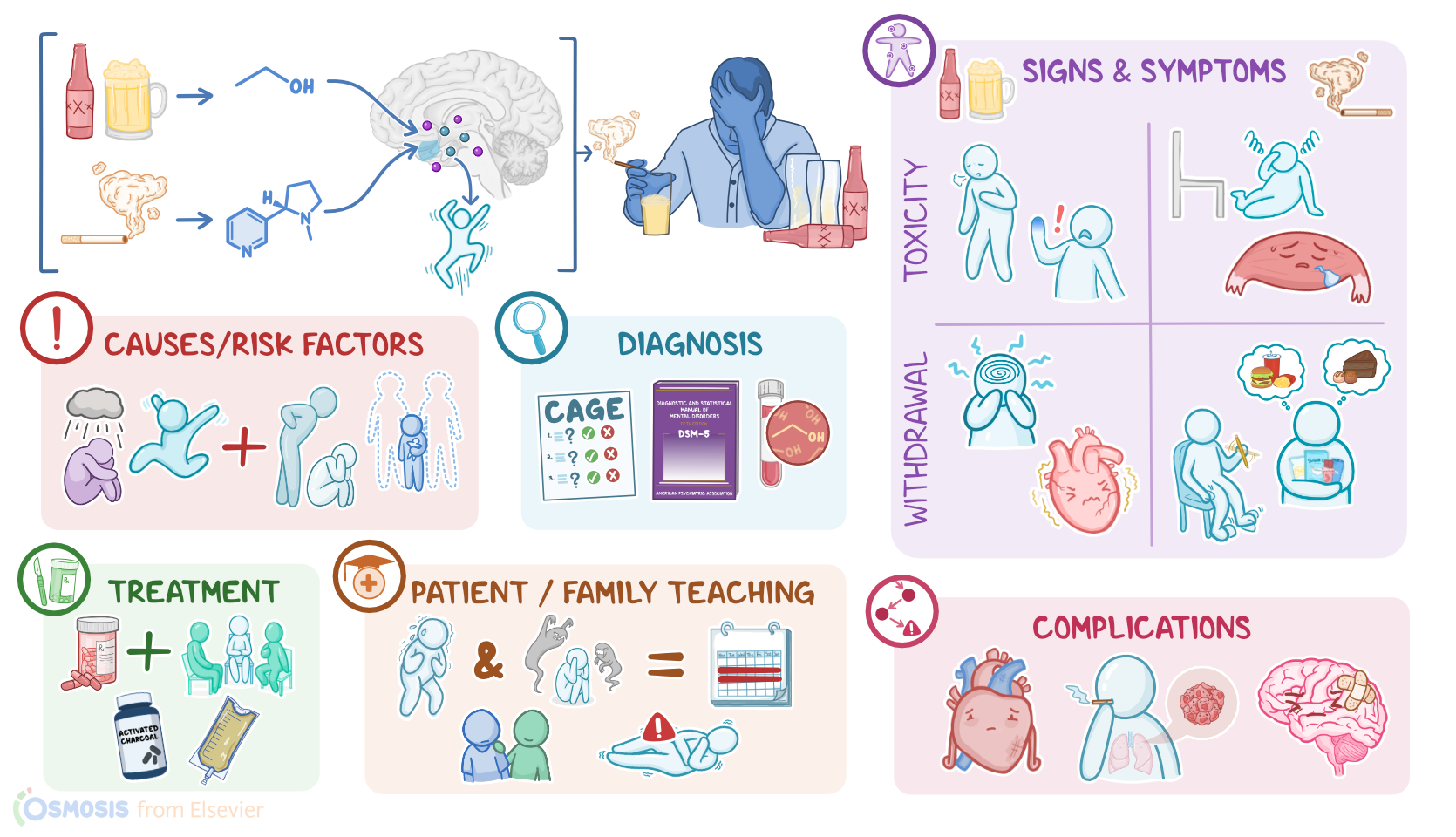
Now, there isn’t a single cause of substance use disorders, but rather it’s a multifactorial disease, meaning that there’s a combination of genetic predisposition and environmental risk factors and triggers. These include a family history of substance use disorder or having a mental health disorder like depression, ADHD, or PTSD. Certain experiences also put a client at high risk for developing a substance use disorder like using the substance at an early age, or experiencing physical, sexual, or emotional abuse.
Okay, so the pathology of substance use disorder centers around the fact that alcohol contains ethanol, while tobacco contains nicotine. Both can trigger the release of dopamine and other neurotransmitters in the brain and create a pleasant and euphoric feeling when using the substance. This in turn motivates the client to repeatedly use the substance.
It’s important to note that not everyone who uses a substance develops substance use disorder, for example someone who’s given morphine in the ER for kidney stones. A substance use disorder develops when long term use of a substance leads to severe physical, psychological, or social impairment in the client.
One reason this occurs is due to the body developing tolerance to the substance with chronic use. This is where neurons adapt to the dopamine over exposure by producing less and less dopamine or reducing the number of dopamine receptors. This lessens the effect of the substance so that the client needs to consume more and more of it to get the same euphoric feeling.
| SUBSTANCE USE DISORDER - ALCOHOL & TOBACCO | ||
| KEY POINTS | NOTES | |
| DEFINITION |
| |
| PHYSIOLOGY |
| |
| CAUSES AND RISK FACTORS |
| |
| PATHOPHYSIOLOGY |
| |
| SIGNS AND SYMPTOMS |
| |
| DIAGNOSIS |
| |
| TREATMENT |
| |
| MANAGEMENT OF CARE |
| |
| PATIENT AND FAMILY TEACHING |
| |
No notes for this video yet
Try adding a note below