Vital signs - Pain: Nursing skills
Pain is a feeling of discomfort that ranges from mild to severe, usually caused by an underlying condition and is never normal. Acute pain is a sudden, usually severe pain that typically decreases over time once the underlying cause resolves. It can last from days to weeks and is often caused by some sort of tissue damage. This includes trauma, like burns, a sprained ankle, or broken bones; surgery; or diseases and conditions like appendicitis. Chronic pain lasts longer than a few months and is usually associated with headaches, back pain, arthritis, nerve pain, and many others. Pain can interfere with the client’s ability to function and their quality of life. Consequences of unresolved pain include depression, impaired sleep, concentration and memory problems, hypertension, sexual dysfunction, and many more. So it’s important that nurses know how to recognize it. Many of your clients will feel pain, but it won’t be the same for everyone. Pain is an individualized sensation that depends on many factors. Each person has a different pain threshold, which is the point when they start noticing pain, and pain tolerance, which is the highest amount of pain they can handle.
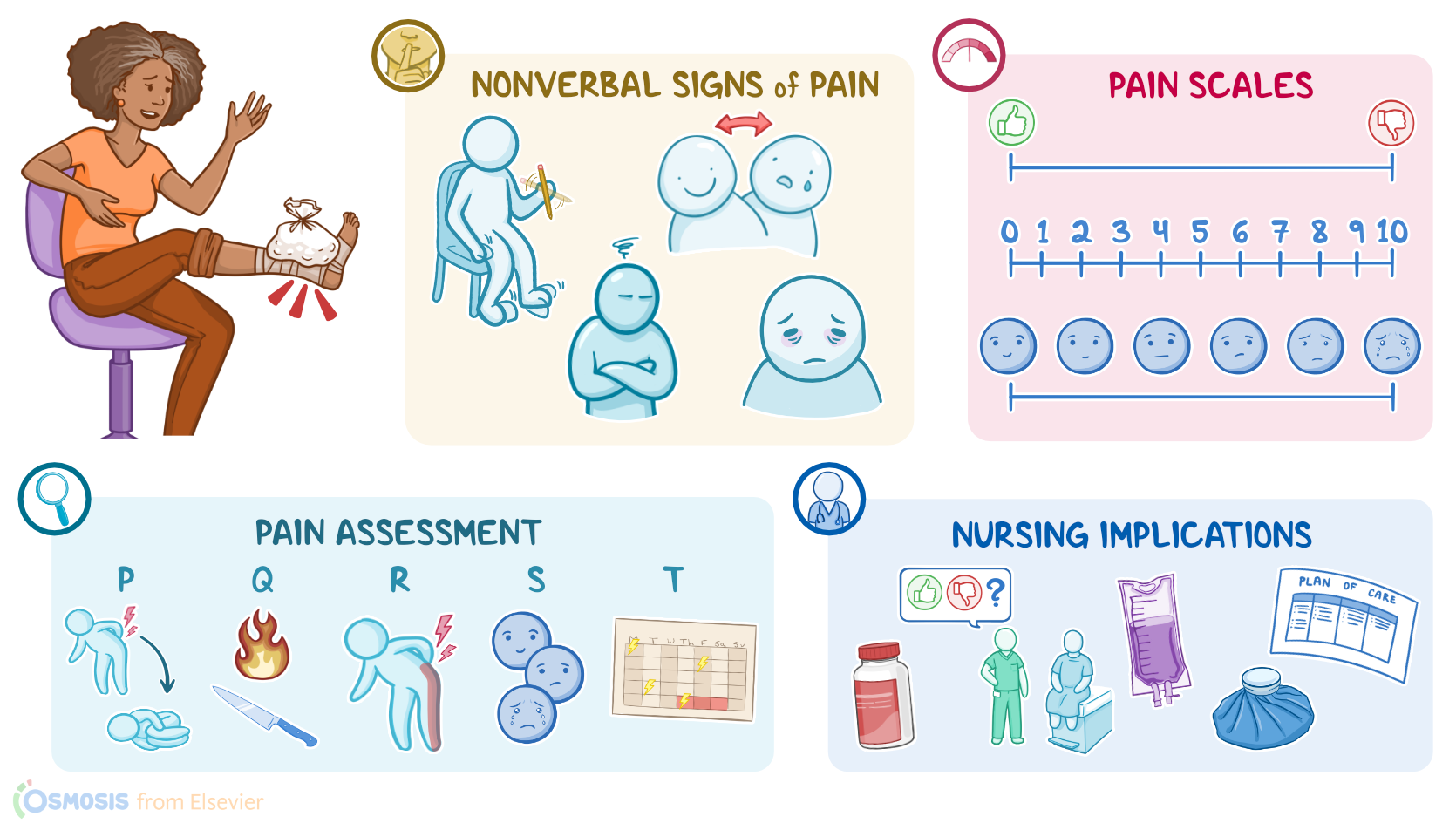
For example, if you pinch someone with a low pain threshold, they might immediately say it hurts, while someone with a high pain threshold will probably not report any pain at all. Now, the way someone handles pain is not just limited to pain threshold and tolerance. There are other factors to consider like anxiety, rest, energy level, hunger, culture, past experience with pain, and so on. Now, as a nurse, you might be the first to notice when a client is in pain. It is easy to notice when the client tells you they feel pain, but sometimes they won’t be able to tell you, or they might not want to. However, a client in pain will usually show some physical signs of pain that you should learn to recognize. These include irritability, restlessness, mood change, insomnia, clenching the jaw, frowning, grimacing, moaning, not wanting to move or change position, redness of the affected part, avoiding the use of or rubbing the affected part, and increased or decreased vital signs like temperature, pulse, blood pressure, and breathing rate. Each person experiences pain differently, so to help you report the severity of pain, you can use the pain scale approved by your facility. There are a few types of pain scales, but they all have the same basic features where on one end of the scale there is no pain and it increases to the worst pain at the other end.
A visual scale doesn’t have any words added to it, so the client can rate their pain level between the two points. A verbal scale has adjectives, like “mild,” “moderate,” and “severe,” written on the line in the order of severity. The numeric scale has a series of numbers from zero to ten, zero meaning no pain, and ten meaning the worst pain. Lastly, the Wong-Baker scale has faces drawn on it, each representing a level of pain. A client should point to the face that fits their feeling the best. The Wong-Baker scale is useful for people who can not verbally express themselves clearly, like children or those who don’t speak English if an interpreter is unavailable. The client’s report should always be respected and believed. To help you remember all of the components of a pain assessment, you can use the PQRST mnemonic. P stands for Provocation, or if the pain gets worse with movement, or if it hurts worse when touched. Q stands for Quality, or how your client describes the pain. Examples include dull, sharp, burning, throbbing, and so on. R stands for Region, which is where the pain is located, or if it radiates or moves somewhere else? S stands for Severity. For this one, you’ll use a pain scale to rate your client’s pain intensity. Finally, T stands for Time. Ask your client when the pain started; what they were doing when it started; how long the pain lasts. In some cases, you’ll also need to get your client’s vital signs, including temperature, pulse, heart rate, blood pressure, and breathing rate to understand how pain might be affecting your client’s condition.
| VITAL SIGNS - PAIN | ||
| KEY POINTS | NOTES | |
| DEFINITION |
| |
| PAIN THRESHOLD AND TOLERANCE |
| |
| NONVERBAL SIGNS OF PAIN |
| |
| PAIN SCALES |
| |
| PAIN ASSESSMENT |
| |
| NURSING IMPLICATIONS |
| |
No notes for this video yet
Try adding a note below