Multiple myeloma: Nursing
Multiple myeloma, also called plasma cell myeloma, is a condition in which there’s a malignant proliferation of plasma cells in the bone marrow. This further affects the bones and eventually destroys them.
First, let’s look at the physiology of the bone marrow and plasma cells. The main function of the bone marrow is to transform hematopoietic stem cells into all types of blood cells, like red blood cells, platelets, and white blood cells, which include lymphocytes. Plasma cells, specifically, develop from B-lymphocytes, or B-cells, which are key cells of the adaptive immune response. In the bone marrow, B-cells mature and acquire a set of diverse B-cell receptors. Afterwards, they are sent to the lymphoid tissue, like the lymph nodes and the spleen, where they encounter various antigens. By meeting different types of antigens, B-cells are activated and specialize into antibody-secreting plasma cells that are able to fight off infections.
Now, the cause of multiple myeloma is still unknown. However, some evidence suggests that genetic abnormalities in oncogenes, which are genes involved in the uncontrolled proliferation of cancer cells, can play a role in the development of multiple myeloma.
However, there are some known risk factors for developing multiple myeloma, which include age above 60 years old; a past medical or family history of plasma cell tumors; exposure to radiation or organic chemicals, like benzene, herbicides and insecticides; as well as some professions with increased exposure to environmental toxins, like firefighters. Finally, viral infections that impair the immune system, like an HIV infection, are also a risk factor for multiple myeloma.
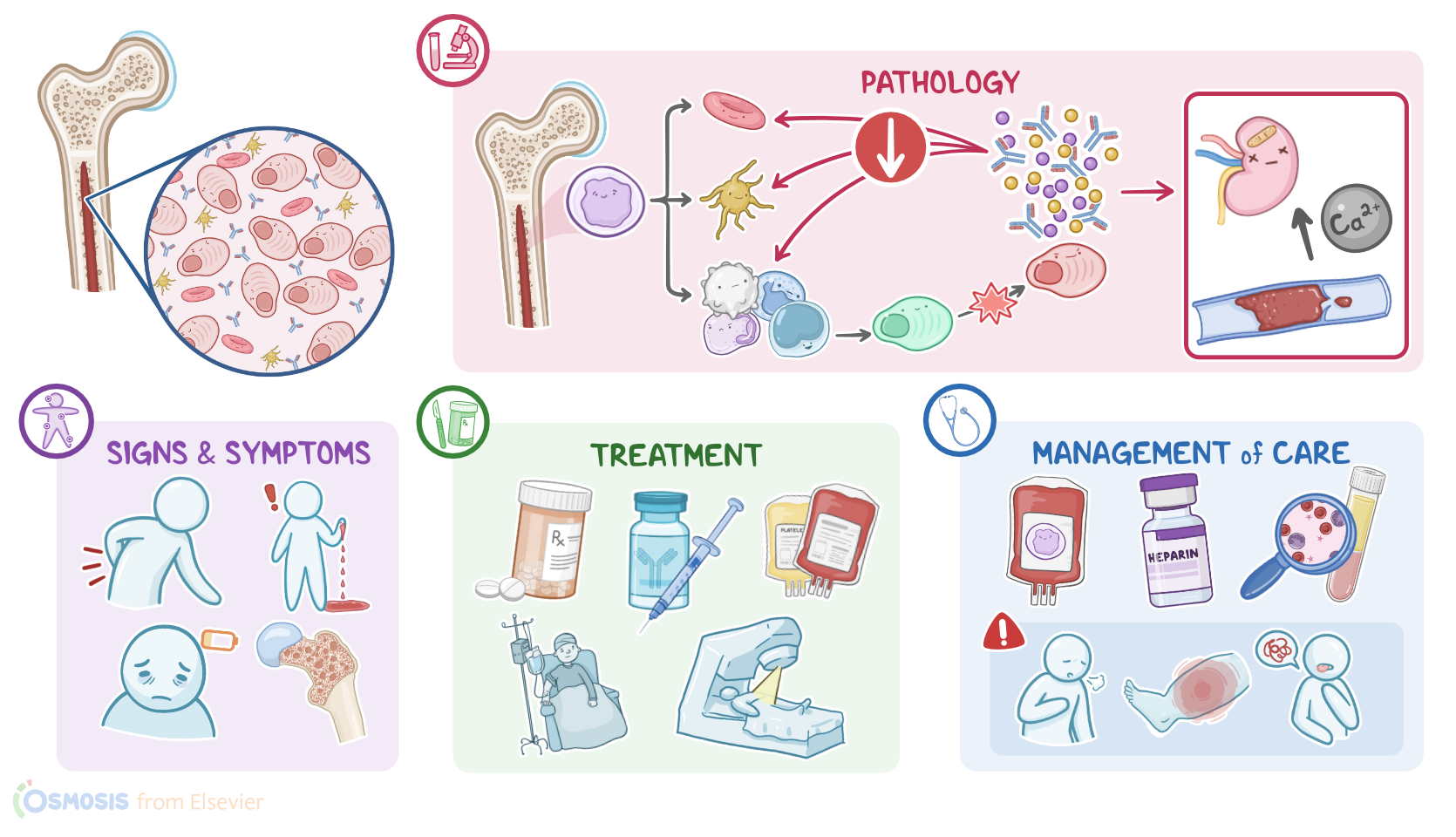
Okay, now let’s look at the pathology of multiple myeloma, which starts with excess production of abnormal plasma cells in the bone marrow. These abnormal plasma cells produce monoclonal antibodies, called M proteins, which are ineffective at fighting off infections. Some of the M proteins accumulate in the bone marrow. and lowers the production of normal red, white cells and platelets, resulting in pancytopenia. At the same time, when abnormal plasma cells proliferate, it reduces the number of normal plasma cells, which affects the body’s natural immune response even more, so there’s an increased risk of infections. Some monoclonal antibodies are released into the blood where they can cause end organ damage. Bence-Jones protein, which is the light chain portion of the M protein, can accumulate in the kidneys and cause renal damage.
| MULTIPLE MYELOMA | ||
| KEY POINTS | NOTES | |
| DEFINITION |
| |
| PHYSIOLOGY |
| |
| CAUSES AND RISK FACTORS |
| |
| PATHOLOGY |
| |
| CLINICAL MANIFESTATIONS |
| |
| DIAGNOSIS |
| |
| TREATMENT |
| |
| MANAGEMENT OF CARE |
| |
| PATIENT AND FAMILY TEACHING |
| |
Aún no hay notas para este video
Intenta agregar una nota a continuación