Osmosis video - Acute kidney injury (AKI): Nursing process (ADPIE)
00:00 / 00:00
Video Summary of Acute kidney injury (AKI): Nursing process (ADPIE)
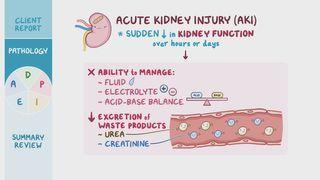
Acute kidney injury (AKI) is a sudden, potentially reversible decline in renal function. AKI results in the accumulation of water, nitrogenous wastes, sodium, and other metabolic wastes in the body, and can also lead to electrolyte imbalances. Common causes include dehydration, sepsis, and some drug therapy.
AKI often presents with reduced urine output, but there can be other signs such as edema, and those associated with the accumulation of metabolic wastes such as anorexia, seizures, and altered mental status. The nursing process for AKI begins with the assessment and identification of patients at risk for developing the condition. Once AKI is diagnosed, nurses work with other health care providers to implement therapies aimed at preventing progression and maximizing patient outcomes. If AKI is left untreated, it can lead to chronic kidney disease (CKD).