Osmosis video - Spontaneous abortion: Nursing
Learn deeper with Osmosis
Master this topic faster with videos, questions, and AI.
Used by 8M+ healthcare learners.
No credit card · Cancel anytime
00:00 / 00:00
Video Summary of Spontaneous abortion: Nursing
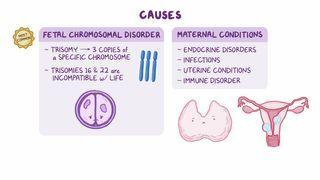
Spontaneous abortion, also known as a miscarriage, is the loss of a pregnancy before the 20th week of gestation. Spontaneous abortion can be complete, incomplete, or missed. With a complete spontaneous abortion, all contents are expelled; while with an incomplete abortion, some contentS like the placenta or fetal membranes, depending on gestational age, can be retained. If it is a missed spontaneous abortion, no uterine contents are expelled.
Symptoms of spontaneous abortion can include vaginal bleeding, cramping, and the passing of tissue from the vagina. In missed spontaneous abortion, people may experience no symptoms and may be discovered during a routine prenatal ultrasound or exam. Diagnosis involves clients' history and physical assessment, followed by an ultrasound and laboratory testing, including a complete blood count, hCG and progesterone levels, and possible cultures of blood or vaginal discharge samples.
Treatment depends on the type of abortion and can involve medications that stimulate uterine contractions or control the bleeding, conservative management, or surgical procedures like dilation and curettage. Rh-negative clients should be administered Rho(D) immunoglobulin after the abortion. Priority goals of nursing care include maintaining fluid balance, preventing infection, managing pain, and providing emotional support. Client and family teaching focuses on teaching them about their condition and treatments, self-care, and when to seek medical assistance.