Osmosis video - Thermoregulation - Neonate: Nursing
Learn deeper with Osmosis
Master this topic faster with videos, questions, and AI.
Used by 8M+ healthcare learners.
No credit card · Cancel anytime
00:00 / 00:00
Video Summary of Thermoregulation - Neonate: Nursing
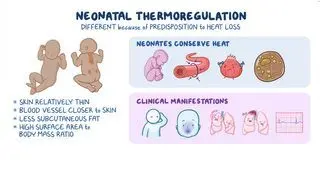
Thermoregulation is an important process for neonates, as their immature body systems can easily become overloaded. Neonatal thermoregulation is different from that of children and adults because of their predisposition to heat loss. That's because their skin is relatively thin, their blood vessels are closer to the skin's surface, there's less subcutaneous fat, and because they are small, they have a high surface area to body mass ratio compared to a child or adult.
Neonates conserve heat when exposed to cooling by assuming a flexed position; or through peripheral vasoconstriction; normal metabolic processes; as well as metabolizing brown adipose tissue. If an infant becomes cold, clinical manifestations can include relatively pale and mottled skin; peripheral or central cyanosis; signs of respiratory distress; apnea, and bradycardia. Behavioral manifestations can include lethargy, poor muscle tone, as well as a weak cry, and weak suck. Priority goals of care include preventing excessive heat loss and providing supportive care if cold stress occurs. Client and family education is focused on how to maintain thermoregulation at home and when to notify the healthcare provider.