Osmosis video - Wound healing
Learn deeper with Osmosis
Master this topic faster with videos, questions, and AI.
Used by 8M+ healthcare learners.
No credit card · Cancel anytime
00:00 / 00:00

Video Summary of Wound healing
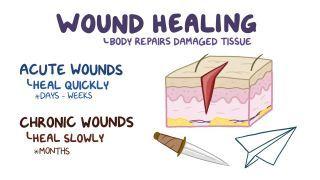
Wound healing is the process of repairing damaged tissue after an injury. Different tissues have different regenerative capacities: labile tissue, like skin and intestine, heal well, while permanent tissue, like cartilage and skeletal muscle, have limited regenerative capacity and may result in scarring. Wound healing can occur by primary, secondary, or tertiary intention depending on how the wound edges approximate. The steps of wound healing are hemostasis, inflammation, epithelialization, fibroplasia, and maturation. Hemostasis involves the formation of a blood clot to prevent further blood loss, followed by inflammation where immune cells clear debris and microbes. Epithelialization involves the regeneration of the epidermal layer, while fibroplasia strengthens the wound with the production of collagen and ground substance. Maturation involves further strengthening of the wound through collagen crosslinking and wound remodeling.