
Ablutophobia · What Is It, Symptoms, Diagnosis, and More

Published: Feb 19, 2026
Author: Lily Guo, MD
Editor: Alyssa Haag, MD
Editor: Ian Mannarino, MD, MBA
Editor: Kelsey LaFayette, DNP, ARNP, FNP-C
Illustrator: Jannat Day
7-day free trial

Go deeper with Osmosis

Osmosis is a learning platform with videos, questions, and AI tools to help you master topics like this.

4.8 · 12,000+ reviews
Watch quick, visual videos
Practice with Qbank-style questions
Use AI to explain, quiz, and review
Study anytime with the mobile app
Start free trial

No credit card · Cancel anytime

What is ablutophobia?

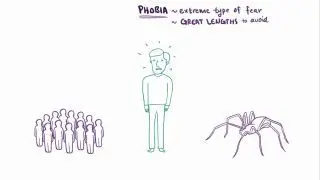
Ablutophobia is a form of specific phobia in which individuals have an irrational fear of bathing, washing, or cleaning themselves. A specific phobia is a common form of anxiety disorder characterized by overwhelming fear of an object or situation that results in avoidance behaviors. Examples of common specific phobias include the phobia of spiders, known as arachnophobia; phobia of heights, known as acrophobia; and phobia of enclosed spaces, known as claustrophobia 

Learn deeper with Osmosis

Master this topic faster with videos, questions, and AI.

Used by 8M+ healthcare learners.

Start free trial

No credit card · Cancel anytime

What causes ablutophobia?

The exact cause of ablutophobia is currently unknown, however, it is thought to stem from a complex interaction of biological, psychological, social, and environmental factorsSpecific phobias, including ablutophobia, can aggregate in families. First-degree relatives of individuals with any specific phobia have an increased risk of developing a specific phobia themselves. Additionally, studies in twins suggest that specific phobias are moderately heritable. Observation of a parent or caregiver with a specific phobia can result in the child learning the same behavior and developing a phobia 

Furthermore, functional magnetic resonance imaging (fMRI) has found neuroanatomical pathways associated with specific phobias. For example, in individuals with specific phobias, hyperactivation has been found in regions of the brain associated with negative emotional responses, such as the amygdala and the insula. Environmental factors may strongly contribute to the development of ablutophobia, such as a traumatic experience associated with showering or bathing. This includes a near-drowning event or an abusive situation. In addition to directly experiencing the trauma, an individual may also develop a phobia after observing a traumatic event such as seeing someone injured or harmed while bathing or hearing about an incident on the news. 

Specific phobias are more common in genetic females than in genetic males.  

What are the signs and symptoms of ablutophobia?

The signs and symptoms of ablutophobia include the avoidance of showering, bathing, or cleaning oneself. When exposed to showering or bathing, or the idea of having to do so, the individual may feel highly anxious and have an associated physiological reaction (e.g., rapid pulse, heart palpitations, difficulty breathing, sensation of lightheadedness, dizziness, dry mouth, and nausea). The individuals often recognize that their fear is irrational and excessive but cannot control their fearful response. Those with specific phobias commonly have other mental health disorders including other anxiety disorders such as generalized anxiety disorder, panic disorder, and major depressive disorder. The age of onset for specific phobias is typically in mid-childhood or early adolescence but this can vary. When untreated, phobias tend to be lifelong.  

How is ablutophobia diagnosed?

The diagnosis of ablutophobia is made clinically after a thorough history and review of symptoms by a licensed healthcare professional. The diagnostic criteria for ablutophobia are outlined by the American Psychiatric Association’s Diagnostic and Statistical Manual of Mental Disorders, Fifth Edition, (DSM-5) and follow the criteria for any specific phobia 

  • Marked fear or anxiety about a specific object or situation (e.g., bathing, showering, washing oneself) resulting in avoidance behaviors 

  • The fear or anxiety is out of proportion to the actual danger posed by the specific situation and to the sociocultural context. 

  • The fear is persistent, typically lasting for 6 months or more. 

  • The fear causes clinically significant distress or impairment in social, occupational, or other important areas of functioning. 

  • The disturbance is not better explained by the symptoms of another mental disorder (e.g., agoraphobia (fear of public or crowded spaces), obsessive-compulsive disorder, post-traumatic stress disorder, etc). 

Each of the above criteria has to be met before a diagnosis of ablutophobia can be made.  

How is ablutophobia treated?

The first-line treatment for ablutophobia includes a type of psychological therapy known as cognitive-behavioral therapy (CBT). The specific type of CBT therapy used to treat those with specific phobia is referred to as exposure therapy, which includes in vivo (i.e., real life) exposure, imaginal exposure, and virtual reality exposure. In vivoexposure therapy requires that the individual directly face the feared situation in real life to help overcome ablutophobia. For example, an individual with ablutophobia may be asked to step into a shower first with the water off and then eventually with the water turned on. During imaginal exposure therapy, the therapist may guide the individual through an imaginary scene of them bathing, while asking them to describe their emotions. Virtual reality exposure is an emerging form of exposure therapy where an individual is immersed in a computer-generated virtual environment. This can be done through the use of a head-mounted display device or a computer-automated room where images are presented in three dimensions.  

Notably, individuals with ablutophobia may be hesitant to seek treatment, either due to a lack of knowledge that the phobia can be treated, embarrassment to disclose the phobia to a health professional, or fear of anxiety during treatment. For individuals who are reluctant to undergo CBT, an alternative treatment to control acute anxiety is benzodiazepine medication (e.g., alprazolam, clonazepam). If there is a comorbid condition such as depression or general anxiety disorder, other medications including selective serotonin reuptake inhibitors (SSRIs) (e.g., fluoxetine, escitalopram) may be prescribed. 

What are the most important facts to know about ablutophobia?

Ablutophobia is a specific phobia characterized by irrational fears of washing, bathing, or showering. This anxiety disorder results in significant avoidance behaviors and is thought to arise from a complex interplay of biological, psychological, social, and environmental factorsSymptoms of ablutophobia include heightened anxiety, rapid pulse, and difficulty breathing when faced with the prospect of bathing, which is recognized by the individual as irrational. Diagnosis follows the DSM-5 criteria for specific phobias, including marked fear or anxiety towards bathing that is disproportionate and persistent. Effective treatments to help overcome ablutophobia primarily involve cognitive behavior therapy, especially exposure therapy. Medications like benzodiazepines or SSRIs may be used for comorbid conditions or when individuals are hesitant to seek therapy. 

Key Takeaways

Definition 

Ablutophobia is a form of specific phobia in which individuals have an irrational fear of bathing, washing, or cleaning themselves. 

Specific Phobias 

- Form of anxiety disorder  

- Overwhelming fear of an object or situation → avoidance behaviors  

Causes of Specific Phobias  

- Biological factors:  

     - Family clusters: increased risk if first-degree relative is affected by same specific phobia 

     - Associated neuroanatomical pathways  

- Environmental factors 

     - Traumatic experiences – e.g., near-drowning event; abusive situation; observation or hearing of traumatic event  

- Risk factor: being genetic females  

Signs and Symptoms 

- Avoidance of showering, bathing, cleaning  

- Anxiety and associated physiological when exposed to showering or bathing  

- Often associated with other mental health disorders  

     - Generalized anxiety disorder, panic disorder, major depressive disorder 

- Age of onset: usually mid-childhood or early adolescence 

- Can be lifelong if left untreated 

Diagnosis 

- DSM-5 criteria for specific phobia:  

     - Marked fear or anxiety about a specific object or situation resulting in avoidance behaviors.   

     - The fear or anxiety is out of proportion to the actual danger posed by the specific situation and to the sociocultural context.  

     - The fear is persistent, typically lasting for 6 months or more.  

     - The fear causes clinically significant distress or impairment in social, occupational, or other important areas of functioning 

     - The disturbance is not better explained by the symptoms of another mental disorder.  

Treatment 

- Cognitive-behavioral therapy (CBT)  

     - Exposure therapy – including in vivo exposure and imaginary exposure (new: virtual reality exposure) 

- If reluctant to undergo CBT: benzodiazepines or SSRIs (if comorbidities such as depression or general anxiety disorder) 

Students say Osmosis is 100% worth it

Because Osmosis saves them time. Lowers stress. And actually helps them remember when it counts.

I used Osmosis to prepare for my first medical school licensing exam! Super helpful and interactive for people who may not do great with just pages of text info!

Cecilia Ruiz

Cecilia Ruiz

MD student

Sayan Misra

I have used Osmosis for about four years. Best thing I have ever used for my medical studies.

Sayan Misra

Sayan Misra

Med student

Osmosis videos are superior because they define simple concepts, tell a story with a clear progression, and provide context.

Jay Pate

Jay Pate

Dental student

References


American Psychiatric Association. Diagnostic and Statistical Manual of Mental Disorders: DSM-IV-TR. 4th ed. American Psychiatric Association; 2000. 


Botella C, Serrano B, baños R, García-Palacios A. Virtual reality exposure-based therapy for the treatment of post-traumatic stress disorder: A review of its efficacy, the adequacy of the treatment protocol, and its acceptability. Neuropsychiatric Disease and Treatment. 2015;11:2533. doi:https://doi.org/10.2147/ndt.s89542 


Hoffman SN, Rassaby MM, Stein MB, Taylor CT. Positive and negative affect change following psychotherapeutic treatment for anxiety-related disorders: A systematic review and meta-analysis. J Affect Disord. 2024 Mar 15;349:358-369. doi: 10.1016/j.jad.2024.01.086. Epub 2024 Jan 10. PMID: 38211753.