Enterovirus D68 · What It Is, Transmission, Signs and Symptoms, Treatment, and More

Published: Nov 06, 2025
Author: Emily Miao, PharmD
Editor: Alyssa Haag, MD
Editor: Ian Mannarino, MD, MBA
Editor: Kelsey LaFayette, DNP, ARNP, FNP-C
Editor: Arianna Succi, MD
Illustrator: Jessica Reynolds, MS
7-day free trial

Go deeper with Osmosis

Osmosis is a learning platform with videos, questions, and AI tools to help you master topics like this.

4.8 · 12,000+ reviews
Watch quick, visual videos
Practice with Qbank-style questions
Use AI to explain, quiz, and review
Study anytime with the mobile app
Start free trial

No credit card · Cancel anytime

What is enterovirus D68?

Enterovirus D68 (EV-D68) is a type of enterovirus first identified in California, United States in the 1960s. It usually causes mild respiratory illness but can be potentially severe in children with asthma and other underlying respiratory conditions. Rarely, EV-D68 can also cause acute flaccid myelitis in young children, an uncommon but serious condition that causes muscle weakness, paralysis, and decreased reflexes. EV-D68 is a member of the Picornaviridae family and Enterovirus genus. Enteroviruses are a broad group of viruses that cause mild to severe diseases, including respiratory infections and viral meningitis. While prevalence varies by year and geographic location, outbreaks tend to occur during late summer and fall. Nonetheless, individuals can be infected year-round. The incidence of EV-D68 has been increasing in the past few decades, and a nationwide respiratory illness outbreak occurred in the United States between August and November of 2014. Since then, the Centers for Disease Control and Prevention (CDC) have implemented a surveillance program to raise awareness on enterovirus infection with EV-D68. Because they have not yet developed antibodies against these viruses, children are most likely to get infected. 

Learn deeper with Osmosis

Master this topic faster with videos, questions, and AI.

Used by 8M+ healthcare learners.

Start free trial

No credit card · Cancel anytime

How is enterovirus D68 transmitted?

EV-D68 spreads from person to person either directly or indirectly (i.e., through a contaminated surface). EV-D68 is primarily found in the respiratory tract and secretions (e.g., saliva, nasal mucosa, sputum) of people who are sickWhen an infected individual coughs and sneezes, virus-containing particles spread into the air. These droplets can land on nearby individuals or land on surfaces into the environment. Therefore, exposure to this virus and infected fomites (i.e., contaminated objects) can be prevented by washing hands often with soap and water and by wearing a face mask. 

What signs and symptoms does enterovirus D68 infection cause?

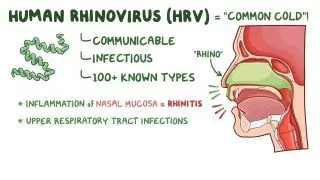
The symptoms of EV-D68 infection range from mild to severe and are similar to those found in other respiratory illnesses, including influenza and the common cold. The incubation period (i.e., the time between exposure to the virus and symptoms onset) of EV-D68 ranges from 3 to 10 days. Most individuals experience either no symptoms at all (i.e., asymptomatic) or mild symptoms such as a runny nose, sore throat, sneezing, cough, and myalgias. Individuals with underlying pulmonary disease (e.g., chronic obstructive pulmonary disease, or COPD) may experience severe symptoms such as wheezing and difficulty breathing, although these are less common. Notably, children with underlying respiratory conditions such as asthma or concomitant bronchiolitis may also experience a more severe disease course (e.g., respiratory distress). 

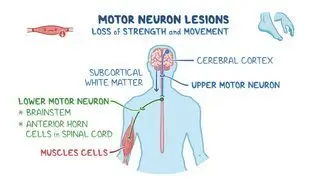
Rarely, EV-D68 has been known to cause acute flaccid myelitis (AFM), a serious neurologic condition that affects the nervous system, specifically the gray matter of the spinal cord. AFM mostly affects young children and causes weakening of the body’s muscles and reflexes. Other signs and symptoms of AFM include difficulty swallowing, slurred speech, facial droop, and drooping eyelids.  

How is an enterovirus D68 infection diagnosed and treated?

Diagnosis of EV-D68 infection begins with a thorough review of symptoms and medical history. Although further testing is often not needed due to the self-resolving nature of the disease, a throat or nasal swab can be helpful in determining the etiology of infection (e.g., bacterial or viral) when necessary. Testing for enterovirus is often incorporated into multiplex respiratory panels, which are molecular assays simultaneously testing for various common respiratory pathogens (e.g., coronavirus, enterovirus, influenza). Molecular sequencing methods such as reverse transcription polymerase chain reaction (RT-PCR) are used to identify the specific virus strain. RT-PCR is a gene sequencing method used to detect a pathogen’s genetic material (e.g., RNA from EV-D68) by converting it into DNA and amplifying it for identification and sequencing.  


There is no specific treatment for individuals with EV-D68 infection. Most individuals experience a mild self-limiting disease; therefore, management is achieved through supportive measures to improve symptom burden. Supportive measures include adequate rest and hydration with oral fluids, and over-the-counter medications such as acetaminophen or ibuprofen to manage fever and alleviate muscle aches and pains. Saline nasal sprays and humidifiers may help with nasal congestion and saltwater rinses can help relieve sore throat. If symptoms worsen with significant respiratory compromise (e.g., shortness of breath, wheezing) or signs of AFM are present, emergency medical attention should be sought immediately. Treatment for AFM includes a combination of supportive measures (e.g., hydration); steroids (e.g., dexamethasone); plasmapheresis (i.e., removal or exchange of components of blood plasma); and intravenous immunoglobulin (IVIG), a pooled antibody therapy used to treat various autoimmune, infectious, and inflammatory conditions. Frequent washing of hands with soap and water can help prevent transmission to others.  
What are the most important facts to know about enterovirus D68?

Enterovirus D68 (EV-D68) is a type of enterovirus that was first identified in California, United States in the 1960s and can cause respiratory illness, that can be severe in children with asthma and other underlying respiratory conditions. EV-D68 is primarily found in the respiratory tract and secretions (e.g., saliva, nasal mucosa, sputum) of people who are sick and spreads from person to person through respiratory droplets. Most individuals experience either no symptoms at all (i.e., asymptomatic) or mild symptoms such as a runny nose, sore throat, sneezing, cough, and myalgias. Individuals with underlying respiratory conditions may experience severe symptoms such as wheezing and difficulty breathing, although these are less common. Management consists of supportive measures including adequate rest and hydration with oral fluids, over-the-counter medications such as acetaminophen or ibuprofen, and saline nasal sprays for decongestion. To prevent EV-D68 infection, avoid touching your eyes, nose, and mouth with unwashed hands and frequently wash your hands with soap and water. 

Key Takeaways

Definition 

Virus of the Picornaviridae family and Enterovirus genus causing respiratory illness. 

Causes 
 

- Direct transmission through infected respiratory droplets  

- Indirect transmission through infected surfaces 

- Prevention: frequent hand washing with water and soap, face masks 

Signs and Symptoms 

- Usually no or mild symptoms 

- Runny nose 

- Sore throat 

- Sneezing  

- Myalgias 

- If underlying respiratory conditions 

     - Wheezing  

     - Dyspnea 

- Acute flaccid myelitis (rare)  

Diagnosis 

- Clinical: review of symptoms and medical history 

- Multiplex respiratory panels, RT-PCR for virus detection 

Treatment 
 

- Self-limiting infection → supportive care 

     - Hydration  

     - Saline nasal sprays 

     - Saltwater rinses 

     - Over-the-counter medications 

- Acute flaccid myelitis:  

     - Steroids 

     - Plasmapheresis 

     - Intravenous immunoglobulin  

Students say Osmosis is 100% worth it

Because Osmosis saves them time. Lowers stress. And actually helps them remember when it counts.

I used Osmosis to prepare for my first medical school licensing exam! Super helpful and interactive for people who may not do great with just pages of text info!

Cecilia Ruiz

Cecilia Ruiz

MD student

Sayan Misra

I have used Osmosis for about four years. Best thing I have ever used for my medical studies.

Sayan Misra

Sayan Misra

Med student

Osmosis videos are superior because they define simple concepts, tell a story with a clear progression, and provide context.

Jay Pate

Jay Pate

Dental student

References


Abedi GR, Watson JT, Nix WA, Oberste MS, Gerber SI. Enterovirus and Parechovirus surveillance—United States, 2014-2016. MMWR Morb Mortal Wkly Rep. 2018;67(18):515-518. https://doi.org/10.15585/mmwr.mm6718a2


Centers for Disease Control and Prevention. About Enterovirus D68. Published September 9, 2022. Accessed November 29, 2023. https://www.cdc.gov/non-polio-enterovirus/about/ev-d68.html


Centers for Disease Control and Prevention. Enterovirus D68. Published July 11, 2023. Accessed November 29, 2023. https://www.cdc.gov/non-polio-enterovirus/hcp/clinical-overview/?CDC_AAref_Val=https://www.cdc.gov/non-polio-enterovirus/hcp/ev-d68-hcp.html


Jubelt B, Lipton HL. Enterovirus/picornavirus infections. Handb Clin Neurol. 2014;123:379-416. https://doi.org/10.1016/B978-0-444-53488-0.00018-3


Messacar K, Abzug MJ, Dominguez SR. The emergence of Enterovirus-D68. Microbiol Spectr. 2016;4(3):EI10-0018-2016. https://doi.org/10.1128/microbiolspec.EI10-0018-2016