



Fordyce Spots · What Are They, Causes, Treatment, and More

Published: Oct 07, 2025
Author: Ali Syed, PharmD
Editor: Alyssa Haag, MD
Editor: Emily Miao, MD, PharmD
Editor: Lily Guo, MD
Illustrator: Jessica Reynolds, MS
Copyeditor: David G. Walker
7-day free trial

Go deeper with Osmosis

Osmosis is a learning platform with videos, questions, and AI tools to help you master topics like this.

4.8 · 12,000+ reviews
Watch quick, visual videos
Practice with Qbank-style questions
Use AI to explain, quiz, and review
Study anytime with the mobile app
Start free trial

No credit card · Cancel anytime

What are Fordyce spots?

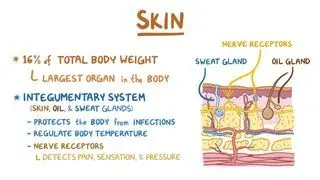
Fordyce spots, also known as Fordyce granules or Fordyce glands, are a skin condition characterized by large, ectopic sebaceous glands (i.e., oil glands) frequently found on the oral mucosa and genitalia. Fordyce spots are very common, occurring in up to 70-80% of adults. They are considered normal variants of the skin that are likely present at birth, however they often go unnoticed. After puberty or with increased age they may grow and become more visible as a result of increased oil production in the skin and hormonal influences.  

Fordyce spots typically appear as painless, pinpoint (<1 mm), whitish-yellow bumps that most commonly appear in areas of the skin without hair follicles (e.g., inside lining of the cheeks, inferior eyelids, vermilion border of the lips). They appear either individually or in scattered patterns, often clustering in groups of 50 to 100 spots that form patches on the skin. Fordyce spots may also appear on genitalia including the shaft of the penis, scrotum, labia majora, and/or labia minora.  Lesions are typically purple or red in color in these locations.  

Learn deeper with Osmosis

Master this topic faster with videos, questions, and AI.

Used by 8M+ healthcare learners.

Start free trial

No credit card · Cancel anytime

Are Fordyce spots malignant?

Fordyce spots are considered benign, physiologic variants of the skin.  However, for some individuals, Fordyce spots may be a cosmetic concern. The perceived unsightly appearance can lead to anxiety, depression, or emotional distress. Additionally, if the Fordyce spots are present on genitalia, they cause itching or discomfort during sexual intercourse.   

What causes Fordyce spots?

The exact cause of Fordyce spots remains unknown and is likely due to a combination of biological and environmental factors. Fordyce spots are commonly caused by the overgrowth of ectopic sebaceous glands, which some studies have linked to hormonal changes and/or factors in embryo development.   

Common risk factors that may be associated with the development of Fordyce spots include oily skin, post-pubertal age, and male sex at birth. Individuals with certain conditions are also at increased risk, including those with dyslipidemia, rheumatic disorders, Muir-Torre syndrome, and colorectal cancers. 

How are Fordyce spots diagnosed?

Fordyce spots are commonly diagnosed by a healthcare professional upon physical examination. Individuals who find their Fordyce spots bothersome; are experiencing any signs or symptoms related to them, such as bleeding, depression or anxiety; or are concerned about other diseases may seek diagnosis or treatment and medical advice from a healthcare professional.  

It is important that Fordyce spots are accurately diagnosed as the differential diagnosis for Fordyce spots include other conditions, such as genital warts, epidermoid cysts, sebaceous hyperplasia, or milia. Additionally, sexually transmitted infections may initially resemble Fordyce spots on the genitals and may require treatment with medications. To diagnose infections, swabs of the affected skin areas may also be taken and tested for the presence of bacteria or viruses. Blood and urine samples may be taken to rule out other conditions. A skin biopsy may be required in rare circumstances, where a sample of tissue is removed and examined under a microscope to rule out other conditions, like skin cancer. 

How are Fordyce spots treated?

Treatment of Fordyce spots is often not required as they are benign and harmless. Individuals may opt for treatment if they have cosmetic concerns. Isotretinoin is a topical medication that can potentially shrink or minimize the Fordyce spots. Surgical approaches can be considered for persistently symptomatic, bothersome lesions but these modalities have a risk of scarring. Examples include laser treatments, such as carbon dioxide (CO2) lasers, also known as electrodesiccation lasers, and pulsed dye lasers. Both laser treatments use concentrated beams of light to remove the spots at different wavelengths. Micro-punch surgery is a micro-punch technique in which a small pen-like device is used to punch the skin and remove unwanted tissue after application of a local anesthetic. This approach permits multiple Fordyce spots to be rapidly removed. 

Do Fordyce spots ever resolve?

Fordyce spots may fade with time without any treatment. It is important to avoid picking or squeezing them, as this can lead to irritation and possible infection. 

What are the most important facts to know about Fordyce spots?

Fordyce spots are a normal, benign variation of the skin characterized by enlarged oil glands. They usually become more visible when there is increased oil production in the skin, such as during puberty. Fordyce spots are typically a white to yellow color and commonly appear in areas of the skin where no hair follicles are present. The exact cause of Fordyce spots remains unknown and is likely due to a combination of biological and environmental factors, resulting in an overgrowth of sebaceous glands. The most common risk factors associated with the development of Fordyce spots include oily skin, post-pubertal age, male sex at birth, dyslipidemia, and colorectal cancers. Fordyce spots may be diagnosed by a healthcare professional upon visual inspection alone; however, in certain circumstances, swabs and/or biopsies of the skin may be taken to rule out other skin conditionsTreatment of Fordyce spots is not required; however, micro-punch surgerylaser treatments, and topical and/or oral medications may be used to shrink or remove Fordyce spots if cosmetic concerns arise. Fordyce spots may fade with time without any treatment, and it is crucial to avoid picking or squeezing them to prevent irritation or infection. 

Key Takeaways

Definition

Fordyce spots are a skin condition characterized by large, ectopic sebaceous glands that result in painless, pinpoint, whitish-yellow bumps on areas of the skin without hair, such as the oral mucosa and genitalia. 

Malignant or Benign? 

- Benign  

- May be a cosmetic concern for some  

- Anxiety, depression, emotional distress  

- Can cause itching or discomfort during sexual intercourse when located on genitalia 

Causes 

- Unknown  

- Commonly caused by ectopic sebaceous gland overgrowth 

- Risk factors: 

     - Oily skin  

     - Post-pubertal age  

     - Male sex at birth  

     - Dyslipidemia  

     - Rheumatic disorders  

     - Muir-Torre syndrome  

     - Colorectal cancer 

Diagnosis 

- Physical exam 

- Rule out differential diagnoses: 

     - Genital warts, epidermoid cysts, sebaceous hyperplasia, milia, sexually transmitted infections 

Treatment 

- Not necessary, optional for cosmetic concerns 

- Topical medications 

- Laser treatments 

- Surgery 

Resolution 

- May fade spontaneously over time 

- Avoid picking or squeezing:  

     - Can cause irritation and infection 

Students say Osmosis is 100% worth it

Because Osmosis saves them time. Lowers stress. And actually helps them remember when it counts.

I used Osmosis to prepare for my first medical school licensing exam! Super helpful and interactive for people who may not do great with just pages of text info!

Cecilia Ruiz

Cecilia Ruiz

MD student

Sayan Misra

I have used Osmosis for about four years. Best thing I have ever used for my medical studies.

Sayan Misra

Sayan Misra

Med student

Osmosis videos are superior because they define simple concepts, tell a story with a clear progression, and provide context.

Jay Pate

Jay Pate

Dental student

References


Ahn GR, Park SJ, Lee CK, Kim BJ. A case of successful treatment of Fordyce spots with a single insulated microneedle radiofrequency device. Dermatol Ther. 2019;32(5):e13026. doi:10.1111/dth.13026. PMID: 31323158.


Fordyce spots. American Osteopathic College of Dermatology. Accessed January 15, 2022. https://www.aocd.org/page/FordyceSpots


Pallua N, Stromps J. Micro-punch technique for treatment of Fordyce spots: A surgical approach for an unpleasant condition of the male genital. J Plast Reconstr Aesthet Surg. 2013;66(1):e8–e11.


Randall D, Booth J, Wiles K, eds. Kumar and Clark’s Clinical Medicine. 11th ed. Philadelphia, PA: Elsevier; 2025.