
Hepatic Steatosis · What Is It, Causes, Diagnosis, Treatment, and More

Published: Mar 04, 2025
Author: Anna Hernández, MD
Editor: Alyssa Haag
Editor: Józia McGowan, DO
Editor: Kelsey LaFayette, DNP, ARNP, FNP-C
Illustrator: Jessica Reynolds, MS
Copyeditor: Stacy M. Johnson, LMSW
7-day free trial

Go deeper with Osmosis

Osmosis is a learning platform with videos, questions, and AI tools to help you master topics like this.

4.8 · 12,000+ reviews
Watch quick, visual videos
Practice with Qbank-style questions
Use AI to explain, quiz, and review
Study anytime with the mobile app
Start free trial

No credit card · Cancel anytime

What is hepatic steatosis?

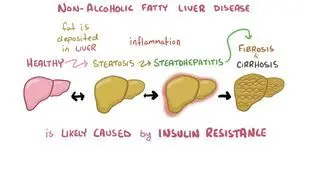
Hepatic steatosis, more commonly known as fatty liver disease, occurs when excess fat accumulates in the liver. Fatty liver disease is one of the most common causes of chronic liver disease in the developed world, affecting up to one in every four individuals. Fatty liver disease starts with simple steatosis, also known as fatty change, which can progress to more advanced stages, such as steatohepatitis, fibrosis, and, ultimately, cirrhosis

Learn deeper with Osmosis

Master this topic faster with videos, questions, and AI.

Used by 8M+ healthcare learners.

Start free trial

No credit card · Cancel anytime

What causes hepatic steatosis?

There are two leading causes of hepatic steatosis: alcohol-induced liver disease (ALD) and non-alcoholic fatty liver disease (NAFLD), when fatty infiltration of the liver is not related to alcohol, medications, or other known causes, like genetic disorders

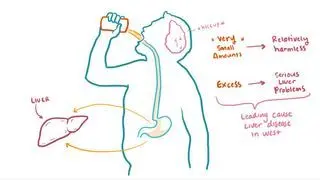
Alcohol-induced liver disease refers to liver damage caused by excess alcohol intake. Alcohol intake is considered excessive if more than four drinks are consumed on any day or more than 14 drinks per week for males, or more than three drinks are consumed on any day or more than seven drinks a week for females. It is generally caused by chronic alcohol misuse; however, it can also occur in people who drink large amounts of alcohol in a short period, known as binge drinking. 

When alcohol enters the body, it is metabolized by the liver into acetaldehyde, a highly reactive metabolite that causes damage to cellular molecules, including proteins and DNA. Alcohol metabolism increases free fatty acid formation and decreases fatty acid oxidation, both of which contribute to fat accumulation in the liver. 

On the other hand, a non-alcoholic fatty liver disease typically affects individuals with metabolic syndrome, which refers to a combination of cardiovascular risk factors, including obesity, high blood pressure, type 2 diabetes mellitus, and hyperlipidemia. Although the exact cause of NAFLD is not clear, insulin resistance appears to play an important role. In metabolic syndrome, insulin receptors on various tissues, including the liver, become less responsive to insulin. As a result, the liver decreases the secretion of lipids into the bloodstream. It increases the synthesis and uptake of free fatty acids from the blood, causing fat to accumulate within liver cells called hepatocytes

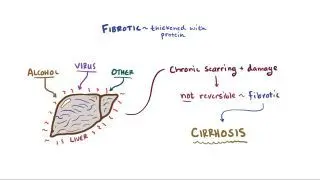
Regardless of the cause of hepatic steatosis, over time, the fat in the hepatocytes is vulnerable to degradation and inflammation, resulting in hepatocyte injury. Together, the process of steatosis and inflammation is referred to as steatohepatitis. Chronic inflammation and liver damage may cause the development of fibrosis and scar tissue in the liver, a condition known as cirrhosis. Because it is usually irreversible, cirrhosis is often referred to as “end-stage” or “late-stage” liver damage.

What are the signs and symptoms of hepatic steatosis?

Individuals with hepatic steatosis are usually asymptomatic. Even at advanced stages of steatohepatitis, an individual might have no symptoms. When symptoms are present, they are often vague, like fatigue or malaise. Once there is significant liver damage, there can be hepatomegaly or enlargement of the liver, pain in the right upper quadrant of the abdomen, and jaundice. As liver function deteriorates and cirrhosis occurs, other disease manifestations can occur, including esophageal varices, ascites, easy bruising, and liver cancer

How is hepatic steatosis diagnosed?

Hepatic steatosis is often suspected in individuals with abnormal liver function tests, such as elevated liver enzymes (e.g., aspartate transaminase [AST] or alanine transaminase [ALT]). In individuals with alcohol-induced liver disease, AST is usually greater than ALT. In addition to elevated AST and ALT, serum alkaline phosphatase (ALP) and gamma-glutamyltransferase (GGT) may also be elevated. If hepatic steatosis is suspected, a diagnosis can be made with imaging studies, such as an ultrasound, CT scan, or MRI, to look for fatty infiltrates. In addition, a liver biopsy can be conducted to confirm the diagnosis and assess the severity of the disease.

Depending on biopsy findings, nonalcoholic fatty liver disease can be categorized as either nonalcoholic fatty liver (NAFL) or nonalcoholic steatohepatitis (NASH). NAFL refers to the presence of hepatic steatosis without evidence of inflammation. This stage is characterized by large droplets of fat within the hepatocytes, giving the liver a large, soft, yellow, and greasy appearance. On the other hand, NASH is the presence of hepatic steatosis and inflammation with hepatocyte injury, resulting in additional histopathologic changes, such as hepatocyte ballooning and the presence of Mallory-Denk bodies (i.e., tangles of intermediate filaments that can be seen in the cytoplasm of hepatocytes). 

How is hepatic steatosis treated?

Treatment for hepatic steatosis depends on the underlying cause. In individuals with non-alcoholic fatty liver disease, treatment focuses on reversing the risk factors contributing to insulin resistance, primarily through a healthy diet, an active lifestyle, weight loss, and medications to lower blood glucose levels (e.g., metformin), if needed. Treating alcohol-induced fatty liver disease involves eliminating alcohol consumption. Steatosis, and to a lesser degree steatohepatitis, are generally reversible by addressing the underlying cause, although that is generally not the case once fibrosis and cirrhosis occur.

What are the most important facts to know about hepatic steatosis?

Hepatic steatosis, or fatty liver disease, occurs when fat is deposited in the liver. The two leading causes are alcohol-induced liver disease; and non-alcoholic fatty liver disease. Diagnosis of hepatic steatosis  is based on abnormal liver function tests, imaging studies evidencing fatty infiltrates, and biopsy. Treatment is focused on addressing the underlying cause, including lifestyle modifications, such as  weight loss, exercise, and eliminating alcohol intake, depending on the cause. 
Students say Osmosis is 100% worth it

Because Osmosis saves them time. Lowers stress. And actually helps them remember when it counts.

I used Osmosis to prepare for my first medical school licensing exam! Super helpful and interactive for people who may not do great with just pages of text info!

Cecilia Ruiz

Cecilia Ruiz

MD student

Sayan Misra

I have used Osmosis for about four years. Best thing I have ever used for my medical studies.

Sayan Misra

Sayan Misra

Med student

Osmosis videos are superior because they define simple concepts, tell a story with a clear progression, and provide context.

Jay Pate

Jay Pate

Dental student

References


Caldwell, S., Ikura, Y., Dias, D., Isomoto, K., Yabu, A., Moskaluk, C., Pramoonjago, P., Simmons, W., Scruggs, H., Rosenbaum, N., Wilkinson, T., Toms, P., Argo, C. K., Al-Osaimi, A. M., & Redick, J. A. (2010). Hepatocellular ballooning in NASH. Journal of hepatology, 53(4), 719–723. https://doi.org/10.1016/j.jhep.2010.04.031


Drescher, H. K., Weiskirchen, S., & Weiskirchen, R. (2019). Current Status in Testing for Nonalcoholic Fatty Liver Disease (NAFLD) and Nonalcoholic Steatohepatitis (NASH). Cells, 8(8), 845. https://doi.org/10.3390/cells8080845


Drinking levels defined. (n.d.). National Institute on Alcohol Abuse and Alcoholism. Retrieved January 14, 2023, from https://www.niaaa.nih.gov/alcohol-health/overview-alcohol-consumption/moderate-binge-drinking


Hepatic steatosis. (2022, September 27). Bmj.com. https://bestpractice.bmj.com/topics/en-us/796


Mitra, S., De, A., & Chowdhury, A. (2020). Epidemiology of non-alcoholic and alcoholic fatty liver diseases. Translational gastroenterology and hepatology, 5, 16. https://doi.org/10.21037/tgh.2019.09.08


Nassir, F., Rector, R. S., Hammoud, G. M., & Ibdah, J. A. (2015). Pathogenesis and Prevention of Hepatic Steatosis. Gastroenterology & hepatology, 11(3), 167–175.


Osna, N. A., Donohue, T. M., Jr, & Kharbanda, K. K. (2017). Alcoholic Liver Disease: Pathogenesis and Current Management. Alcohol research: current reviews, 38(2), 147–161.


Powell, E. E., Wong, V. W.-S., & Rinella, M. (2021). Non-alcoholic fatty liver disease. Lancet, 397(10290), 2212–2224. https://doi.org/10.1016/S0140-6736(20)32511-3