
Paraphimosis · What Is It, Causes, Symptoms, and More

Published: Feb 13, 2026
Author: Lily Guo, MD
Editor: Alyssa Haag, MD
Editor: Józia McGowan, DO
Editor: Kelsey LaFayette, DNP, ARNP, FNP-C
Editor: Mary Roberts, MSN, RN
Editor: Lahav Constantini, MD
Illustrator: Abbey Richard, MSc
7-day free trial

Go deeper with Osmosis

Osmosis is a learning platform with videos, questions, and AI tools to help you master topics like this.

4.8 · 12,000+ reviews
Watch quick, visual videos
Practice with Qbank-style questions
Use AI to explain, quiz, and review
Study anytime with the mobile app
Start free trial

No credit card · Cancel anytime

What is paraphimosis?

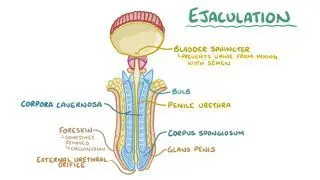
Paraphimosis refers to the persistent retraction of the foreskin on an uncircumcised or partially circumcised penis such that it cannot be returned to its original position. The foreskin, a physiologic covering for the glans penis (i.e., the head of the penis), serves to protect the glans and the external urethral orifice. In paraphimosis, the foreskin becomes entrapped behind the coronal sulcus (i.e., the groove separating the glans penis from the shaft) forming a tight, constrictive ring. This condition may result in venous, lymphatic, and eventually arterial compromise of the glans penis, leading to ischemia, making paraphimosis a urologic medical emergency requiring immediate care.  

Learn deeper with Osmosis

Master this topic faster with videos, questions, and AI.

Used by 8M+ healthcare learners.

Start free trial

No credit card · Cancel anytime

What causes paraphimosis?

Paraphimosis results from retraction of the foreskin that is not subsequently returned to its pre-retracted position, leading to entrapment of the foreskin behind the glans penis and formation of a constricting band at the coronal sulcus. This may lead to impaired venous and lymphatic drainage, progressive edema, and, if untreated, arterial compromise of the glans.  

In infants and young children, paraphimosis most commonly occurs due to inappropriate or forced foreskin retraction during hygiene by a caregiver or through self-manipulation. In adolescents and adults, it is frequently iatrogenic, occurring after urological procedures such as bladder catheterization or cystoscopy when the foreskin is not replaced. It may also develop following inadequate foreskin reduction after urination, sexual activity, or genital trauma (e.g. genital body piercing), or in the setting of local infection or inflammation that causes foreskin edema and prevents spontaneous reduction. 

What are the signs and symptoms of paraphimosis?

The signs and symptoms of paraphimosis include acute penile swelling and severe pain. The retracted foreskin may appear as an erythematous, swollen, constricting, tight band of tissue at the coronal sulcus, whereas the penile shaft often appears flaccid and unaffected. Other manifestations include dysuria (i.e., painful urination), a decreased urinary stream, and, in severe or prolonged cases, complete urinary obstruction and bladder distention. If paraphimosis is left untreated, blood flow to the tip of the penis can become compromised over hours to days, resulting in progressive ischemia that can lead to local skin necrosis and glans infarction. Findings suggestive of ischemia include cyanotic (i.e., blue) or black discoloration of the glans penis and increased firmness on palpation. With further delay in intervention, advanced sequelae such as gangrene or, in extreme cases, autoamputation may occur.  

How is paraphimosis diagnosed?

Paraphimosis is usually diagnosed by a clinician based on physical examination. The diagnosis is made by identifying a foreskin that is retracted behind the glans and cannot be returned to its original position. Asking about recent foreskin manipulation, medical procedures, or symptoms of infection helps clarify the cause, while other conditions that can cause penile swelling, such as a hair tourniquet in infants, allergic reactionsor balanoposthitis (i.e., inflammation of the foreskin and glans penis), are ruled out.

How is paraphimosis treated?

Paraphimosis is treated with prompt manual reduction of the foreskin back over the glans penis, a procedure that commonly takes place in the emergency room.  

Before attempting reduction, adequate pain control is essential and is typically achieved using topical analgesics (e.g., lidocaine gel), local anesthetic injections (e.g., lidocaine without epinephrine, bupivacaine), or a dorsal penile nerve block. If local measures do not provide sufficient analgesia, systemic analgesia (e.g., with opioids) and procedural sedation may be required.  

Measures to reduce edema prior to reduction can improve success rates and include the application of ice compresses or compressive wrapping for several minutes. A water-soluble lubricant may also be applied to facilitate reduction. During manual reduction, the healthcare provider applies steady pressure to the glans penis while simultaneously advancing the foreskin distally over the glans.  

If manual reduction is unsuccessful, urologic consultation is required. Alternatively, minimally invasive techniques may be attempted, including osmotic reduction using granulated sugar or hypertonic glucose, the multiple puncture technique with a fine needle to evacuate edema, or injection of hyaluronidase to disperse swelling. When conservative and minimally invasive measures fail, surgical intervention, such as a dorsal slit procedure to relieve the constricting band or emergent circumcision may be necessary. 

What are the most important facts to know about paraphimosis?

Paraphimosis is a condition in which the foreskin of an uncircumcised or partially circumcised penis is retracted and cannot be returned to its original position, forming a constrictive ring behind the coronal sulcus. It can occur in infants after cleaning if the foreskin is not replaced and in adolescents and adults following urological procedures, sexual activity, trauma, or infections that cause foreskin edema. Symptoms include penis swelling, pain, and dysuria. If left untreated, paraphimosis can progress to urinary obstruction, ischemia, and tissue necrosis. Diagnosis is based on physical examination and clinical history. Paraphimosis is a urologic emergency that requires prompt recognition, evaluation and intervention, in order to prevent irreversible tissue damage. Management mainly includes pain control, edema reduction, and manual reduction of the foreskin, with possible surgical intervention when conservative measures fail. 

Key Takeaways

Definition 

Persistent retraction of the foreskin in an uncircumcised or partially circumcised penis, such that the foreskin cannot be returned to its original position. 

Pathophysiology 

- Entrapped foreskin impairs venous and lymphatic drainage 

- Progressive edema develops 

- Untreated cases may progress to arterial compromise and ischemia of the glans 

Etiology 

Underlying mechanism: 

- Retraction of foreskin without subsequent reduction 

Infants and children: 

- Forced or inappropriate foreskin retraction during hygiene 

- Self-manipulation 

Adolescents and adults: 

- Iatrogenic (e.g., catheterization, cystoscopy without foreskin replacement) 

- Failure to reduce foreskin after urination or sexual activity 

- Genital trauma (e.g., piercings) 

- Local infection or inflammation causing foreskin edema 

Signs & Symptoms 

- Acute penile swelling and severe pain 

- Erythematous, swollen, constricting band at the coronal sulcus 

- Penile shaft often flaccid and unaffected 

- Dysuria and decreased urinary stream 

- Severe cases: urinary obstruction and bladder distention 

Ischemic Findings & Complications 

- Cyanotic (blue) or black discoloration of the glans 

- Increased firmness of the glans on palpation 

- Progressive ischemia → skin necrosis, glans infarction 

- Advanced sequelae: gangrene, autoamputation (rare) 

Diagnosis 

- Clinical diagnosis based on physical examination 

- Identification of retracted foreskin unable to be reduced 

- History of recent manipulation, procedures, trauma, or infection 

- Differential diagnoses to exclude: 

     - Hair tourniquet (especially in infants) 

     - Allergic reactions 

     - Balanoposthitis 

     - Other causes of penile edema 

Treatment 

Urologic emergency requiring prompt intervention 

- Pain control (topical anesthetics, local injections, dorsal penile nerve block, systemic analgesia with sedation) 

- Edema reduction (e.g., ice compresses, compressive wrapping, lubrication) 

- Manual reduction of foreskin  
*If unsuccessful:  
Urologic consultation; minimally invasive alternatives (osmotic reduction, multiple puncture technique, hyaluronidase) or surgical intervention (dorsal slit procedure, emergent circumcision) 

Students say Osmosis is 100% worth it

Because Osmosis saves them time. Lowers stress. And actually helps them remember when it counts.

I used Osmosis to prepare for my first medical school licensing exam! Super helpful and interactive for people who may not do great with just pages of text info!

Cecilia Ruiz

Cecilia Ruiz

MD student

Sayan Misra

I have used Osmosis for about four years. Best thing I have ever used for my medical studies.

Sayan Misra

Sayan Misra

Med student

Osmosis videos are superior because they define simple concepts, tell a story with a clear progression, and provide context.

Jay Pate

Jay Pate

Dental student

References


Dubin J, Davis JE. Penile emergencies. Emerg Med Clin North Am. 2011;29:485-500. 


Hollowood AD, Sibley GN. Non-painful paraphimosis causing partial amputation. Br J Urol. 1997;80:958-959. 


Leeson C, Vigil H, Witherspoon L. Foreskin care: Hygiene, importance of counselling, and management of common complications. Can Fam Physician. 2025;71(2):97-102. doi:10.46747/cfp.710297 


Little B, White M. Treatment options for paraphimosis. Int J Clin Pract. 2005;59:591-593. 


McCollough M, Sharieff GQ. Abdominal surgical emergencies in infants and young children. Emerg Med Clin North Am. 2003;21:909-924. 


Raman SR, Kate V, Ananthakrishnan N. Coital paraphimosis causing penile necrosis. Emerg Med J. 2008;25:454-455. 


Reynard JM, Barua JM. Reduction of paraphimosis the simple way—the Dundee technique. BJU Int. 1999;83:859-860.