Yaws Disease · What It Is, Presentation, Treatment and More

Published: Apr 13, 2026
Author: Ali Syed, PharmD
Editor: Alyssa Haag, MD
Editor: Lily Guo, MD
Editor: Kelsey LaFayette, DNP, ARNP, FNP-C
Illustrator: Abbey Richard, MSc
7-day free trial

Go deeper with Osmosis

Osmosis is a learning platform with videos, questions, and AI tools to help you master topics like this.

4.8 · 12,000+ reviews
Watch quick, visual videos
Practice with Qbank-style questions
Use AI to explain, quiz, and review
Study anytime with the mobile app
Start free trial

No credit card · Cancel anytime

What is yaws disease?

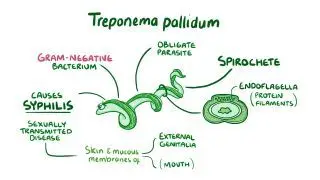
Yaws disease is a chronic, infectious skin condition caused by the spirochete bacterium Treponema pallidum subspecies pertenuea subspecies of Treponema pallidum (T. pallidum)It primarily affects children under 15 years of agethough adults may also be affected. Yaws is the most common endemic treponematoses, which are chronic bacterial infections caused by spiral bacteria of the genus TreponemaOther endemic treponematoses include bejel caused by T. pallidum subspecies endemicum and pinta caused by Treponema carateum. These organisms are indistinguishable from Treponema pallidum subspecies pallidum which causes venereal (i.e., sexually transmitted) syphilis. Endemic syphilis, however, is considered non-venereal and is not sexually transmitted nor passed from mother to baby 

Yaws disease is found in tropical areas of AfricaSoutheast AsiaSouth America, and the Pacific Islands, particularly in impoverished, rural communities with limited healthcare access. According to the World Health Organization, 15 countries are known to be endemic to yaws disease and over 80,000 cases of yaws disease are diagnosed each year. 

Learn deeper with Osmosis

Master this topic faster with videos, questions, and AI.

Used by 8M+ healthcare learners.

Start free trial

No credit card · Cancel anytime

What causes yaws disease?

Yaws disease is caused by the spirochete bacterium Treponema pallidum subspecies pertenue. Yaws disease is spread from person-to-person through skin-to-skin contact, particularly when broken skin encounters a skin lesion infected by yaws disease. Yaws disease is mainly contagious during the beginning stages, when skin lesions are the most concentrated with bacteria. Children under 15 years of age are most affected in endemic regions, while adults in these areas may develop immunity over time. Factors such as poor hygiene, poverty, overcrowding, rural settings, and climates with heavy rainfall and high humidity contribute to the spread of yaws disease. 

What are the signs and symptoms of yaws disease?

Yaws disease can impact the skin, bones, and joints, and has an incubation period, or the time between exposure and appearance of symptoms, from 9 to 90 days. It typically begins with cysts, ulcers, and sores that can spread and progress through four different stages. The stages of yaws include primary, secondary, latent, and tertiary (late). The primary stage, known as primary yaws, is when the first skin lesion appears, often referred to as the “mother yaw.” This growth typically starts as a small, painless papule (i.e., a raised bump <1 cm in diameter) typically on the legs or feet, but can appear anywhere on the body. It may then develop into a large yellow nodule (i.e., a raised bump 2 to 5 cm in diameter, often called papilloma) that eventually ulcerates. The ulcer  may have a texture resembling a strawberry, that eventually crusts over and heals, often leaving a scar. Alternatively, primary yaws can also appear as a cluster of papules. This stage may last anywhere from 3 to 6 months.  

The secondary stage, or secondary yaws, typically occurs weeks to months after the primary infection but may develop up to 2 years later. Secondary yaws symptoms are characterized by multiple skin lesions that may cover the hands, arms, legs, feet, buttocks, and face. If the soles of the feet are involved, walking may be painful, known as “crab yaws.” These skin lesions vary in appearance and may be wart-like, ulcerative, raised, bumpy, red or yellow, scaly, flat, hard, or thickened. In this stage, yaws disease can spread to the bones, causing pain and swelling in the fingers, toes, arms, or legs.   

The third stage, known as latent yaws, involves the long bones, joints, and/or skin. During this stage, individuals may test positive for Treponema pallidum, without exhibiting signs or symptoms. This latent period may last for several years, and an individual may still be contagious during this stage. Approximately 10% of individuals may develop tertiary or late yaws, 5 to 10 years after the primary stage. This stage is marked by widespread growth, including large lesions near joints, deep open wounds, and plaques on the hands and feet.  

People with yaws may exhibit additional symptoms including swollen lymph nodes, bone pain, general tiredness, and malaise. If left untreated, yaws disease may return months or years later, and lead to permanent damage to the skin, bones, and tissues. Complications of yaws disease may involve swollen fingers and toes, called dactylitis; infection of bones or their lining referred to as periostitis; tissue death; disfigurement; secondary bacterial infections; and physical limitations caused by plaques or other damage. Yaws may also be complicated by gangosa, an ulcerative condition resulting in destruction of the soft palate, spreading to the bone, cartilage, and soft tissue of the face, specifically the nasal structures.  
How is yaws disease diagnosed?

Yaws disease is often diagnosed by a healthcare professional through a thorough history, including a review of symptoms, past medical history, and recent travel history, followed by a physical examination looking for characteristic skin lesions. Specific laboratory tests can be used to aid in the diagnosis of yaws including Treponema pallidum particle agglutination (TPPA) and rapid plasma reagin (RPR) blood tests. However, these tests are often used for screening purposes and are unable to distinguish between yaws disease and other forms of syphilis, therefore the interpretation of results requires concurrent clinical assessment. More specific treponemal tests, such as the fluorescent treponemal antibody absorption (FTA-ABS) test, confirms the presence of antibodies specific to Treponema pallidum, but cannot differentiate between past and current infections, as test results remain positive for life once antibodies are present. 

The dual path platform syphilis screen and confirm (DPP) assay can detect both past and present infections, offering a more comprehensive diagnostic approach. Due to its high cost, initial screening of suspected cases of yaws may be performed with less expensive treponemal tests, with positive results being subsequently confirmed by the DPP. Polymerase chain reaction (PCR) technology provides definitive confirmation of yaws disease by detecting DNA in skin lesions. 

Swabs of skin lesions and blood tests may be analyzed for microbiological examination. Under a microscope, the bacteria causing yaws disease and venereal syphilis appear identical, making differentiation based on microscopy challenging. Yaws disease may be considered a diagnosis of exclusion, and accurate diagnosis requires a combination of clinical exam findings and laboratory testing. 

How is yaws disease treated?

Yaws disease is treated with antibiotics that can be given at any stage. The preferred treatment is a single high dose of azithromycin. Alternatively, a single high dose of benzathine penicillin G may also be considered for individuals who have suspected treatment failure with azithromycin or those who cannot receive azithromycin (e.g., due to allergies). Early treatment, particularly during the first and second stages of yaws, generally results in a positive prognosis and significantly reduces the risk of complications such as spreading, permanent scarring, and disfigurement. Individuals should be re-examined 4 weeks after antibiotic treatment. In cases of presumed treatment failure, macrolide resistance testing may be conducted, and treatment with benzathine penicillin may be considered. 

Since there is no vaccine for yaws disease, prevention involves avoiding skin-to-skin contact with individuals who are known to have the condition. Healthcare providers may also administer antibiotics to close contacts of affected individuals to prevent the spread of infection. The World Health Organization is actively working towards the eradication of yaws disease by treating entire communities in endemic areas, regardless of whether individuals exhibit symptoms, to control and eventually eliminate the condition. 

What are the most important facts to know about yaws disease?

Yaws disease is a chronic infectious skin condition caused by the spirochete bacterium Treponema pallidum subspecies pertenue. Yaws is the most common of the endemic treponematoses, which includes other diseases like bejel and pinta. It primarily affects children under the age of 15 but can also impact adults in endemic regions. Transmission occurs through skin-to-skin contact, particularly when broken skin encounters infected lesions. Yaws disease progresses through four stages: primary, secondary, latent, and tertiary. Symptoms include cysts, ulcers, and, in advanced cases, bone pain and severe complications. Diagnosis involves a combination of serological tests and clinical assessment. Treatment typically includes antibiotics, specifically azithromycin. Currently, there is no vaccine for yaws disease, and preventive measures focus on minimizing contact with infected individuals. 

Key Takeaways

Definition 

-Chronic infection affecting the skin, bones, and cartilage, caused by the spirochete bacterium Treponema pallidum subspecies pertenue. 

Endemic treponematoses* 

-Yaws (most common): T. pallidum subspecies pertenue 

-Bejel: T. pallidum subspecies endemicum  

-Pinta: T. carateum  

-*Not to be confused with venereal syphilis, caused by T. pallidum subspecies pallidum  

Epidemiology  

-Neglected tropical disease 

-Africa  

-Southeast Asia 

-South America  

-Pacific Islands  

->80,000 cases/year in 15 endemic countries  

Cause  

-Infection by T. pallidum subspecies pertenue  

-Transmission: person-to-person (skin-to-skin) 

-Most contagious in earlier stages  

-Children <15 years of age (adults: immunity over time 

-Risk factors for spreading:  

-Poor hygiene  

-Poverty  

-Overcrowding  

-Rural settings  

-Heavy rainfall and high humidity  

Signs and symptoms 

-Incubation: 9-90 days  

-Primary yaws (3-6 months) 

-Small, painless papule usually in legs/feet (“mother yaw”) → large, yellow nodule (papilloma) ulcerated nodule (strawberry appearance) → crusting and healing  scar 

-Sometimes cluster of papules 

-Secondary yaws (from weeks-months up to 2 yeas after primary infection 

 -Multiple widespread skin lesions of variable appearance 

-“Crab yaws”: painful walking from feet soles lesions 

-Bone involvement → pain and swelling (fingers, toes, arms, legs) 

-Latent yaws (may last several years) 

-Positive T. pallidum testing but no signs and symptoms 

-May be contagious 

-Tertiary (late) yaws (10% of individuals; 5-10 years after primary stage) 

-Large lesions near joints; deep open wounds; plaques on hands and feet  

-Additional symptoms: swollen lymph nodes; bone pain; tiredness and malaise  

-If left untreated → permanent tissue damage  

-Complications 

-Dactylitis  

-Periostitis  

-Tissue death  

-Disfigurement  

-Secondary bacterial infections  

-Physical limitations from plaques  

-Gangosa (ulceration and destruction of soft palate, spreading to nasal structure)  

Diagnosis 

-Medical history  

-Physical examination  

-Laboratory tests 

-Treponema pallidum particle agglutination (TPPA) and rapid plasma reagin (RPR) blood tests 

-Can't differentiate yaws from other treponematoses 

-Fluorescent treponemal antibody absorption (FTA-ABS) test  

-Specific to T. pallidum complex, but can’t distinguish past versus active infections  

-Dual path platform syphilis screen and confirm (DPP) assay (can distinguish past vs active infections)  

-Polymerase chain rection (PCR) for definitive confirmation (detects DNA in skin lesions) 

-Microscopic examination (e.g., swab of skin lesions) 

-Can't differentiate Treponema subspecies 

Treatment 

-Azithromycin (single high dose)  

-Alternatively: benzathine penicillin G (single high dose) 

-Early treatment → positive prognosis and reduced risk of complications  

-Re-assessment for treatment failure after 4 weeks  

-Macrolide resistance testing in case of treatment failure  

-Prevention: avoidance of skin-to-skin contact with affected individuals; antibiotic treatment to close contacts or communities in endemic areas (WHO goal: eradication)  

Students say Osmosis is 100% worth it

Because Osmosis saves them time. Lowers stress. And actually helps them remember when it counts.

I used Osmosis to prepare for my first medical school licensing exam! Super helpful and interactive for people who may not do great with just pages of text info!

Cecilia Ruiz

Cecilia Ruiz

MD student

Sayan Misra

I have used Osmosis for about four years. Best thing I have ever used for my medical studies.

Sayan Misra

Sayan Misra

Med student

Osmosis videos are superior because they define simple concepts, tell a story with a clear progression, and provide context.

Jay Pate

Jay Pate

Dental student

References


Alwi NM, Muhamad R, Ishak A, Abdullah WNHW. Yaws: The forgotten tropical skin disease. Malays Fam Physician. 2021;16(3):104.  


Handley BL, Tchatchouang S, Grout L, et al. Evaluating the yaws diagnostic gap: A survey to determine the capacity of and barriers to improving diagnostics in all yaws-endemic countries. Front Trop Dis. 2022;3:969219. doi:10.3389/fitd.2022.969219. 


Holmes A, Tildesley MJ, Solomon AW, et al. Modeling treatment strategies to inform yaws eradication. Emerg Infect Dis. 2020;26(11):2600-2609. doi:10.3201/eid2611.191491. 


Vicar EK, Simpson SV, Mensah GI, Addo KK, Donkor ES. Yaws in Africa: Past, present and future. Diseases. 2025;13(1):14. doi:10.3390/diseases13010014. 


Yaws. World Health Organization. Retrieved August 26th, 2024. https://www.who.int/news-room/fact-sheets/detail/yaws