
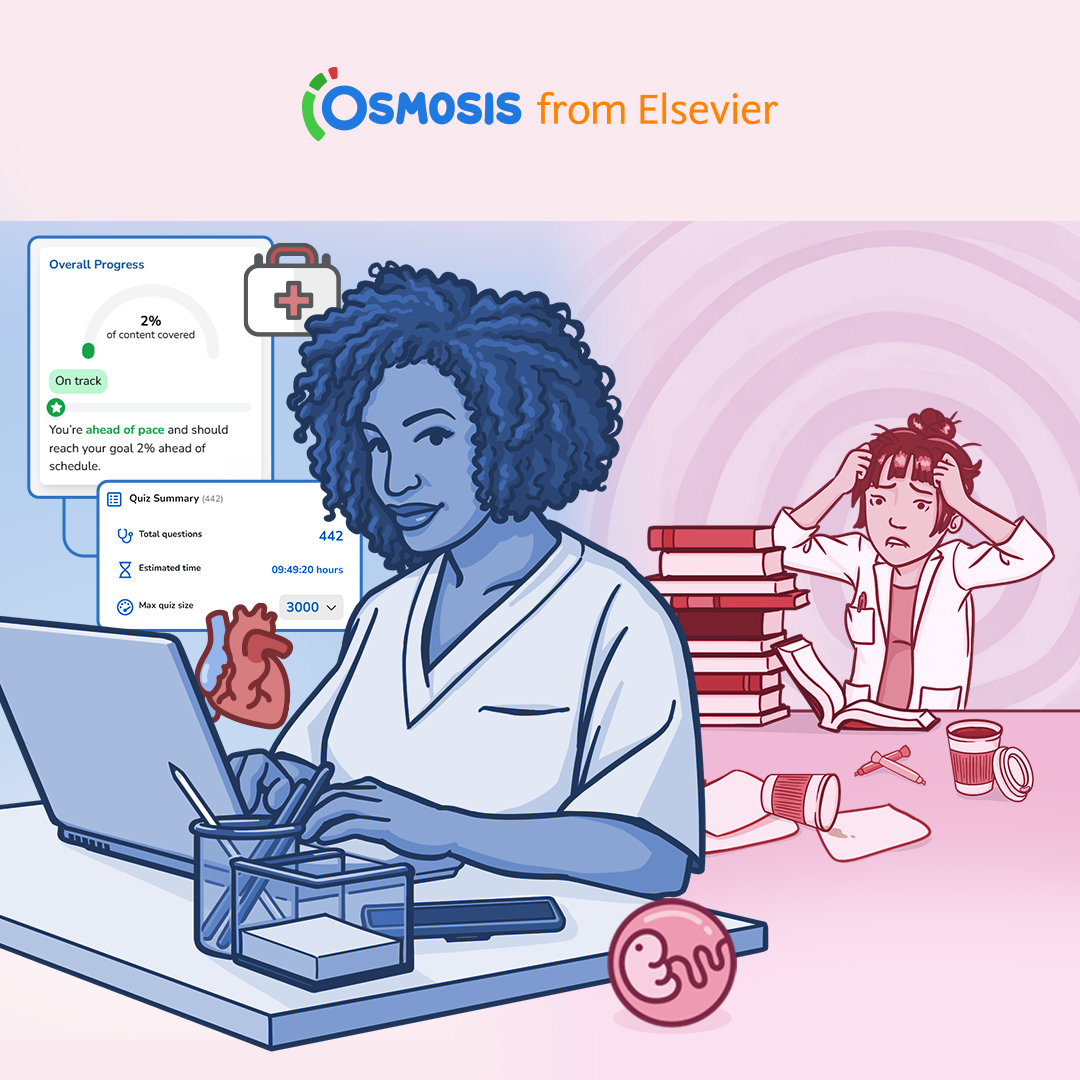
For many learners, the first weeks of a healthcare program redefine what “challenging” means. Students who were high achievers in undergraduate programs suddenly face an overwhelming volume of new information, unfamiliar terminology, and expectations.
When left unchecked, research illustrates that overwhelm can undermine confidence, contribute to ineffective study habits, and increase the risk of burnout, disengagement, and attrition. While the rigor of healthcare education isn’t changing, educators can make the transition more manageable through intentional course design.
Here are five practical ways to reduce overwhelm and set new healthcare students up to thrive from day one.
1. Understand the Root Causes of Overwhelm
Students rarely struggle because they’re incapable of succeeding. More often, they’re navigating several major transitions all at once.
The sheer volume of unfamiliar material is one of the biggest hurdles. Students are expected to master new terminology, complex concepts, and interconnected subjects at a pace they’ve rarely experienced before.
At the same time, many enter healthcare programs without being aware of evidence-based study strategies. Techniques that earned excellent grades in undergraduate courses—such as highlighting notes or rereading textbooks—often aren’t enough when information must be retained, integrated, and recalled under pressure.
Furthermore, the transition from undergraduate to medical-level expectations also creates challenges. Rather than simply remembering facts, students are expected to connect concepts, solve clinical problems, and apply knowledge to patient care.
Layered on top of these academic demands is the pressure to perform. Early exams can feel like high-stakes indicators of future success, leaving many students anxious that one poor grade means they are not cut out for the profession.
Understanding these challenges allows educators to design learning experiences that reduce unnecessary barriers while maintaining academic rigor.
2. Provide Structure to Guide Early Learning
For students entering an unfamiliar learning environment, structure reduces uncertainty. When expectations and learning pathways are clear, students can spend less energy figuring out how to study and more energy learning.
Provide a Clear Roadmap for Learning
Weekly modules, curated playlists of learning resources, and clearly sequenced topics provide students with a roadmap that makes large courses feel more manageable.
Osmosis Playlists make it easy to organize videos and quizzes into structured learning paths for pre-class preparation, post-class review, or exam study. You can also monitor student progress, create supplemental playlists for learners who need extra support, and customize content to address individual learning gaps.
Help Students Prioritize Essential Content
New learners often assume every lecture slide, textbook chapter, and optional reading deserves equal attention. Clearly identifying foundational concepts helps students prioritize their time and prevent unnecessary cognitive overload.
Break Complex Topics into Manageable Learning Chunks
Breaking large subjects into smaller, digestible learning units can also make a significant difference. Complex topics become less intimidating when students can focus on mastering one concept before building up to the next.
Together, these strategies reduce cognitive overload, help students prioritize their efforts, and build confidence through steady progress.

3. Introduce Effective Study Strategies from Day One
Many healthcare students arrive with strong work ethics but ineffective learning strategies for the demands of medical education. Teaching students how to learn can be just as valuable as teaching course content itself.
Introducing the following evidence-based learning techniques early gives students tools they’ll use throughout their education:
- Active Recall: Encourage students to retrieve information from memory instead of simply reviewing it, strengthening long-term retention.
- Spaced Repetition: Reinforce learning over time by revisiting material at strategically timed intervals before it is forgotten.
- Retrieval Practice: Encourage students to regularly test their understanding (rather than relying on passive review) through low-pressure quizzes, flashcards, or practice questions.
- Time Management Skills: Learning how to plan and prioritize their study time effectively is essential for students navigating the pace of healthcare education. Tools like the Osmosis Study Schedule provide students with a structured plan by helping them organize coursework, set study goals, and stay on track with their learning objectives—reducing last-minute cramming and encouraging consistent progress.
Unlike passive strategies such as rereading or highlighting, these evidence-based techniques improve long-term retention while helping students build more efficient, sustainable study habits.
4. Use Early Assessments to Build Confidence (Not Stress)
Assessments don’t have to be major milestones that generate anxiety.
Frequent formative assessments allow students to check their progress before high-stakes exams. Short quizzes, practice questions, case-based activities, or knowledge checks encourage consistent engagement while giving educators insight into areas that may need additional attention.
Immediate feedback is equally important. Students benefit most when they understand not only whether an answer is correct, but why. Detailed explanations reinforce key concepts, correct misconceptions before they become habits, and encourage students to view mistakes as opportunities for learning rather than signs of failure.
Low-stakes assessments help students view testing as an opportunity to learn rather than a judgment of ability. Over time, regular retrieval practice and feedback build confidence, reduce exam anxiety, and prepare students for higher-stakes assessments.
5. Leverage Data to Identify At-Risk Students Early
Not every struggling student raises their hand for help.
Learning analytics provides valuable insight into student engagement and performance during the critical first weeks of a course. Osmosis reporting dashboards track content completion, quiz performance, practice question accuracy, and study activity, helping identify early warning signs before students experience significant academic setbacks.
Sharing this information with students is just as valuable. When learners can track their own progress, identify weak areas, and compare their study habits against course expectations, they become more active participants in their own success. Self-monitoring encourages reflection and allows students to adjust before small challenges become larger problems.
These insights create opportunities for timely intervention. Reaching out to students who show declining engagement or consistently struggle with foundational concepts allows you to recommend additional resources, adjust study approaches, or connect learners with academic support services while there’s still time to make a meaningful difference.
Helping Students Thrive from the Start
The transition into healthcare education will always be demanding, but it doesn’t have to be overwhelming. By providing structure, teaching effective study strategies, using formative assessments, and identifying struggling students early, educators can help students build confidence alongside competence. Small changes in the first weeks of a program can have a lasting impact on academic performance, resilience, and long-term success.
Want to help your students build stronger study habits and navigate the challenges of healthcare education with confidence? Discover how Osmosis empowers active, personalized learning that supports both academic performance and student well-being. Schedule a call today!
Key Takeaways
- Understanding why new healthcare students feel overwhelmed helps educators design more supportive learning experiences.
- Clear course structure, learning roadmaps, and prioritized content reduce cognitive overload.
- Teaching evidence-based study strategies early improves retention, confidence, and long-term academic performance.
- Low-stakes formative assessments with timely feedback promote learning while reducing test anxiety.
- Learning analytics can identify at-risk students early, enabling timely interventions that improve student outcomes.
Resources
Discover how Osmosis enables active, personalized learning for academic success and student well-being. Schedule a call today!
Leave a Reply