
Author: Marina Horiates Kerekes, MD & Team
-
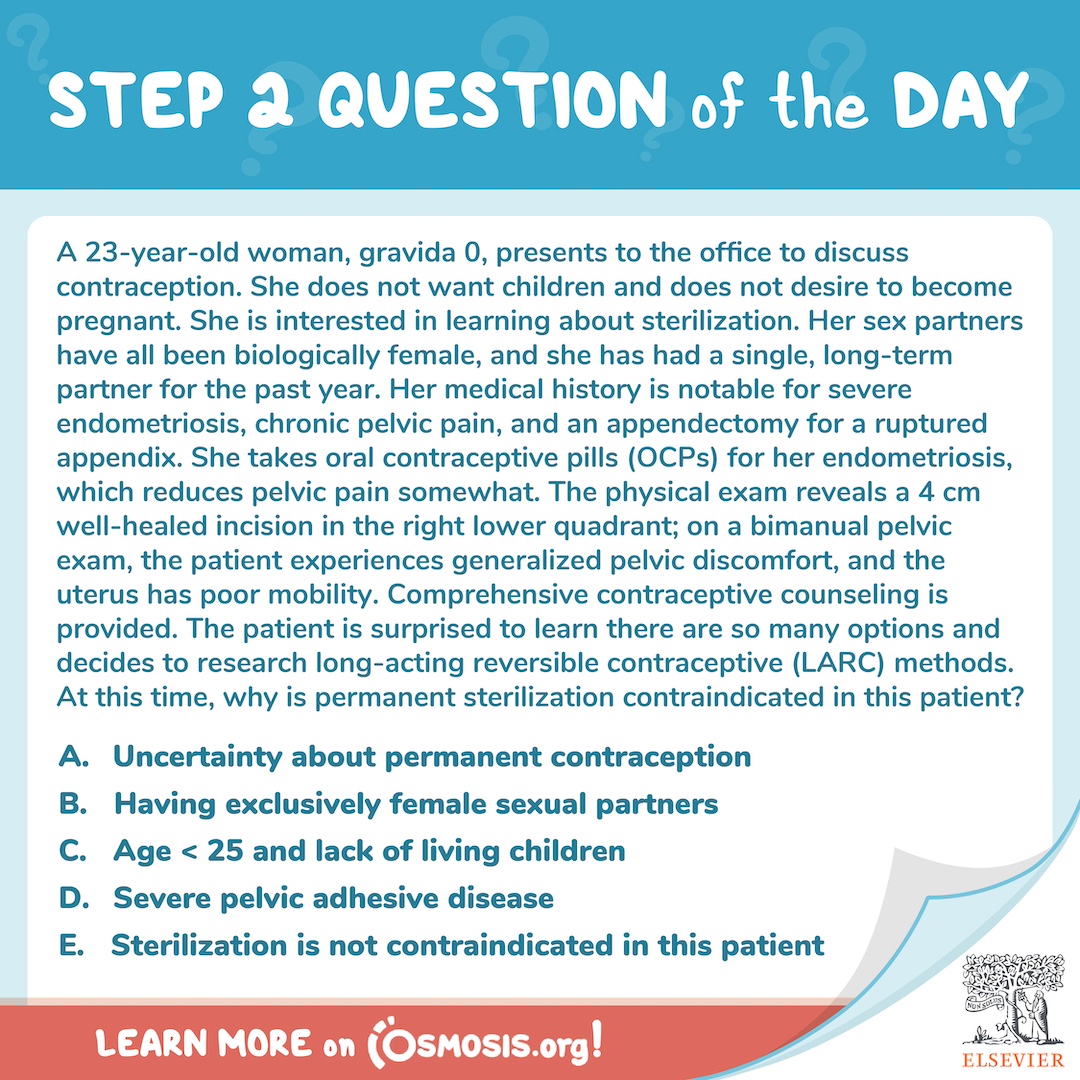
USMLE® Step 2 Question of the Day: LARC
— Updated:
A young woman considering permanent contraception expresses uncertainty and wants to explore LARCs first. Understand why full informed consent is essential before sterilization.
-

USMLE® Step 1 Question of the Day: Histologic analysis
— Updated:
Prepare for the USMLE Step 1 exam with this detailed question about a 57-year-old woman with malaise and intermittent fevers over the past several weeks. Can you correctly identify which of the following findings is most likely to be demonstrated on histologic analysis? A 57-year-old woman presents to her primary care…
-
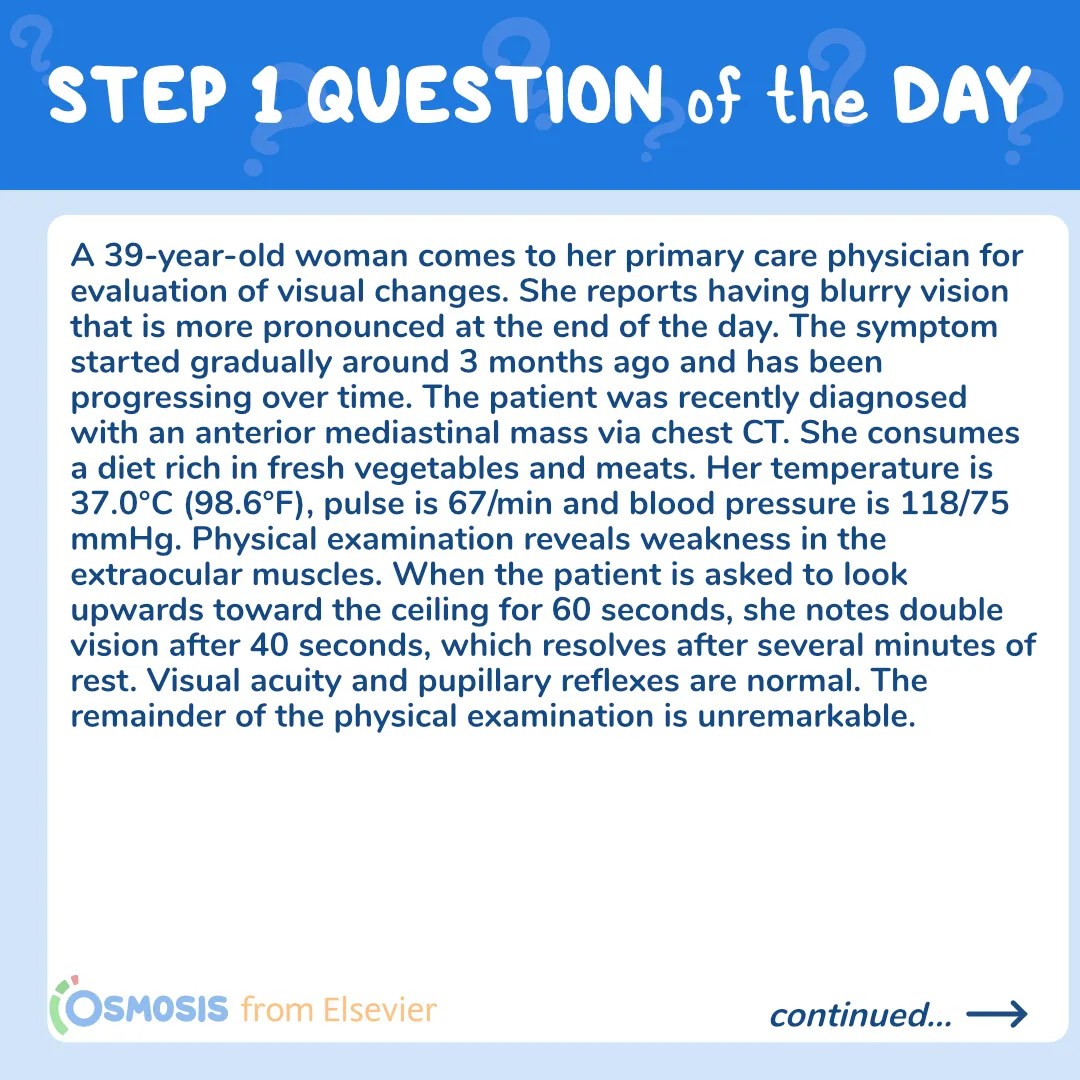
USMLE® Step 1 Question of the Day: Blurry vision
— Updated:
Test your knowledge with a USMLE Step 1 question on a patient with progressive blurred vision and muscle weakness linked to a mediastinal mass. Which neuromuscular structure is affected?
-
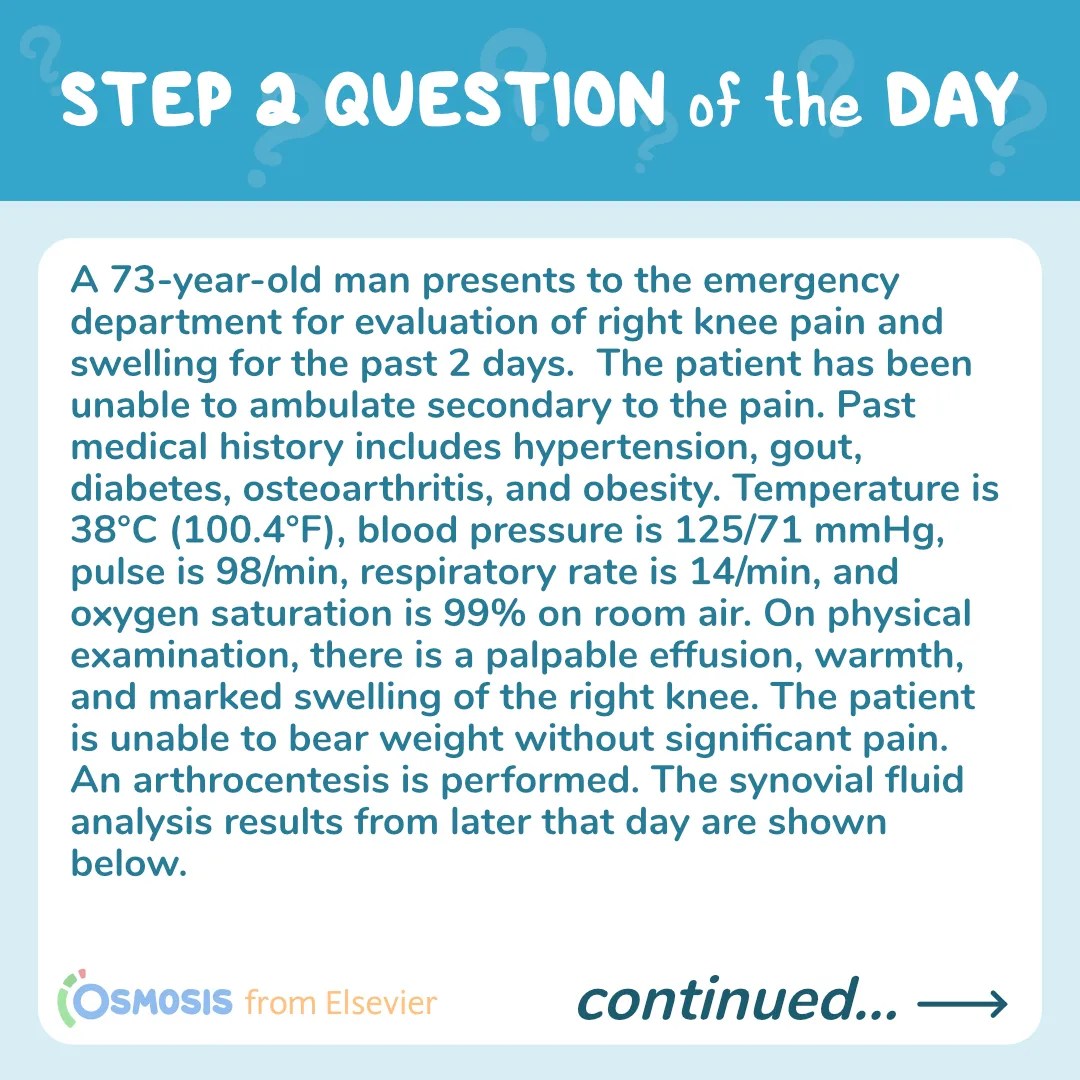
USMLE® Step 2 Question of the Day: Arthrocentesis
— Updated:
Review a clinical case of knee swelling and pain with synovial fluid results. Can you identify the most likely diagnosis and differentiate it from other arthritic conditions?
-
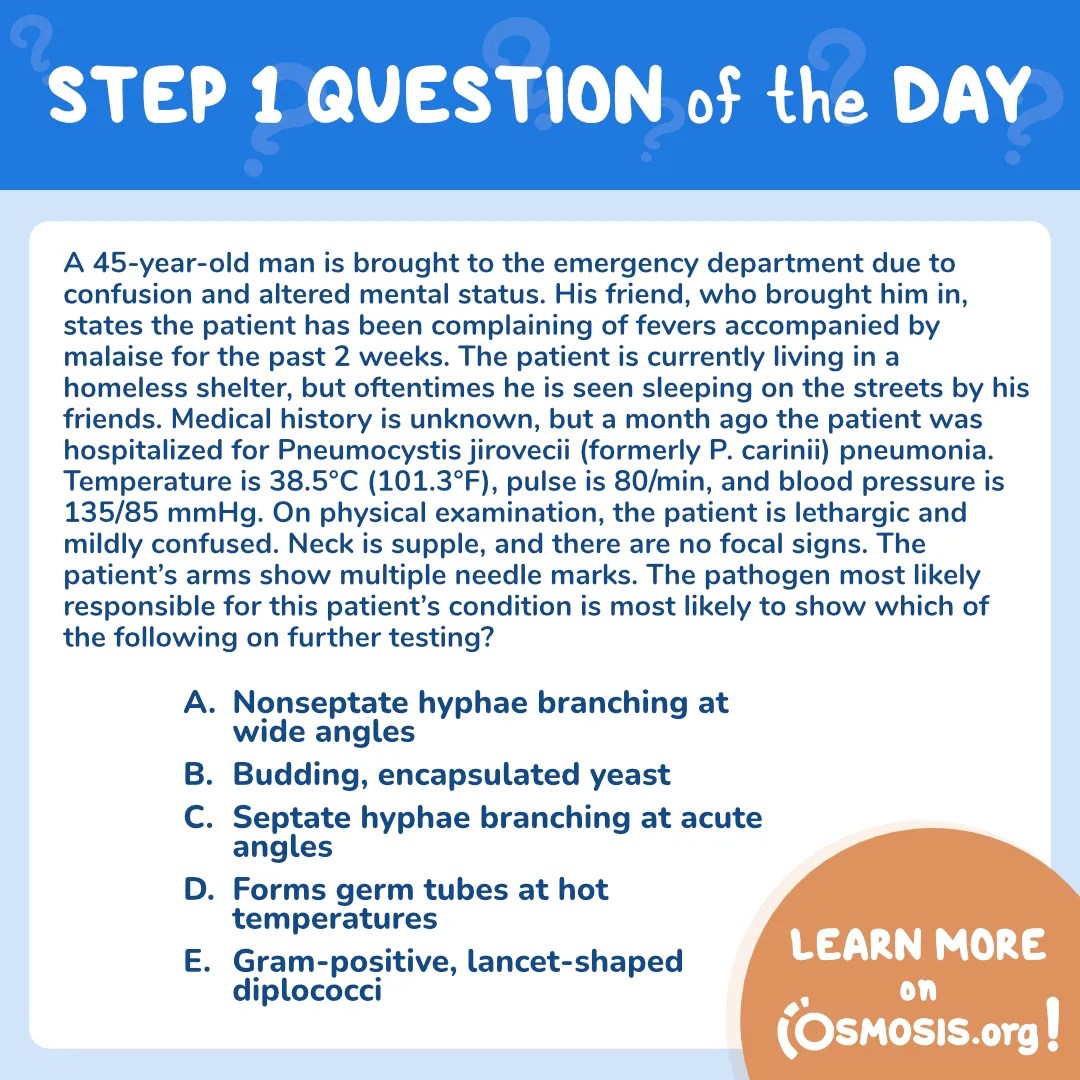
USMLE® Step 1 Question of the Day: Pathogen test
— Updated:
Prepare for your USMLE Step 1 exam with this question focused on identifying pathogens in immunocompromised patients. Understand the presentation and diagnostic features of Cryptococcus neoformans and other pathogens in similar settings. A 45-year-old man is brought to the emergency department due to confusion and altered mental status. His friend,…
-
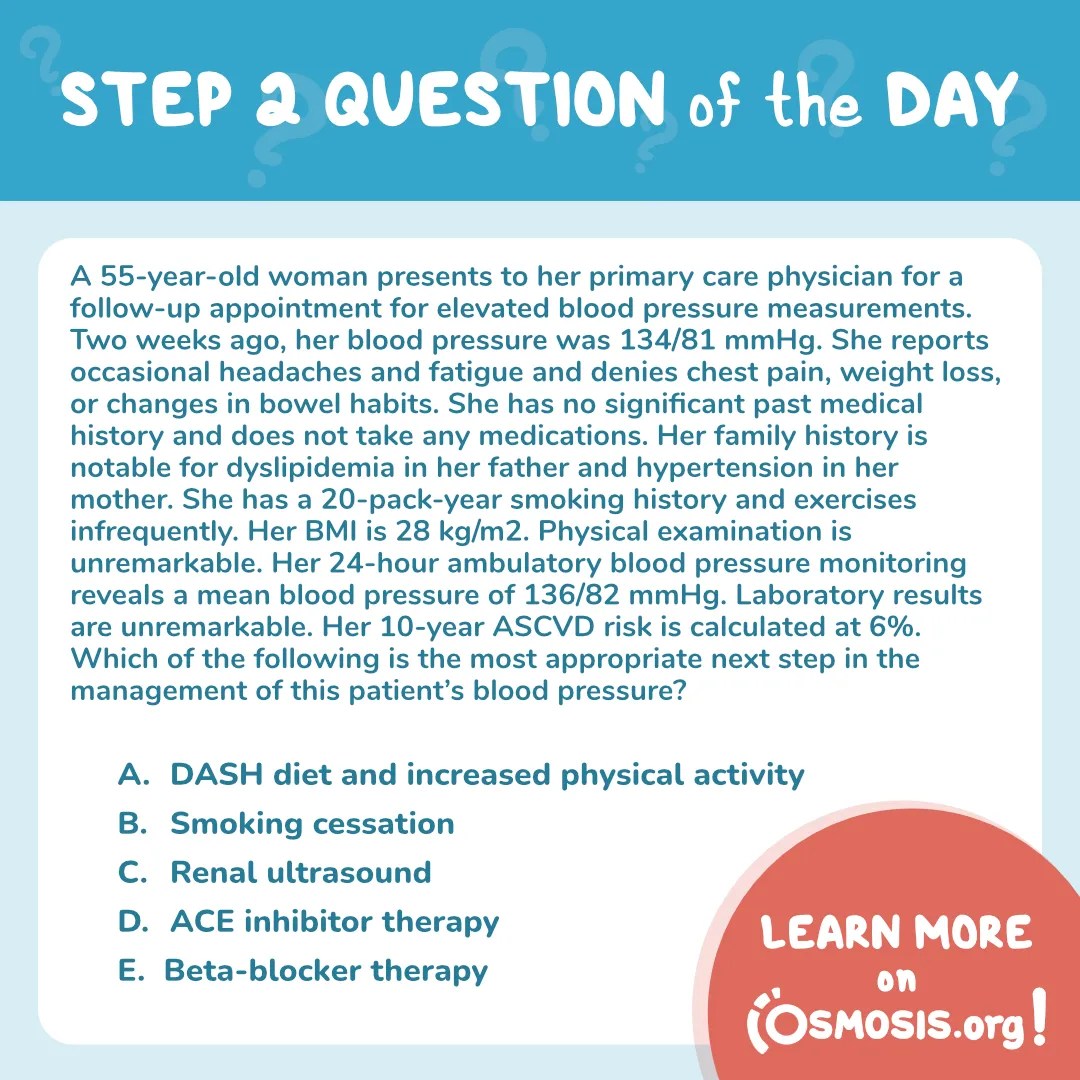
USMLE® Step 2 Question of the Day: High blood pressure
— Updated:
Prepare for your USMLE Step 2 with this case: A 55-year-old woman presents with stage 1 hypertension and occasional headaches. Her 24-hour blood pressure monitoring and low ASCVD risk score point to a critical next step in management.A 55-year-old woman presents to her primary care physician for a follow-up appointment…
-
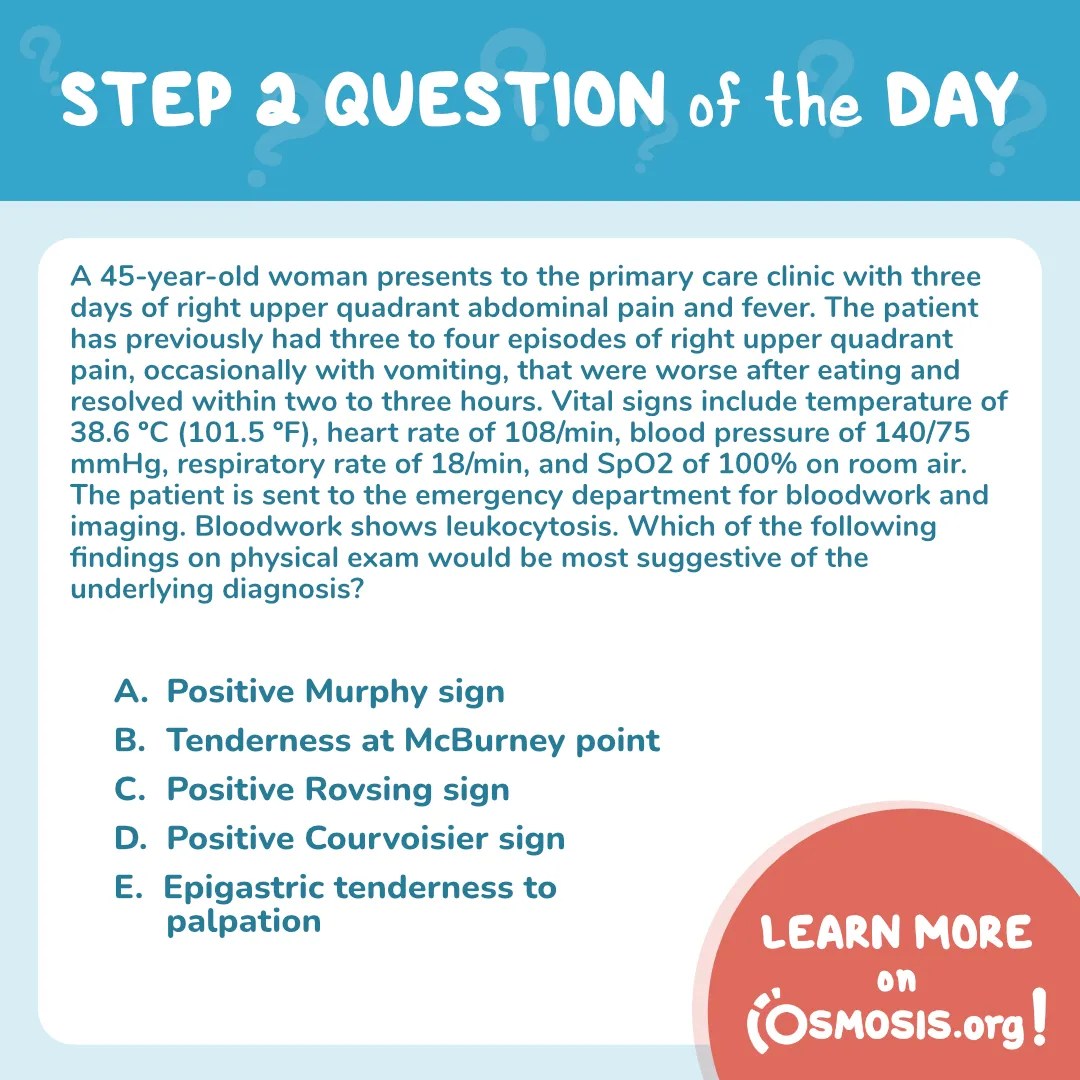
USMLE® Step 2 Question of the Day: Leukocytosis
— Updated:
Prepare for the USMLE Step 2 with a case of a 45-year-old woman presenting with right upper quadrant pain, fever, and a history of biliary colic. Learn how to identify key physical exam findings, such as a positive Murphy’s sign, that suggest acute cholecystitis, a common complication of gallstones.A 45-year-old…
-
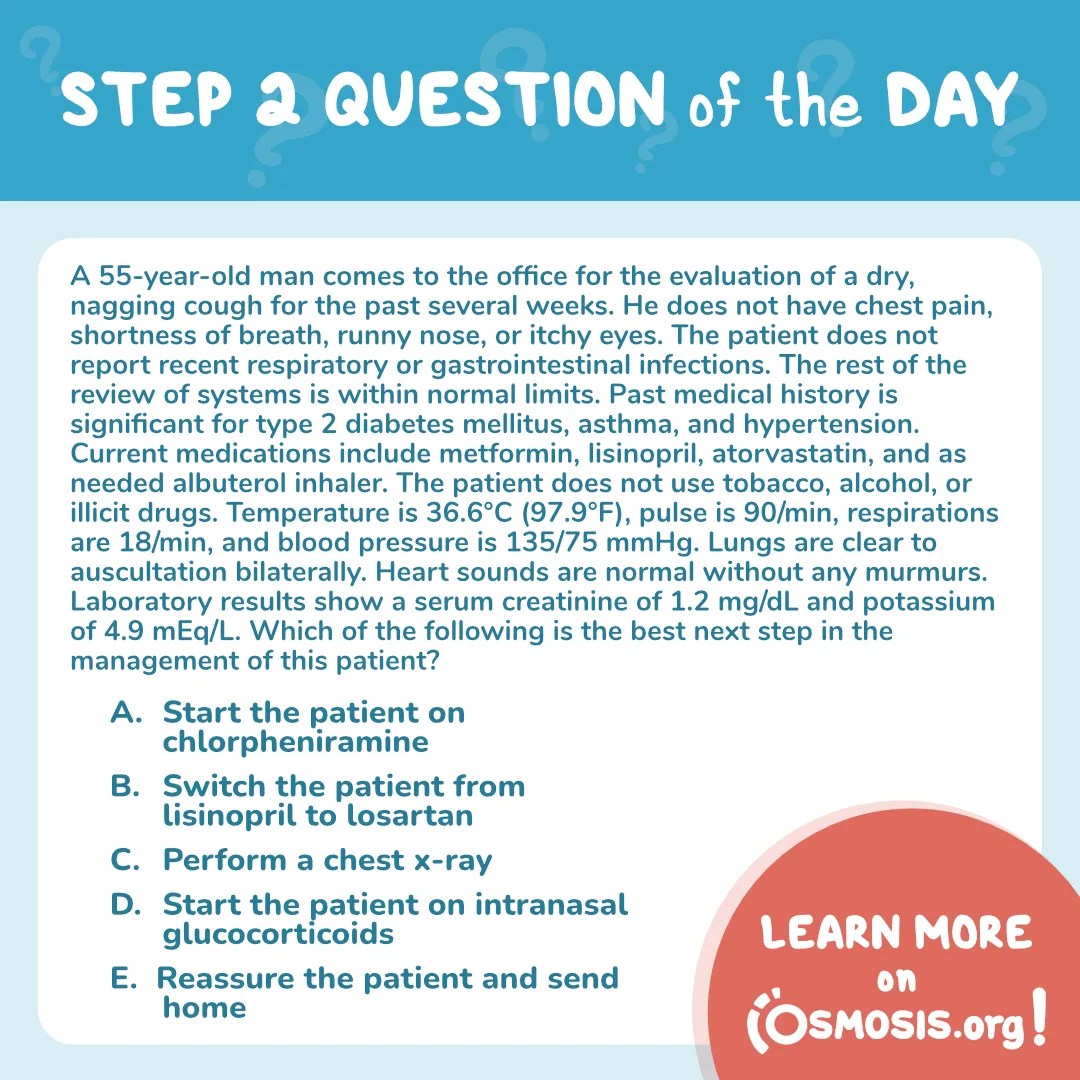
USMLE® Step 2 Question of the Day: Dry cough
— Updated:
Evaluate your knowledge with today’s USMLE Step 2 Question of the Day! A 55-year-old man presents with a persistent dry cough, and his current medication regimen may be the cause. What’s the next best step in his management?A 55-year-old man comes to the office for the evaluation of a dry,…
-
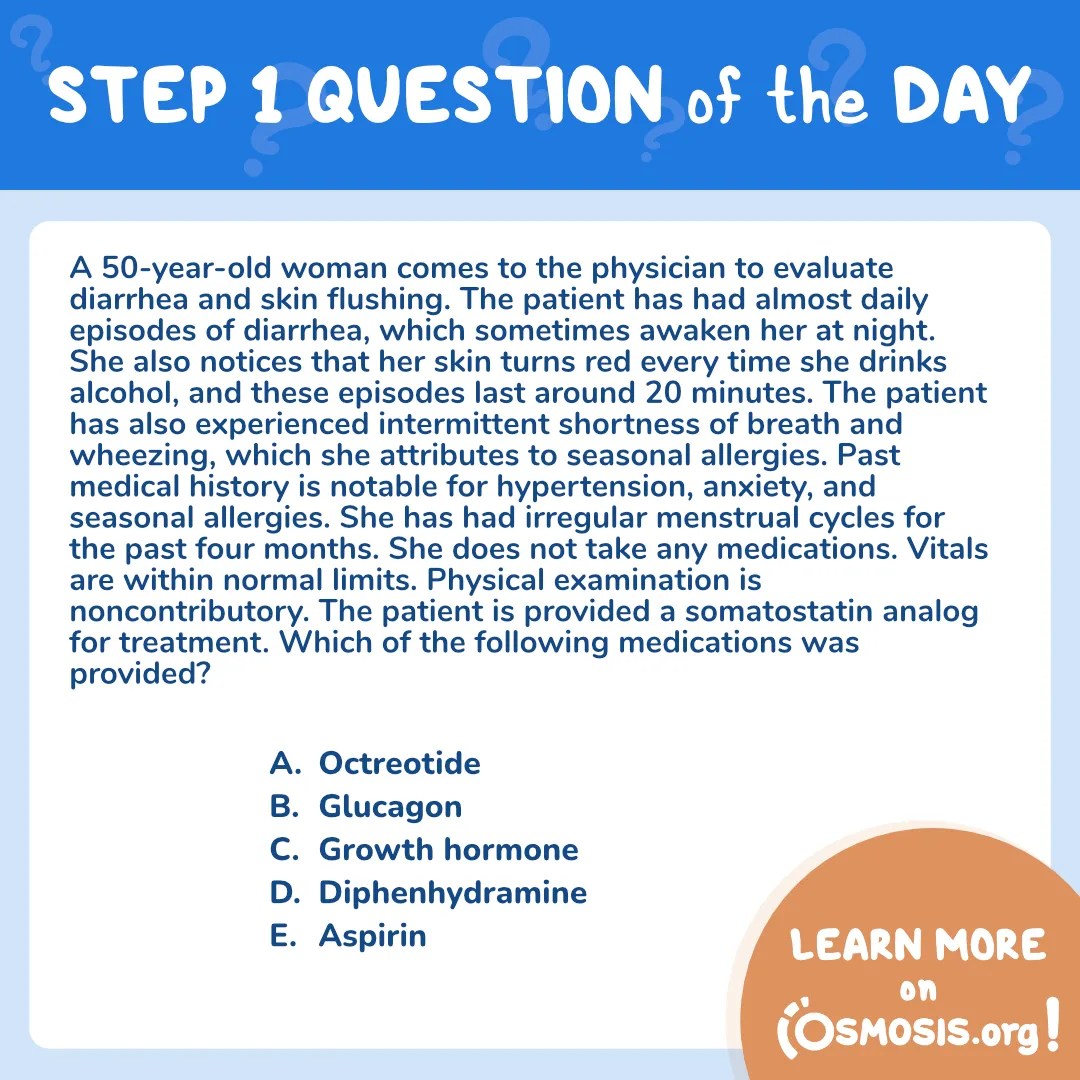
USMLE® Step 1 Question of the Day: Somatostatin analog
— Updated:
Test your knowledge with this USMLE Step 1 Question of the Day! A 50-year-old woman presents with daily diarrhea, skin flushing, and shortness of breath. She is treated with a somatostatin analog. Which medication was provided? A 50-year-old woman comes to the physician to evaluate diarrhea and skin flushing. The…
-
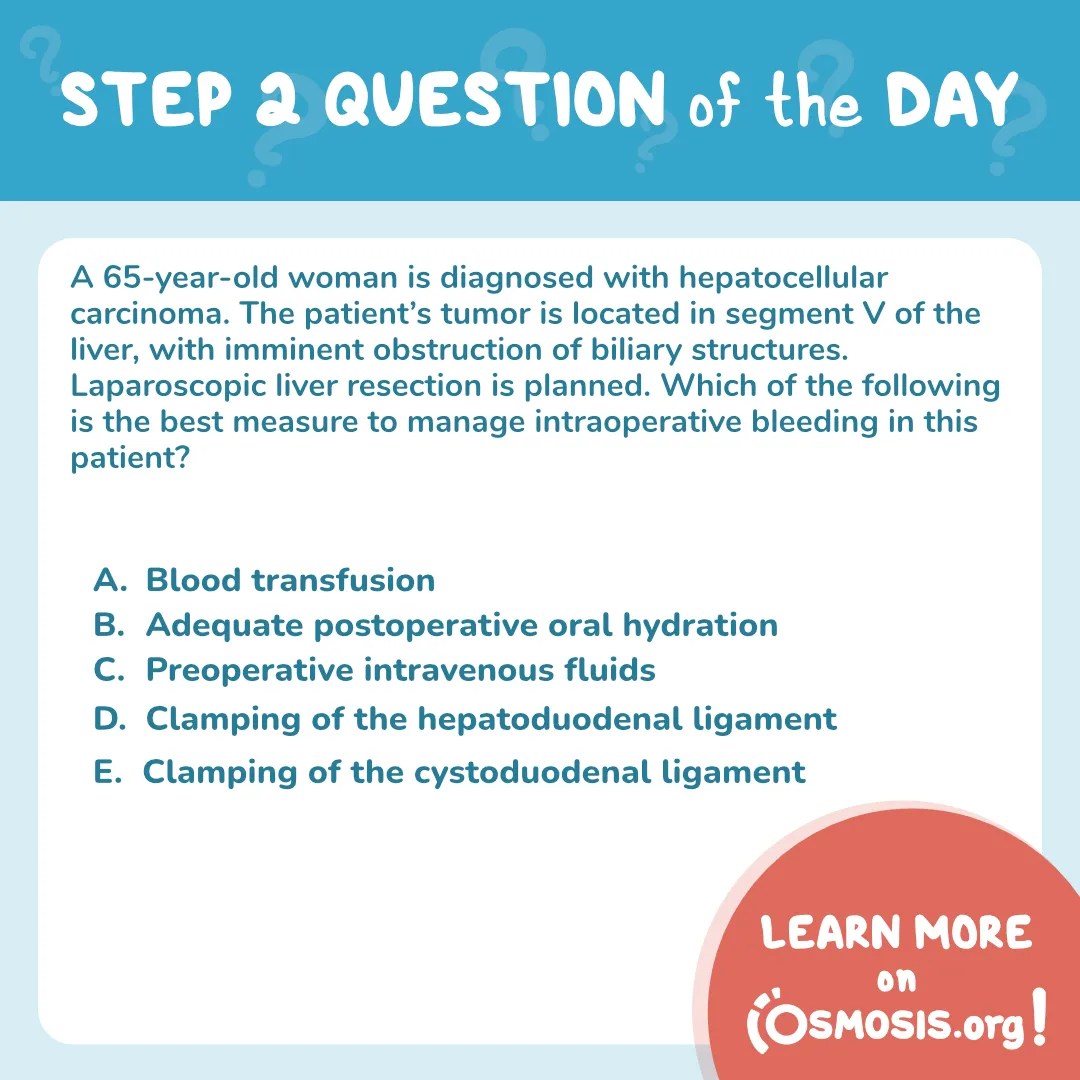
USMLE® Step 2 Question of the Day: Hepatocellular carcinoma
— Updated:
Test your knowledge with this USMLE Step 2 Question of the Day! A 65-year-old woman is diagnosed with hepatocellular carcinoma and is scheduled for a laparoscopic liver resection. Which measure is best for managing intraoperative bleeding?A 65-year-old woman is diagnosed with hepatocellular carcinoma. The patient’s tumor is located in segment…
-
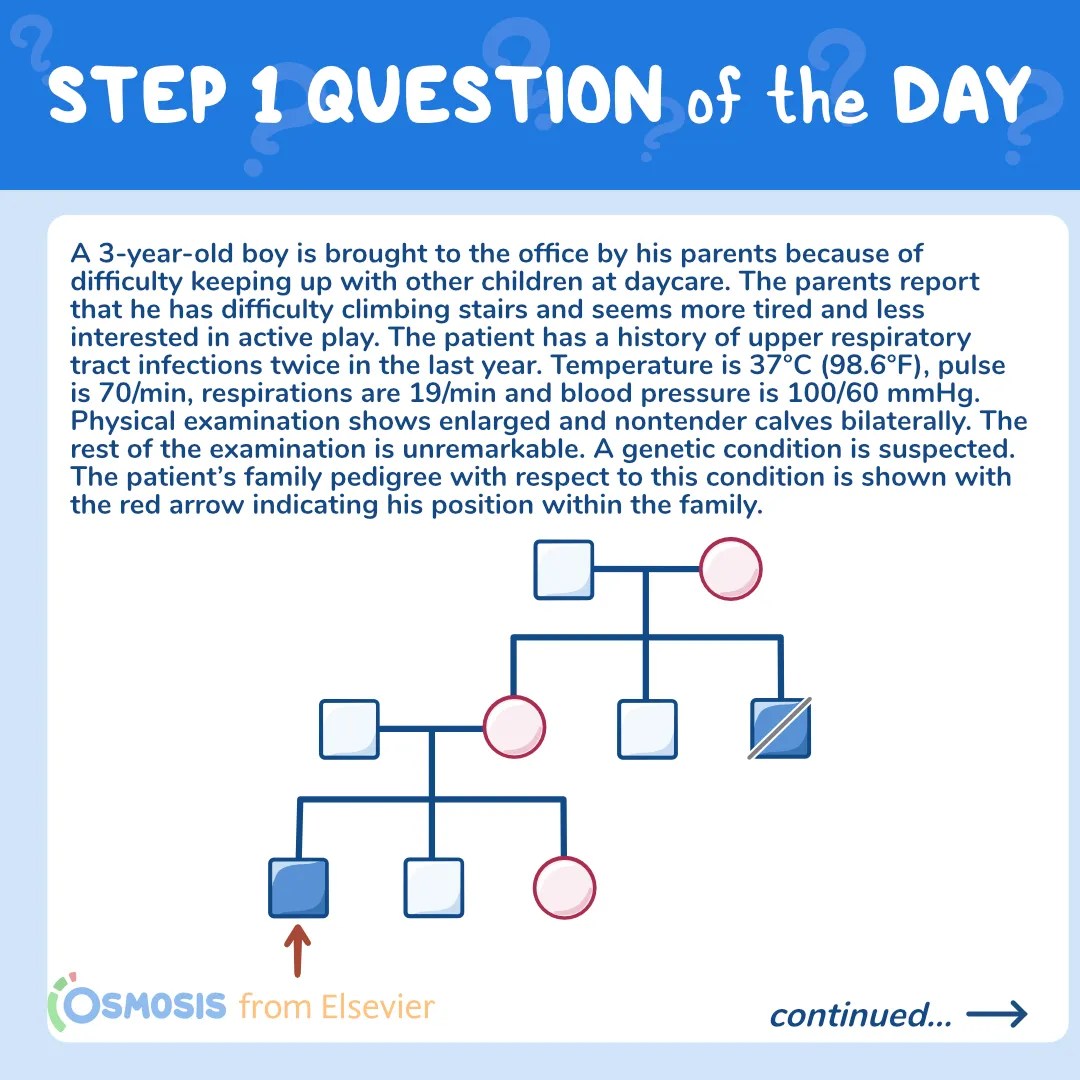
USMLE® Step 1 Question of the Day: Inheritance patterns
— Updated:
Test your knowledge with this USMLE Step 1 Question of the Day. A 3-year-old boy is brought to the office due to difficulty keeping up with other children at daycare. The physical examination reveals enlarged calves, and a genetic condition is suspected. Review the patient’s family pedigree and determine the…
-
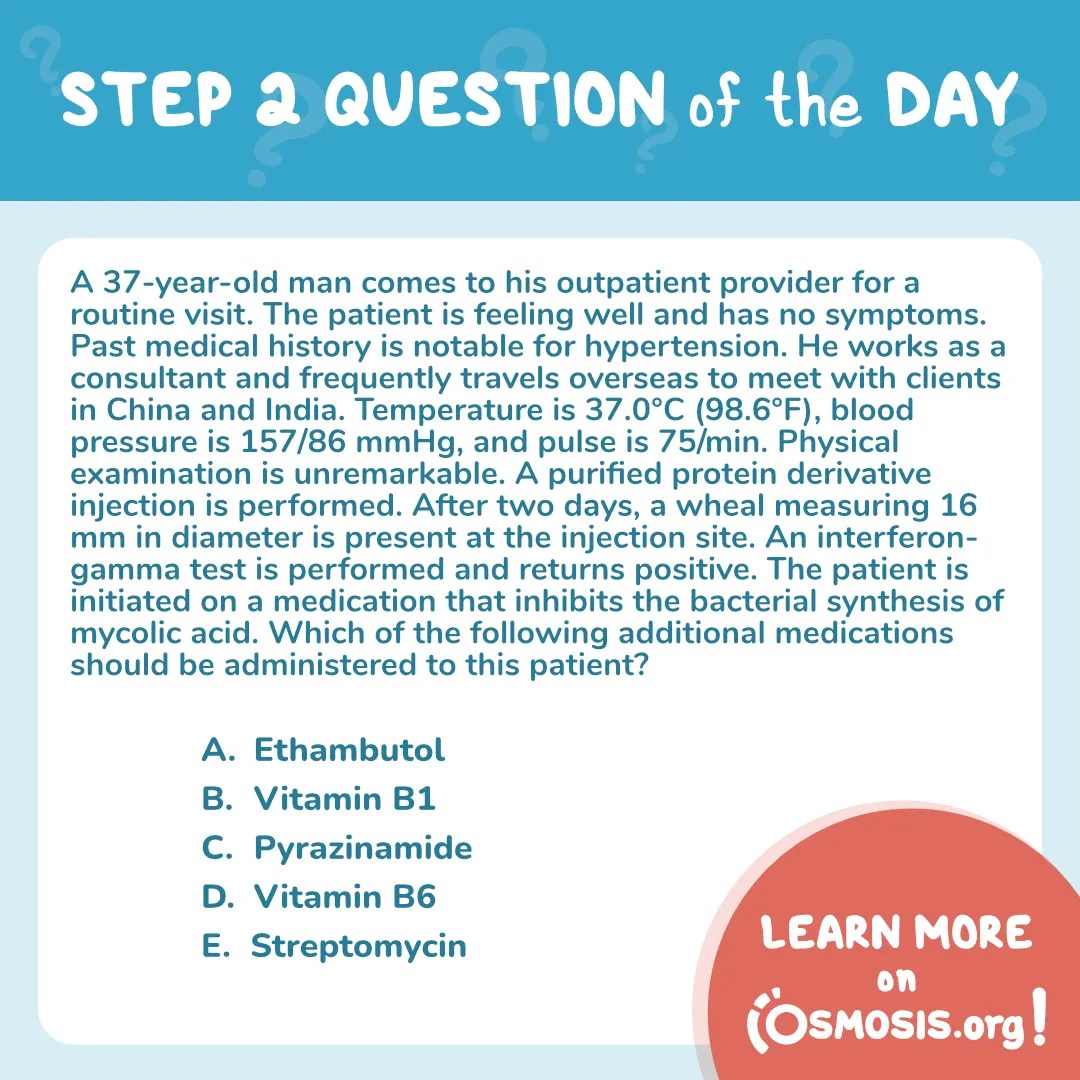
USMLE® Step 2 Question of the Day: Mycolic acid
— Updated:
Test your knowledge with this USMLE Step 2 Question of the Day. A 37-year-old man with a history of hypertension and frequent travel to tuberculosis-endemic regions presents for a routine visit. He has no symptoms, but his tuberculin skin test and interferon-gamma assay are positive. The patient is initiated on…
-
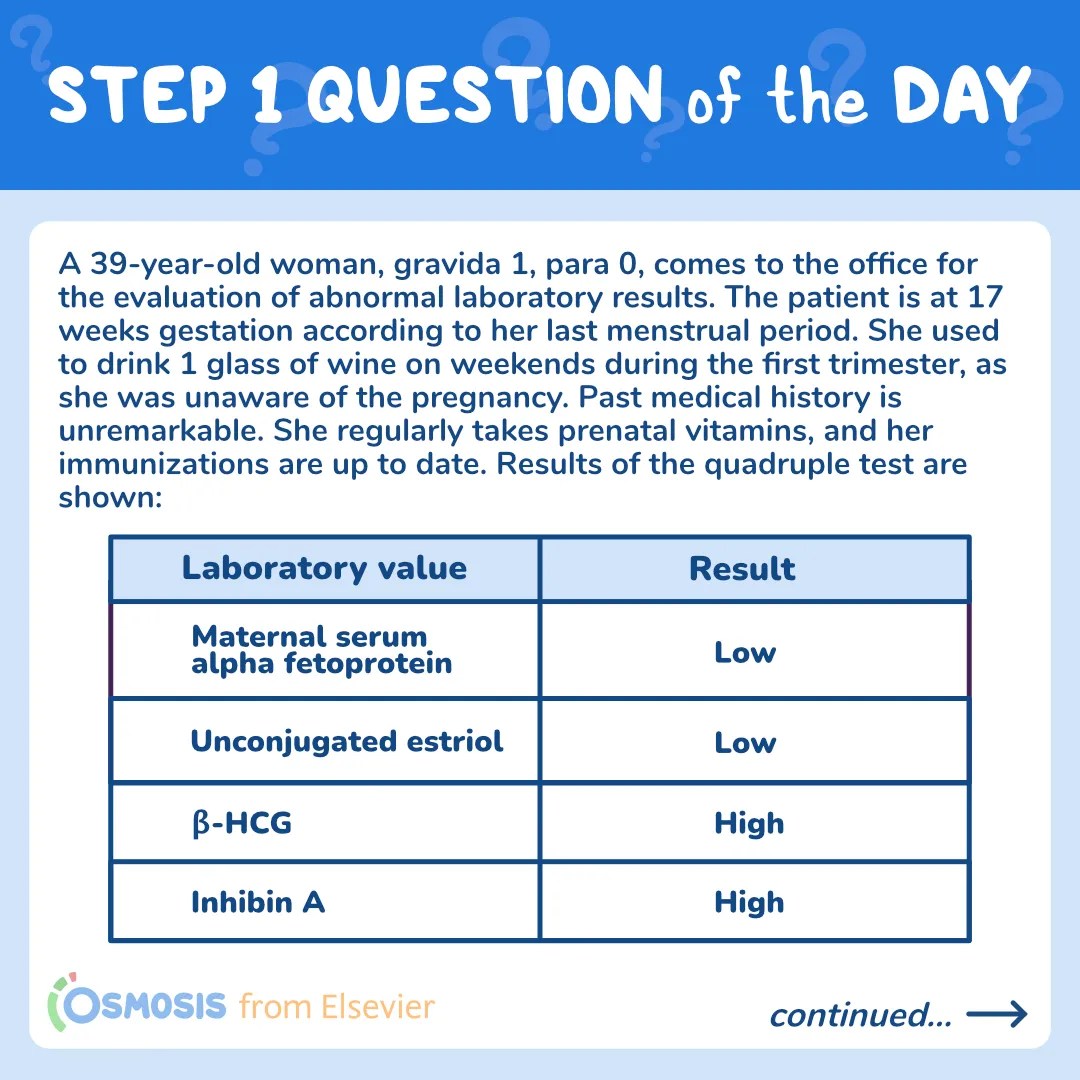
USMLE® Step 1 Question of the Day: Quadruple test
— Updated:
A pregnant patient’s quadruple test shows abnormal markers. Which fetal condition is most likely associated with these results?
-
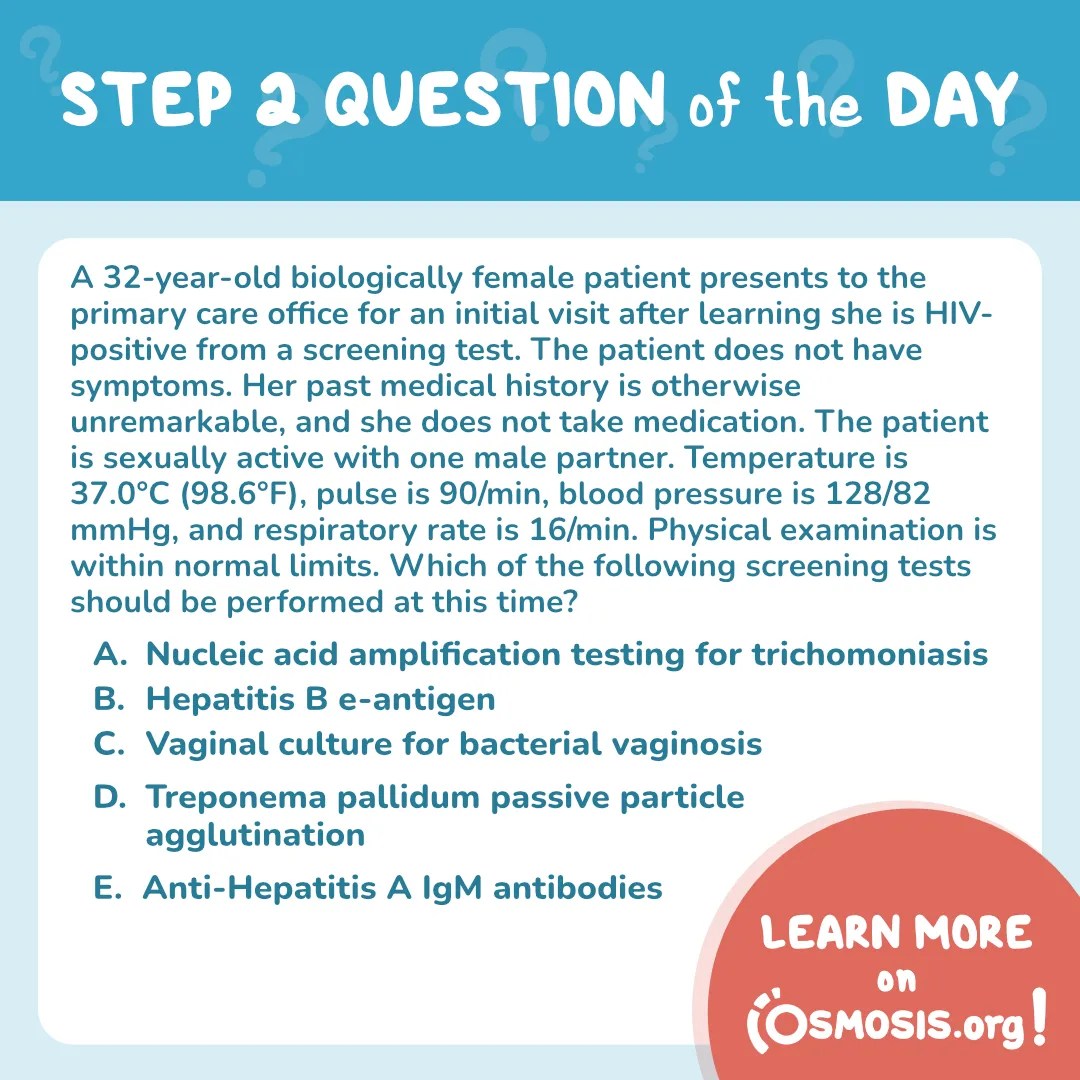
USMLE® Step 2 Question of the Day: HIV positive
— Updated:
Explore a crucial aspect of HIV management with this scenario-based USMLE Step 2 CK question. Learn about recommended screening tests for newly diagnosed HIV-positive patients. A 32-year-old biologically female patient presents to the primary care office for an initial visit after learning she is HIV-positive from a screening test. The patient does…
-
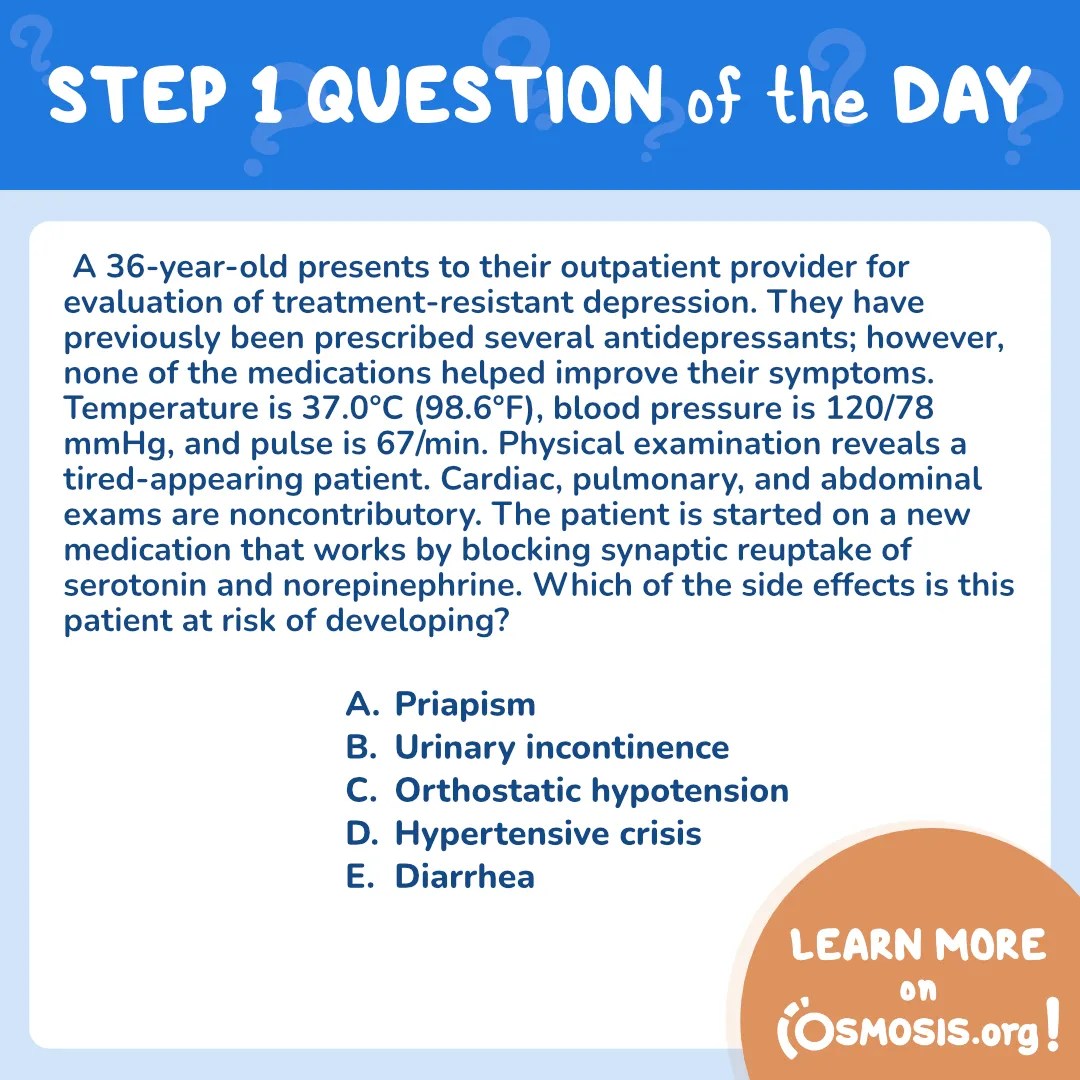
USMLE® Step 1 Question of the Day: Antidepressants
— Updated:
This USMLE Step 1 Question of the Day involves a 36-year-old patient for evaluation of treatment-resistant depression. Based on the findings, identify the most likely diagnosis. A 36-year-old presents to their outpatient provider for evaluation of treatment-resistant depression. They have previously been prescribed several antidepressants; however, none of the medications…
-
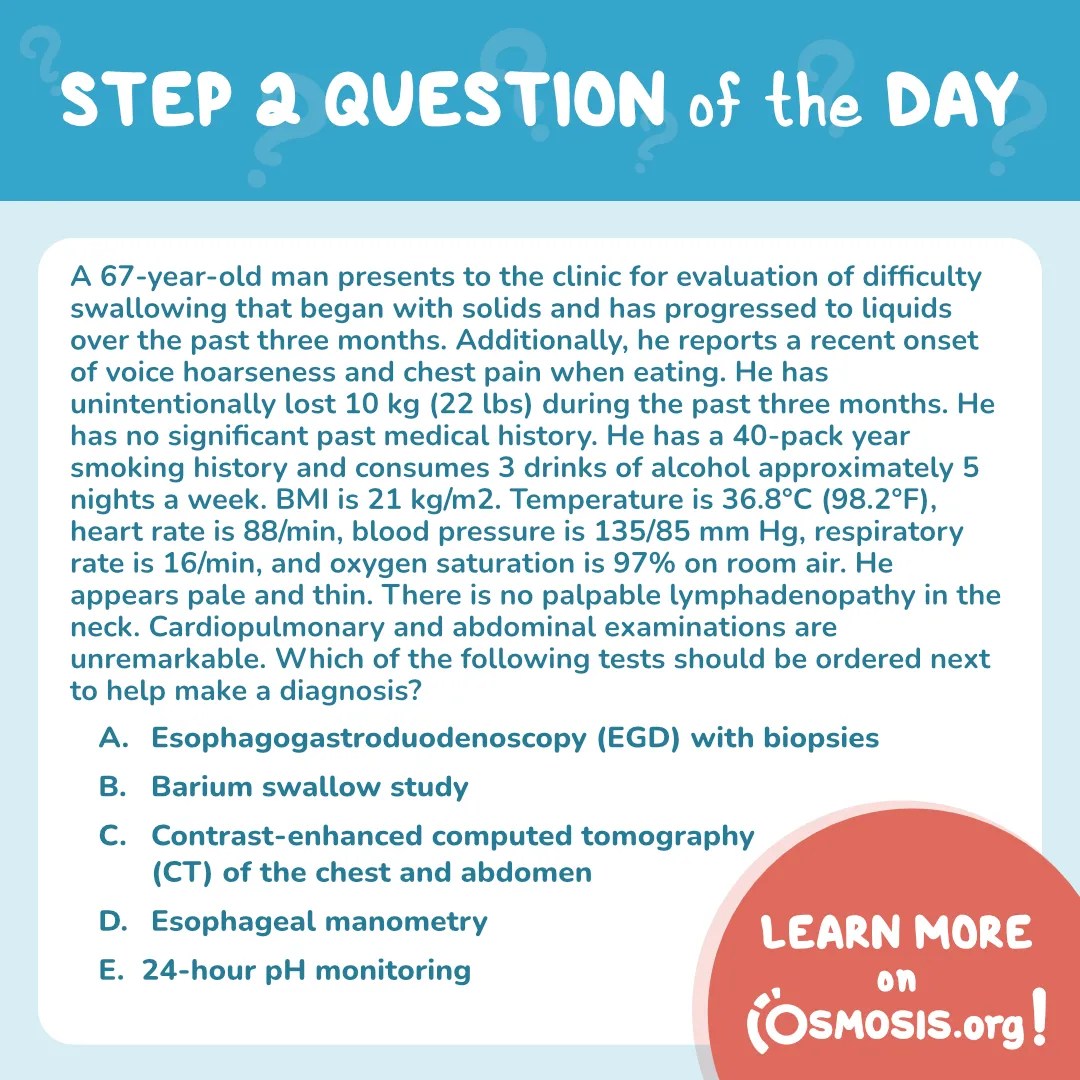
USMLE® Step 2 Question of the Day: Difficulty swallowing
— Updated:
Learn about the USMLE Step 2 CK diagnostic approach through the case of a 67-year-old man with progressive dysphagia, weight loss, hoarseness, and chest pain. Do you know which test(s) should be given? A 67-year-old man presents to the clinic for evaluation of difficulty swallowing that began with solids and…
-
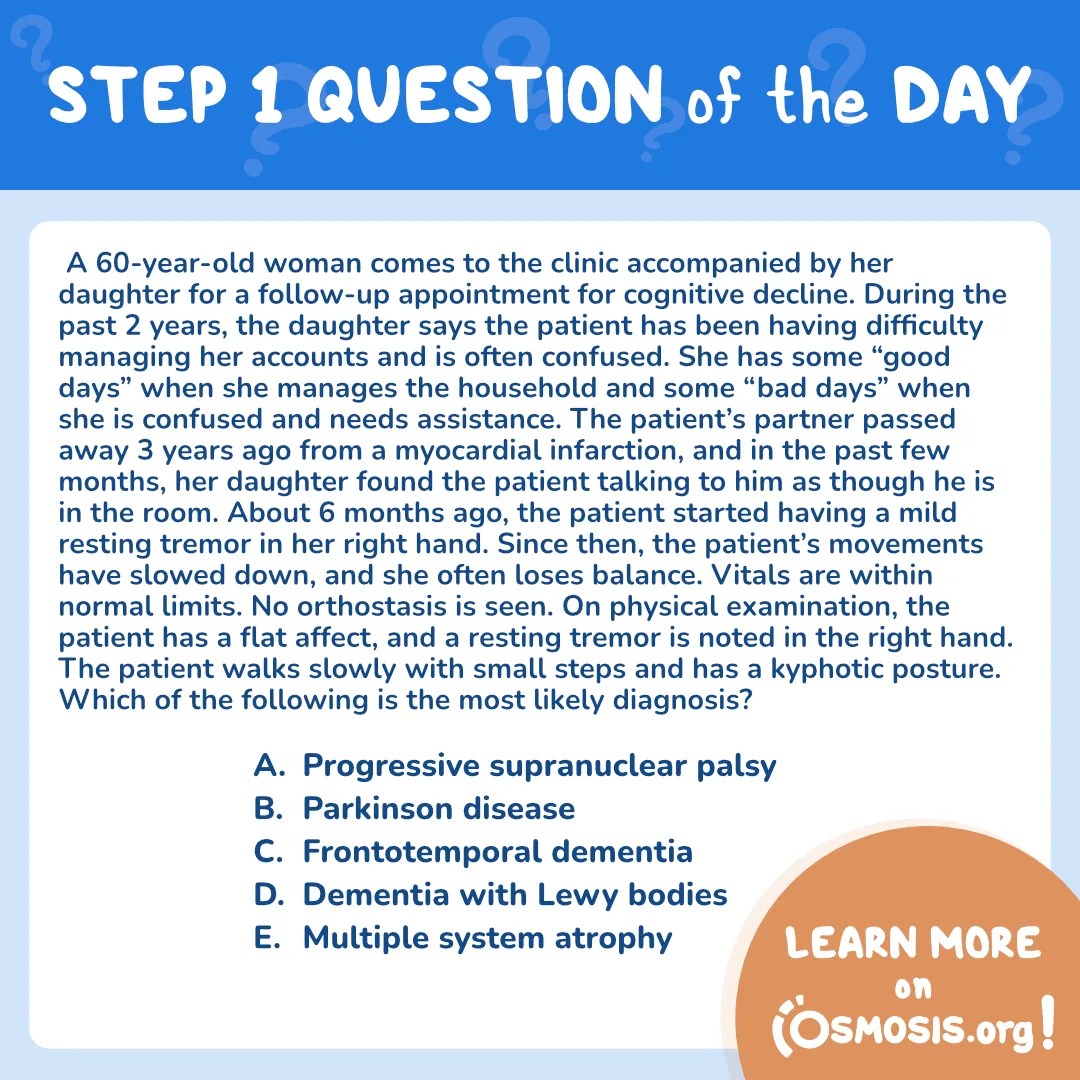
USMLE® Step 1 Question of the Day: Cognitive decline
— Updated:
An older woman presents with fluctuating cognition, visual hallucinations, and parkinsonism. What diagnosis best explains her symptoms?
-
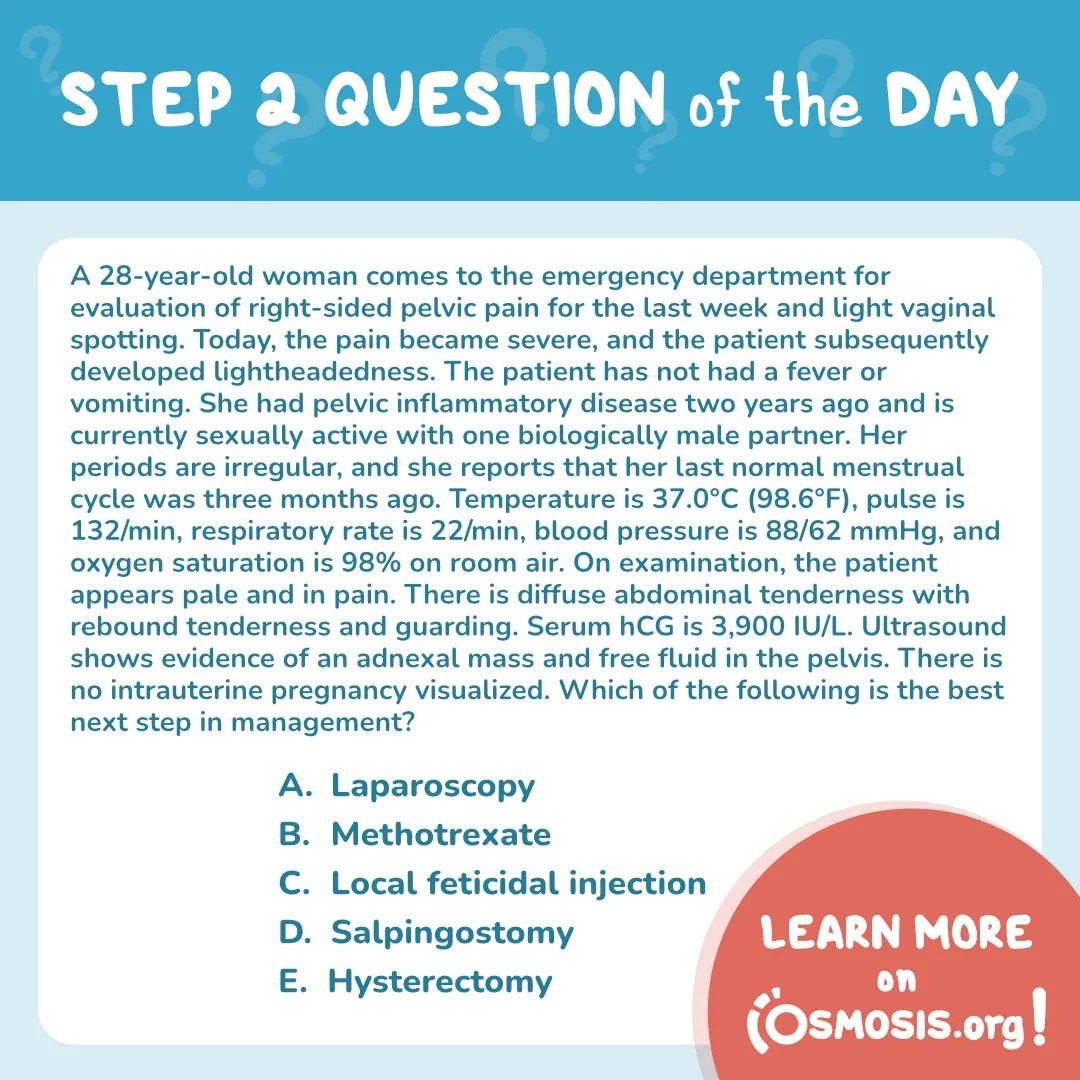
USMLE® Step 2 Question of the Day: Pelvic pain
— Updated:
Learn about a USMLE Step 2 question involving a 28-year-old woman with a ruptured ectopic pregnancy, presenting with severe pelvic pain, hypotension, and a positive hCG. Understand the significance of emergent laparoscopy to control bleeding and remove damaged tissue.A 28-year-old woman comes to the emergency department for evaluation of right-sided…
-
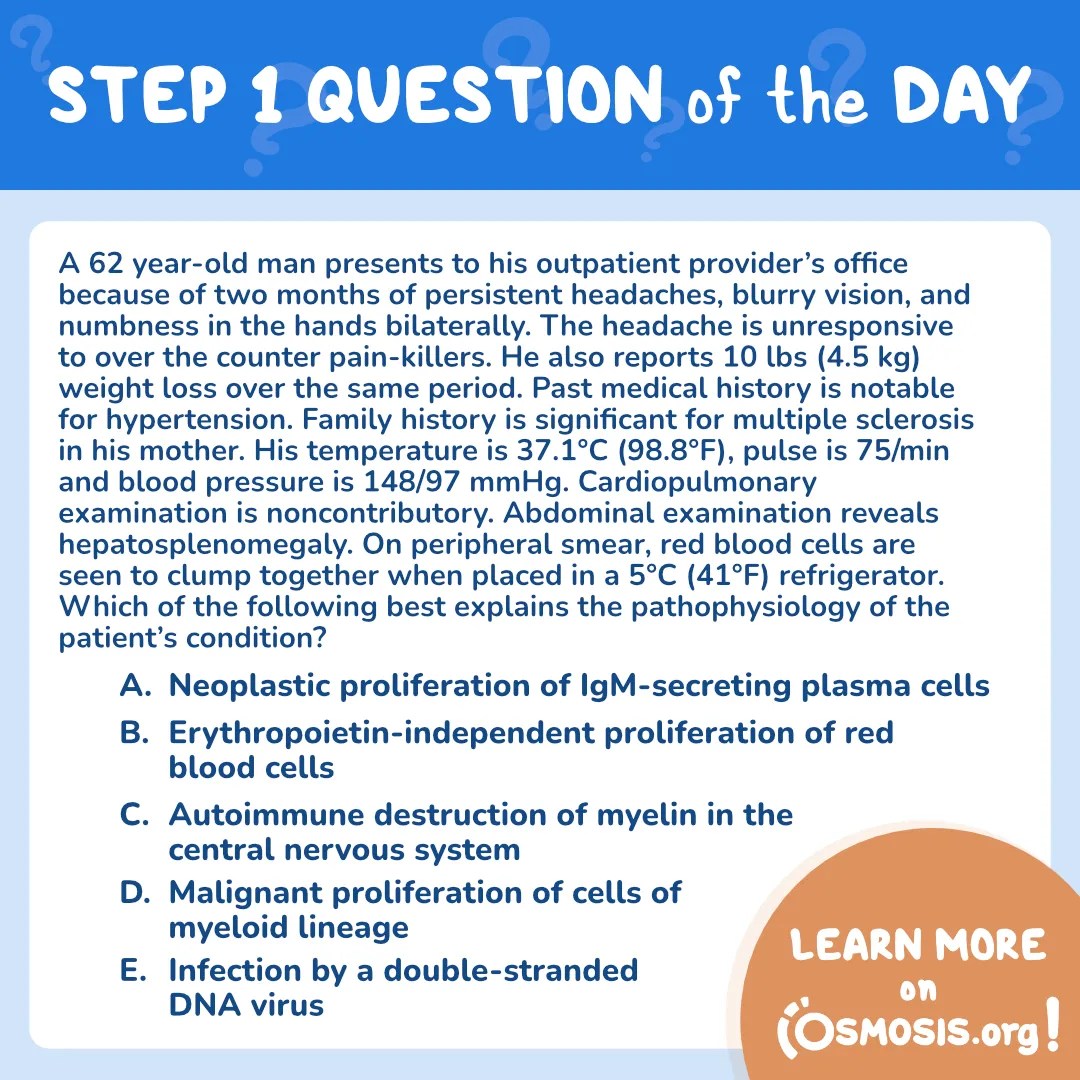
USMLE® Step 1 Question of the Day: Hepatosplenomegaly
— Updated:
Prepare for USMLE Step 1 with this case! Learn about a USMLE Step 1 question involving a 62-year-old man with headaches, blurry vision, and numbness in his hands. Learn the significance of elevated IgM levels, blood viscosity, and the importance of cold agglutination in this hematologic malignancy. A 62 year-old…
-
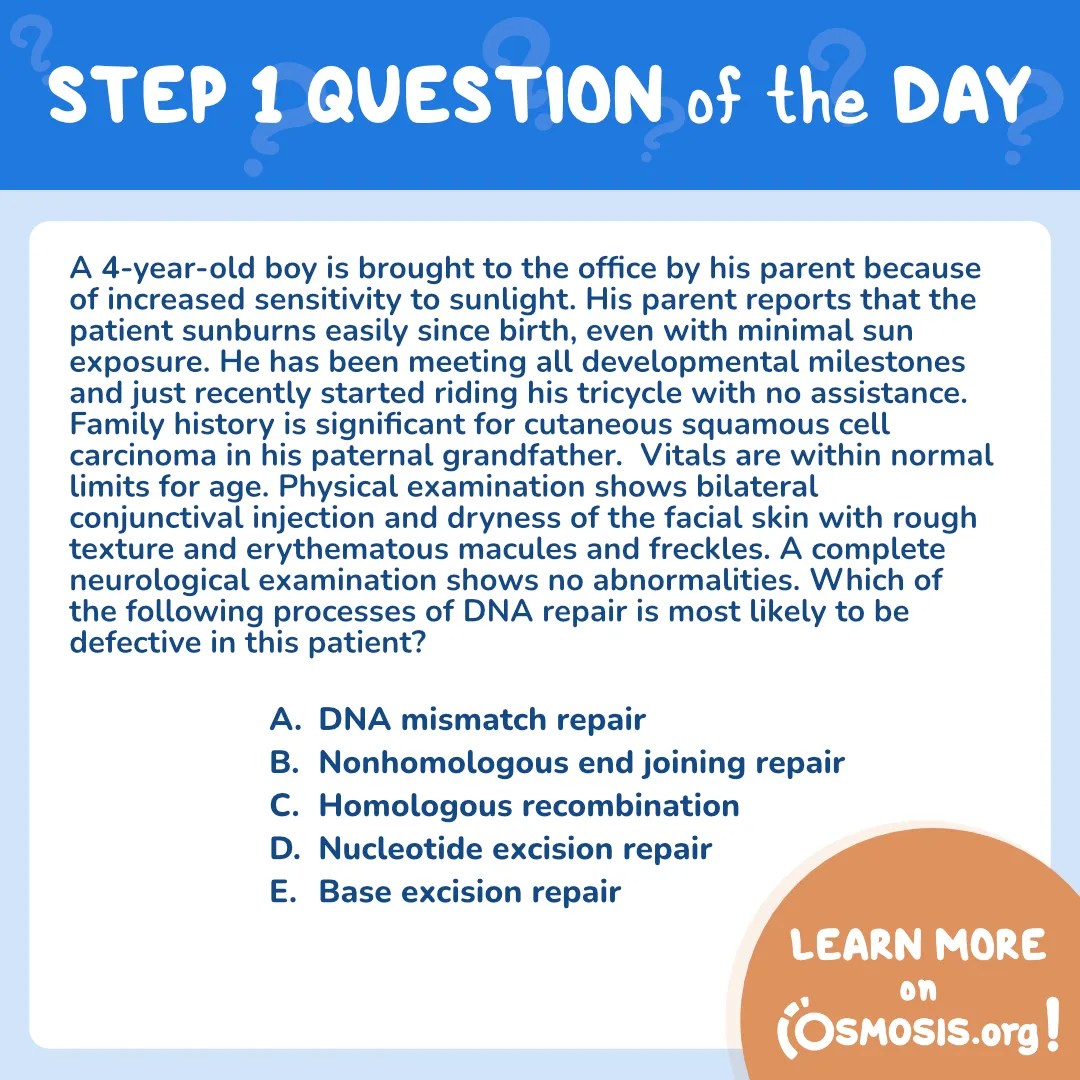
USMLE® Step 1 Question of the Day: Sunlight sensitivity
— Updated:
Prepare for USMLE Step 1 with this case! A 4-year-old boy with increased sensitivity to sunlight and facial skin changes since birth is brought in for evaluation. What’s the most likely diagnosis? A 4-year-old boy is brought to the office by his parent because of increased sensitivity to sunlight. His…
-
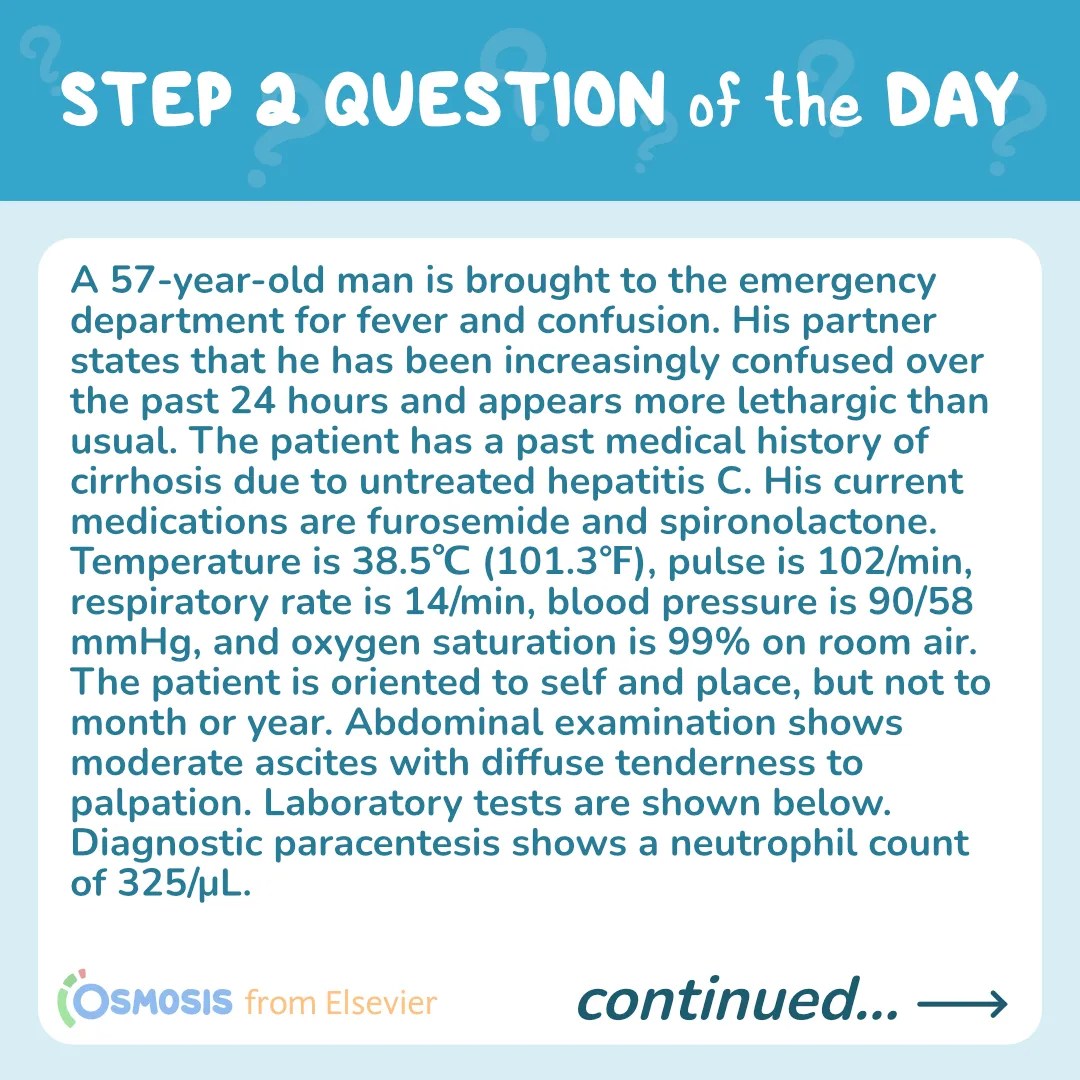
USMLE® Step 2 Question of the Day: Fever and confusion
— Updated:
A 57-year-old man is brought to the emergency department for fever and confusion. His partner states that he has been increasingly confused over the past 24 hours and appears more lethargic than usual. The patient has a past medical history of cirrhosis due to untreated hepatitis C. His current medications…
-
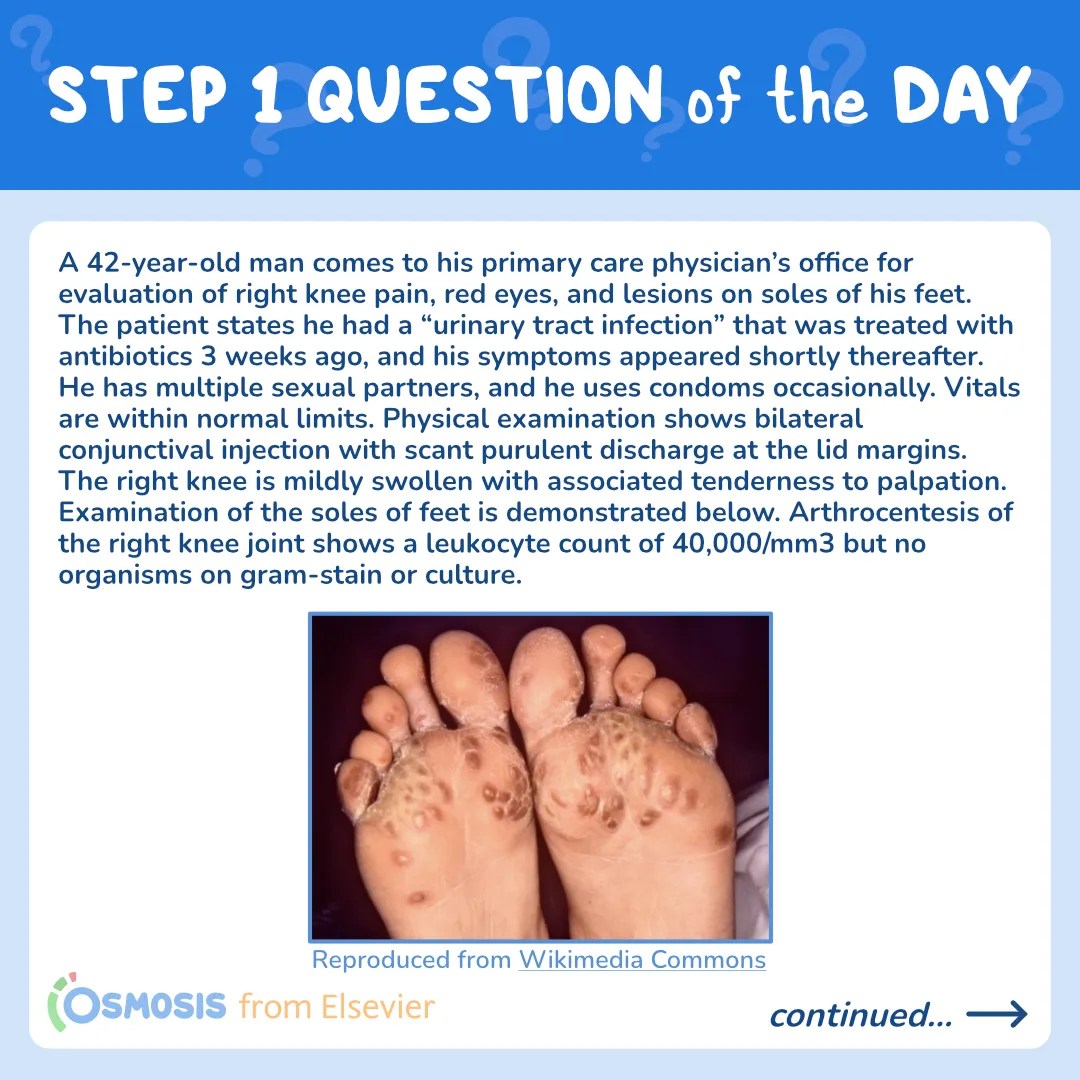
USMLE® Step 1 Question of the Day: Knee pain
— Updated:
Discover the case of a 42-year-old man with knee pain, red eyes, and foot lesions post-UTI treatment. Could it be reactive arthritis? A 42-year-old man comes to his primary care physician’s office for evaluation of right knee pain, red eyes, and lesions on soles of his feet. The patient states…
-
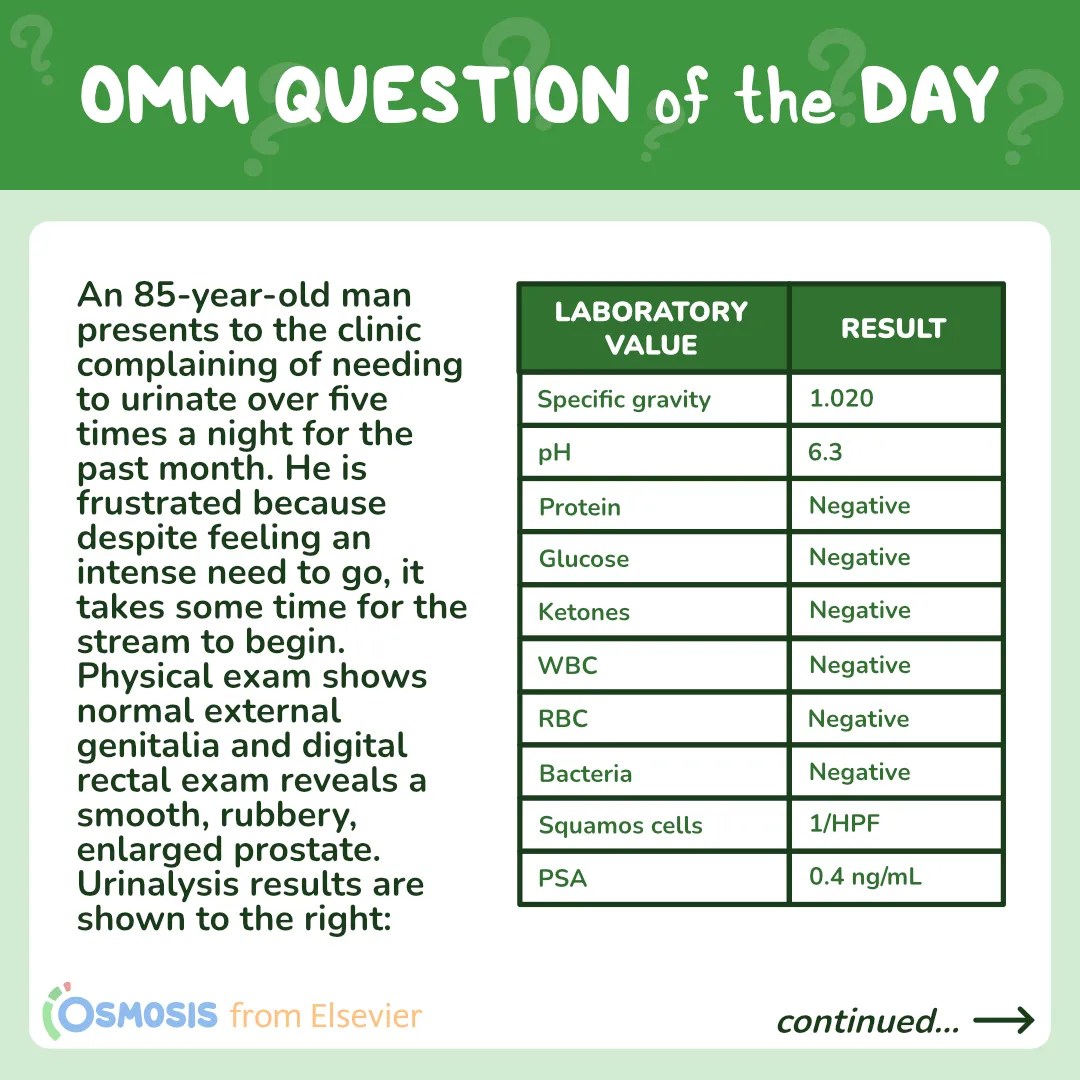
OMM® Question of the Day: Enlarged prostate
— Updated:
Explore the role of sympathetic innervation in urinary symptoms and how manipulation of specific spinal levels can alleviate prostate-related issues. An 85-year-old man presents to the clinic complaining of needing to urinate over five times a night for the past month. He is frustrated because despite feeling an intense need…
-
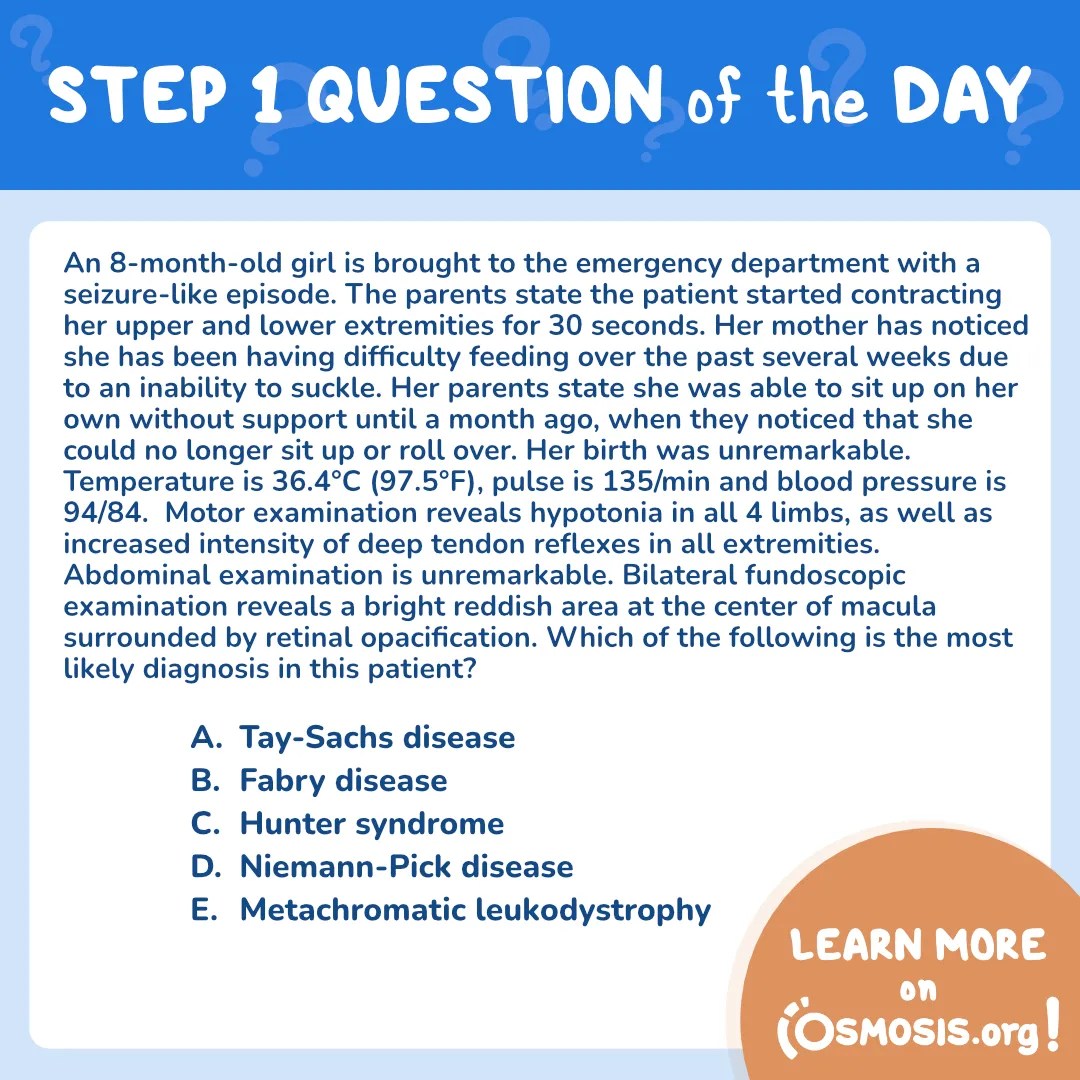
USMLE® Step 1 Question of the Day: Hypotonia
— Updated:
Learn about Tay-Sachs disease, an autosomal recessive neurodegenerative disorder characterized by regression of motor milestones, seizures, and a distinctive cherry-red macula. An 8-month-old girl is brought to the emergency department with a seizure-like episode. The parents state the patient started contracting her upper and lower extremities for 30 seconds. Her…
-
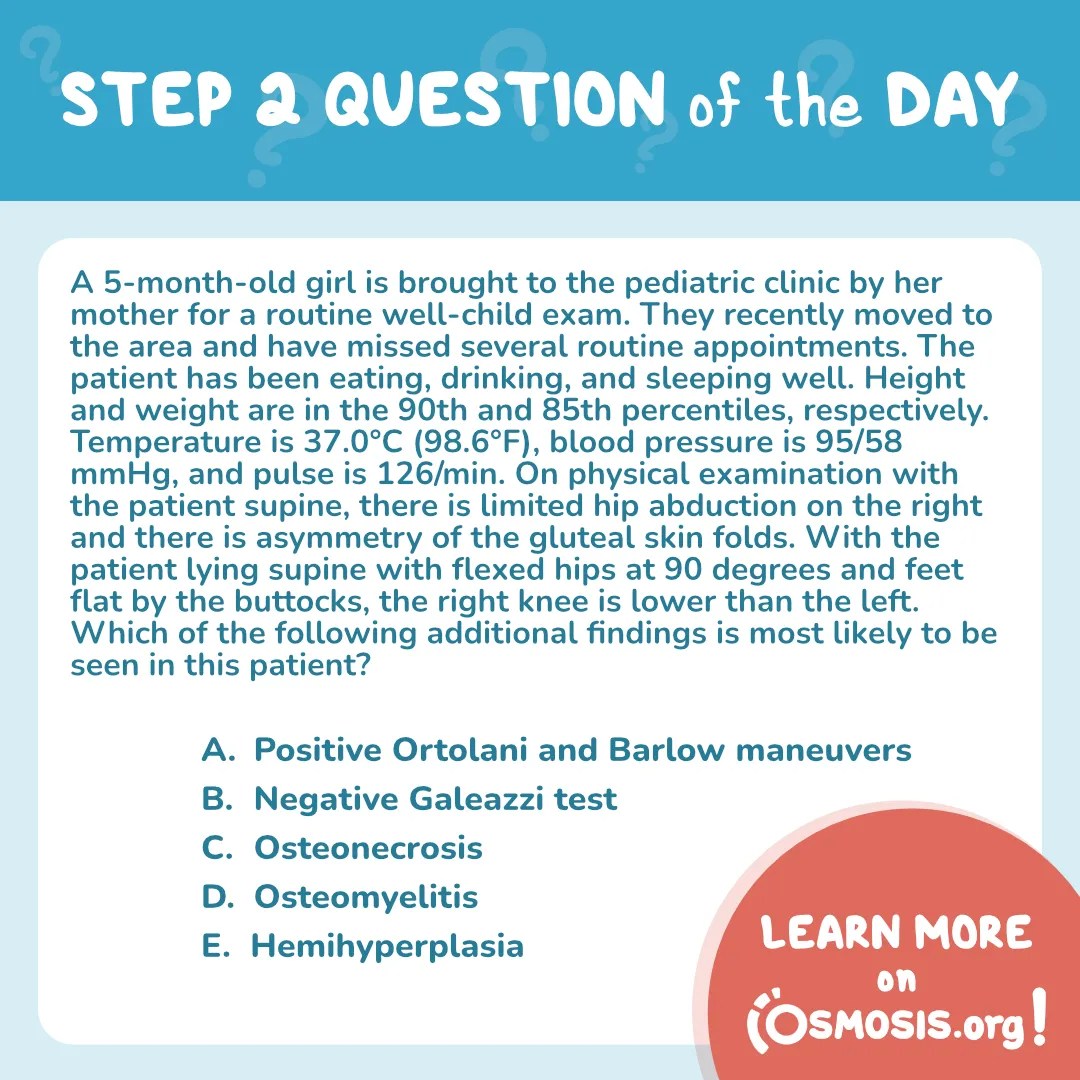
USMLE® Step 2 Question of the Day: Limited hip abduction
— Updated:
Prepare for USMLE Step 2 with our QOTD on limited hip abduction, Developmental Dysplasia of the Hip, & Barlow maneuver. Strengthen your exam knowledge!A 5-month-old girl is brought to the pediatric clinic by her mother for a routine well-child exam. They recently moved to the area and have missed several…
-
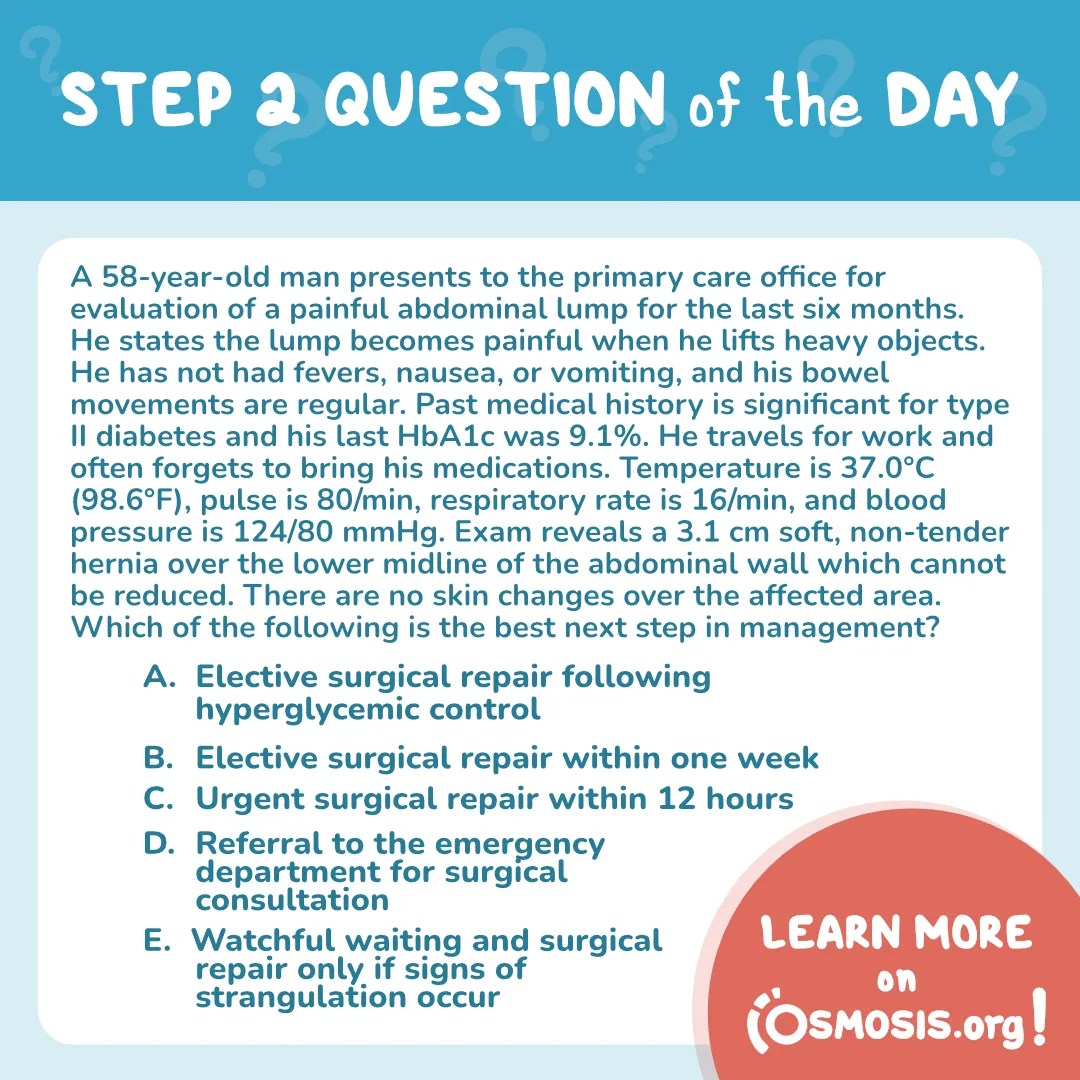
USMLE® Step 2 Question of the Day: Abdominal hernia
— Updated:
Prepare for USMLE Step 2 with our QOTD on limited hip abduction, Developmental Dysplasia of the Hip, & Barlow maneuver. Strengthen your exam knowledge. A 58-year-old man presents to the primary care office for evaluation of a painful abdominal lump for the last six months. He states the lump becomes…
-
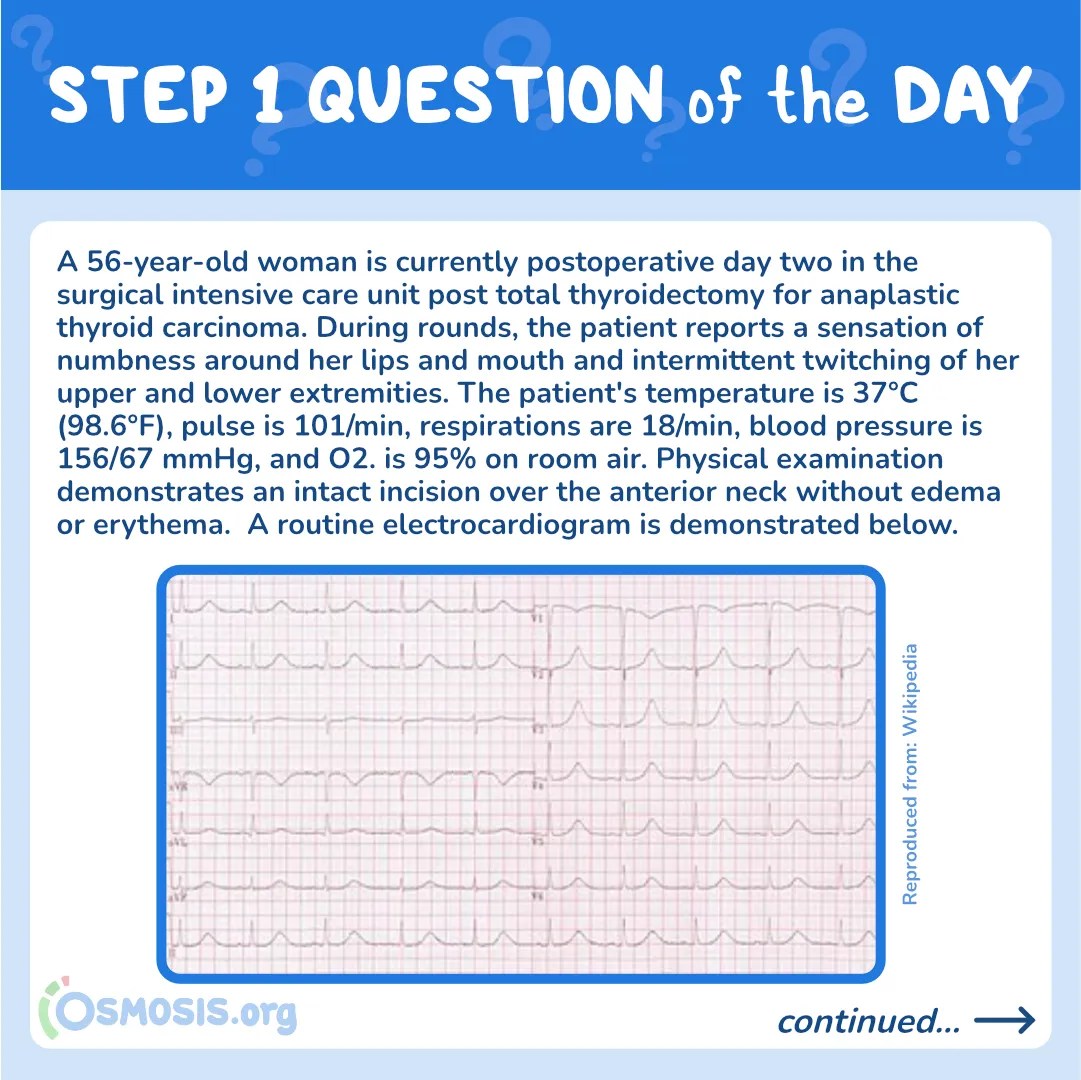
USMLE® Step 1 Question of the Day: Thyroidectomy
— Updated:
This week, we are sharing another USMLE® Step 1-style practice question to test your knowledge of medical topics. Today’s case focuses on a 56-year-old woman who reported a sensation of numbness on her mouth and intermittent twitching of her extremities. Physical examination demonstrates an intact incision over the anterior neck without…
-
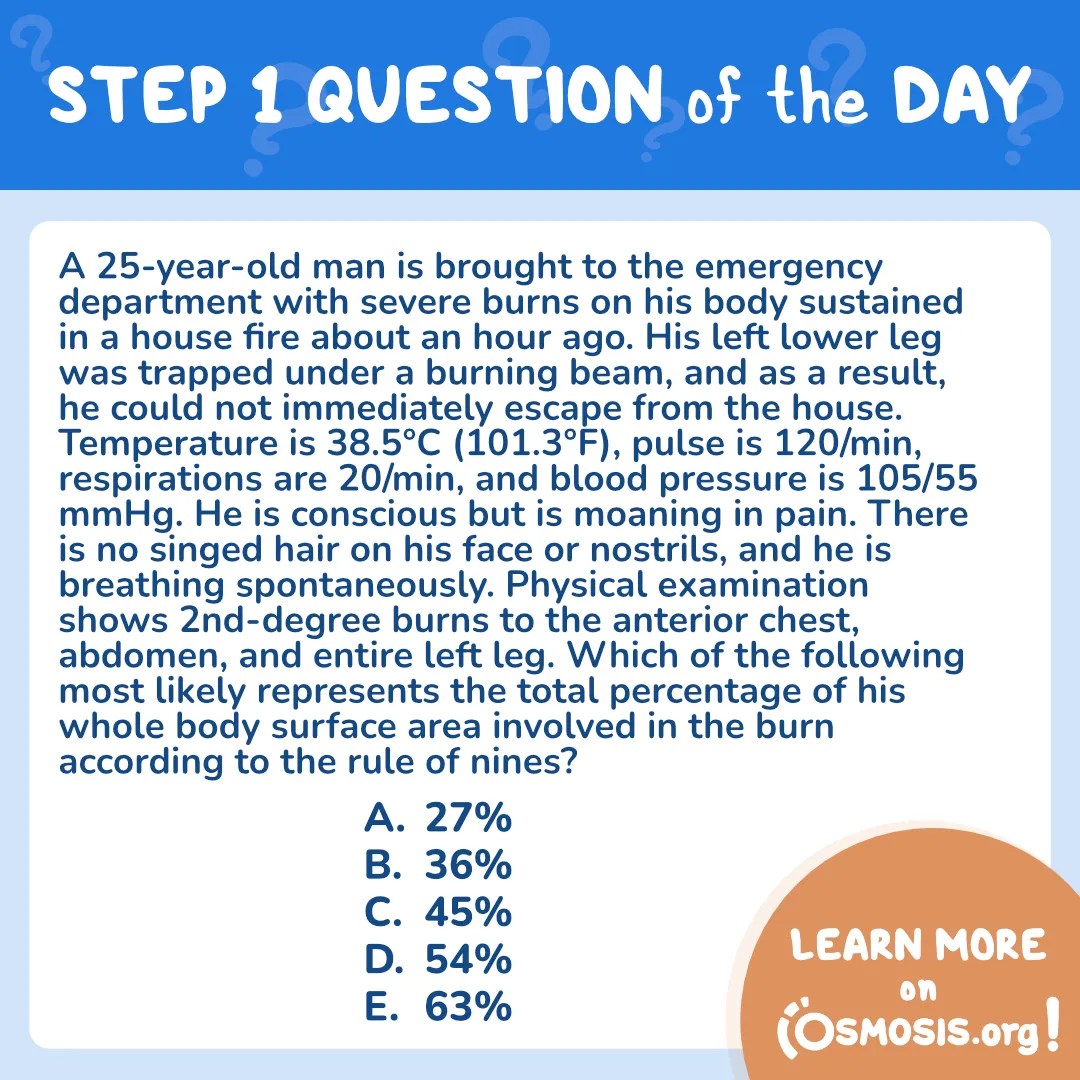
USMLE® Step 1 Question of the Day: Rule of nines
— Updated:
The Rule of Nines is a method used in emergency departments to quickly estimate the extent of burns on a patient’s body. This USMLE® Step 1 Question of the Day will test your knowledge on this topic. A 25-year-old man is brought to the emergency department with severe burns on…
-
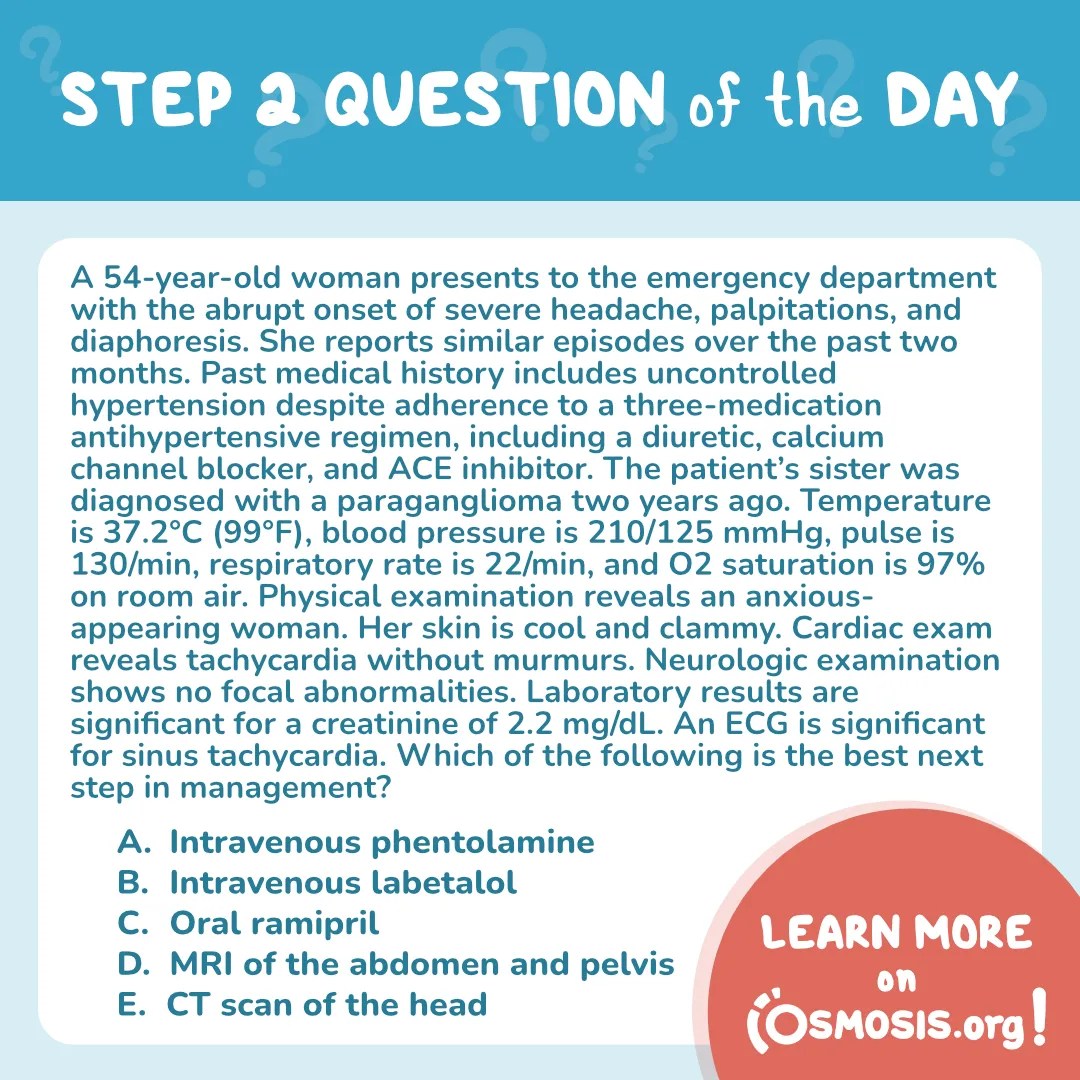
USMLE® Step 2 Question of the Day: Sinus tachycardia
— Updated:
This USMLE® Step 2 Question of the Day focuses on sinus tachycardia and its association with conditions like pheochromocytoma and hypertensive emergencies. Understand the role of alpha-blockers in management.A 54-year-old woman presents to the emergency department with the abrupt onset of severe headache, palpitations, and diaphoresis. She reports similar episodes…
-
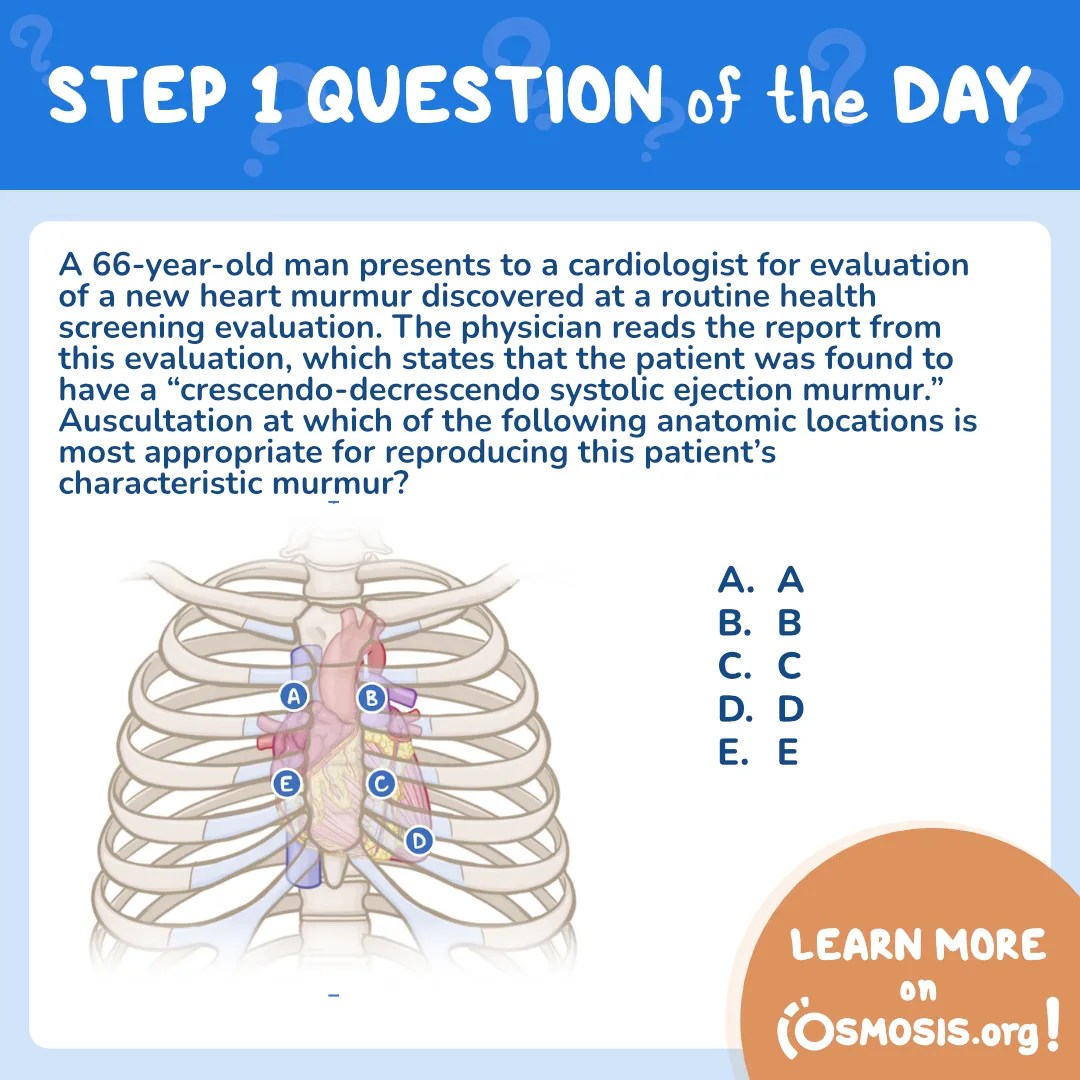
USMLE® Step 1 Question of the Day: Systolic ejection murmur
— Updated:
Aortic stenosis produces a classic crescendo-decrescendo systolic ejection murmur best heard at the right second intercostal space. Learn key auscultation sites for cardiac murmurs.